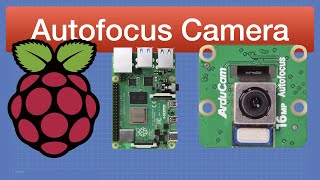
Raspberry Pi Autofocus Camera and Libcamera
Explore Raspberry Pi autofocus camera and libcamera for capturing images, videos, and streaming. Learn installation, usage, and compare quality with other Pi cameras.
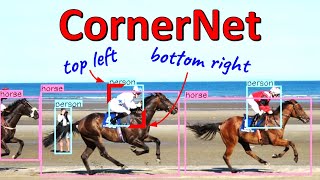
CornerNet- Detecting Objects as Paired Keypoints
Explores CornerNet, a novel object detection approach using paired keypoints. Covers corner pooling, heatmap and embedding outputs, loss functions, and experimental results.
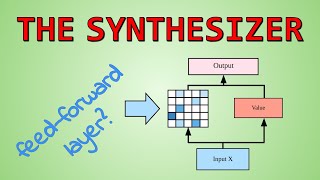
Synthesizer - Rethinking Self-Attention in Transformer Models
Explores alternative attention mechanisms in Transformer models, proposing the Synthesizer model that learns synthetic attention weights without token-token interactions, showing competitive performance across various NLP tasks.
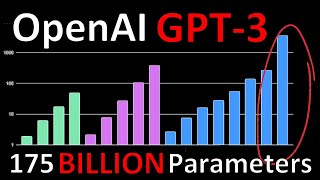
GPT-3 - Language Models Are Few-Shot Learners
Comprehensive analysis of GPT-3's capabilities, exploring its performance on various NLP tasks and discussing its potential impact on AI research and applications.

DETR - End-to-End Object Detection with Transformers
Explore DETR, a groundbreaking object detection method using Transformers. Learn about its simplified architecture, innovative loss function, and impressive performance in image analysis tasks.

When BERT Plays the Lottery, All Tickets Are Winning - Paper Explained
Exploring BERT pruning and the Lottery Ticket Hypothesis, revealing that even pruned components can be fine-tuned for good accuracy in NLP tasks, with implications for model efficiency and knowledge utilization.
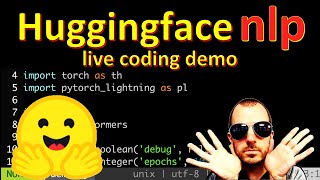
PyTorch Sentiment Classifier From Scratch With Huggingface NLP Library - Full Tutorial
Build a sentiment classifier using PyTorch, BERT, and Huggingface's NLP library. Learn to process datasets, tokenize text, create tensors, and implement training steps for an IMDB sentiment analysis model.
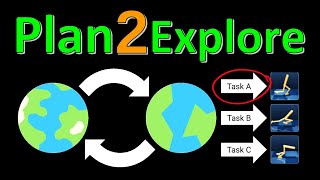
Planning to Explore via Self-Supervised World Models - Paper Explained
Explores a novel AI approach for efficient self-supervised learning and rapid adaptation to new tasks, using planning in latent space to seek out uncertainty and maximize information gain.
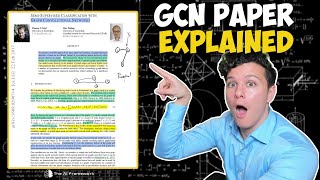
Graph Convolutional Network Paper Explained
Comprehensive explanation of Graph Convolutional Networks (GCNs), covering theory, derivation, and practical applications in node classification, with insights into their functionality and effectiveness.

Variational Autoencoder From Scratch in PyTorch
Learn to implement a Variational Autoencoder from scratch using PyTorch, covering architecture, training loop, and inference with practical examples and code demonstrations.
Detecting Facial Keypoints with Deep Learning
Learn to implement a top-performing deep learning solution for facial keypoint detection, covering data analysis, model development, and submission strategies for Kaggle competitions.

Detecting Eye Disease Using Deep Learning - Kaggle Top 1% Solution, No Ensemble
Learn to detect eye disease using deep learning, with a top-ranked Kaggle solution. Covers data preprocessing, loss functions, augmentation, and resolution techniques for improved accuracy in medical image analysis.

PyTorch Image Segmentation Tutorial with U-NET - Everything From Scratch
Learn to implement U-NET for image segmentation from scratch, covering model architecture, dataset preparation, training process, and evaluation techniques in PyTorch.
Albumentations Tutorial for Data Augmentation - PyTorch Focused
Learn data augmentation techniques using Albumentations library for image classification, segmentation, and object detection tasks, with a focus on PyTorch implementation and practical examples.
WGAN Implementation From Scratch With Gradient Penalty
Implement WGAN and WGAN-GP in PyTorch, focusing on improving GAN training stability through loss function modifications. Includes theoretical explanations and practical coding.
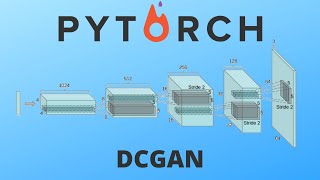
DCGAN Implementation From Scratch
Learn to implement DCGAN from scratch, focusing on convolutional neural networks for image generation. Covers discriminator and generator implementation, weight initialization, and training on MNIST and CelebA datasets.
YOLOv1 from Scratch
Comprehensive tutorial on implementing YOLOv1 from scratch, covering architecture, loss function, dataset preparation, training, and evaluation for object detection.

Classifying Skin Cancer - TensorFlow Tutorial
Build a TensorFlow model to classify skin lesions as benign or malignant. Learn preprocessing, model setup, training, and evaluation using metrics like ROC curves for this important medical application.

TensorFlow Tutorial - TensorFlow Datasets
Learn to use TensorFlow Datasets for loading, preprocessing, and modeling image and text data. Covers MNIST image classification and IMDB sentiment analysis with practical examples and code demonstrations.

How to Build Custom Datasets for Text in PyTorch
Learn to build custom datasets for text in PyTorch, focusing on image captioning with the Flickr8k dataset. Covers dataset creation, vocabulary setup, batch padding, and data loading for various NLP tasks.
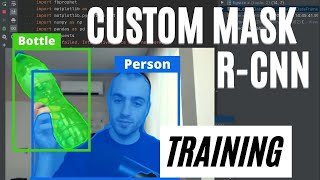
Train Mask R-CNN for Image Segmentation
Learn to train and implement Mask R-CNN for image segmentation using free online GPU resources. Covers dataset preparation, model training, and practical application for object detection and segmentation.