Automated Interactive Domain-Specific Conversational Agents that Understand Human Dialogs
Explore AutoConcierge, a system combining GPT-3 and answer set programming to create realistic, domain-specific conversational agents that truly understand user utterances.
Using Logic Programming and Kernel-Grouping for Improving Interpretability of Convolutional Neural Networks
Explore a neurosymbolic framework for improving CNN interpretability in image classification using logic programming and kernel-grouping techniques.

Optimal Program Synthesis via Abstract Interpretation - POPL 2024
Explore a framework for optimal program synthesis using abstract interpretation, improving scalability with A* search and heuristics for numerical constant optimization in domain-specific languages.
Homotopy Type Theory for Sewn Quilts
Explore PieceWork, an innovative programming language for quilt design inspired by Homotopy Type Theory. Learn how computational methods can enhance diversity in sewn designs and bridge programming theory with quilting craft.
Goals as Constraints: Writing miniKanren Constraints in miniKanren
Explore an extension to miniKanren allowing goals to run as constraints, enhancing expressiveness and efficiency in relational programming.
Semi-Automated Direction-Driven Functional Conversion - miniKanren'23
Explore semi-automated direction-driven functional conversion techniques in miniKanren, enhancing program transformation and optimization capabilities.

Decoding Algorithmic Artistry: Visual Generative AI
Explore visual generative AI, from diffusion models to future implications. Gain insights on current research, limitations, and navigating AI growth in this comprehensive overview.
Leveraging Generative AI and Transformers in Healthcare - Anomaly Detection and Implementation
Explore AI and transformers in healthcare, focusing on anomaly detection, data annotation, and machine learning frameworks. Learn about challenges, implementations, and generative AI applications.
Leveraging ChatGPT and Copilot in Long-Term Projects
Explore AI integration in development projects using ChatGPT and Copilot. Learn prompting techniques, best practices, and ethical considerations for leveraging AI tools effectively.
Do We Still Need to Observe? The Future of AI and Observability
Explore how AI revolutionizes observability practices, from automated query writing and dashboard creation to enhanced root cause analysis and streamlined alert management in modern tech operations.

On-Device Training Under 256KB Memory
Discover cutting-edge techniques for on-device machine learning training with minimal memory requirements, presented by MIT's Song Han in this technical seminar on resource-efficient AI deployment.
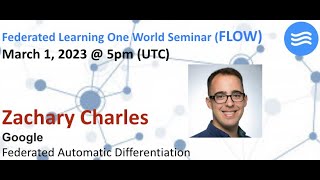
Federated Automatic Differentiation - Seminar 96
Explore advanced concepts in federated automatic differentiation with Google researcher Zachary Charles, covering innovative approaches to distributed machine learning and privacy-preserving computation.
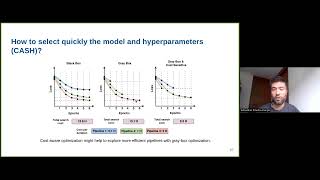
Quick-Tune: Quickly Learning Which Pretrained Model to Finetune and How
Discover a methodology for efficiently selecting and fine-tuning pretrained models through meta-learning, optimizing model selection and hyperparameter configurations for new datasets.
MotherNet: A Foundational Hypernetwork for Tabular Classification
Discover how MotherNet hypernetwork architecture revolutionizes tabular classification by generating optimized neural networks through in-context learning, offering faster training and competitive performance against XGBoost.
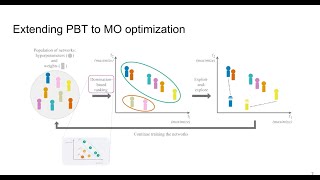
Multi-Objective Population Based Training for Hyperparameter Optimization
Discover advanced hyperparameter optimization techniques through Population Based Training (PBT) and its multi-objective evolution, focusing on real-world applications in precision, fairness, and robustness.
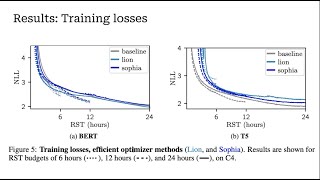
No Train No Gain - Revisiting Efficient Training Algorithms for Transformer-based Language Models
Delve into efficient training algorithms for Transformer models, exploring dynamic architectures, batch selection, and optimizers while examining their effectiveness against baseline methods.
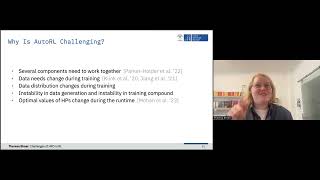
Challenges in Hyperparameter Optimization for Reinforcement Learning - Understanding AutoRL Through AutoML
Explore the complexities of hyperparameter optimization in Reinforcement Learning, examining AutoML tools and methods to better understand and tune RL algorithms for improved performance.
Discovering Black-Box Optimizers via Evolutionary Meta-Learning
Delve into evolutionary meta-learning techniques for discovering black-box optimizers, exploring advanced concepts in evolution strategies and genetic algorithms through self-attention architectures.
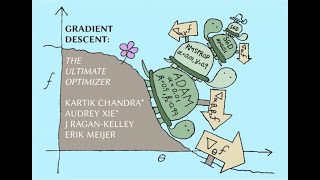
Gradient Descent: The Ultimate Optimizer - Automating Hyperparameter Optimization
Discover how to automatically optimize hyperparameters in gradient-based ML algorithms through an elegant modification to backpropagation, making optimizer tuning more efficient and less sensitive to initial choices.

Semantic Code Refactoring for Abstract Data Types
Explore automated semantic code refactoring for Abstract Data Types using a novel method that generates equivalent implementations based on new data representations and relational invariants.

Fusing Direct Manipulations into Functional Programs
Explore a novel framework for bidirectional live programming that fuses direct manipulations into functional programs, enabling code-insensitive output modifications and automatic source code updates.