Making LLMs Fully Utilize Context - A Data-Driven Approach
Discover how to enhance LLM context utilization through Microsoft's data-driven approach, exploring information-intensive training methods and practical solutions for improved context awareness and reasoning capabilities.
Introduction to DsPy Framework and Building Blocks - Part 1
Discover the fundamentals of DsPy framework for optimizing LLM pipelines, exploring its core components and how it differs from LangChain and LlamaIndex in this introductory guide.

Building a RAG Pipeline with LangChain and ChromaDB for Email-Based Chat Applications
Master practical RAG implementation with LangChain and ChromaDB to build an intelligent email-based chatbot system using vector stores, text splitters, and LLM integration.
Fine-tuning Gemma Models with PEFT and LoRA Using HuggingFace Datasets
Master parameter-efficient fine-tuning techniques for Gemma 2B model using PEFT and LoRA, with hands-on code implementation and custom dataset creation for optimized model training.
Improving RAG Pipelines with Contextual Information Retrieval
Master advanced RAG techniques by exploring hybrid approaches combining semantic embeddings with TF-IDF and BM25, plus learn about Anthropic's Contextual Retrieval method for enhanced performance.
OpenAI O1 Preview: Understanding AI Reasoning Models and Chain of Thought
Explore OpenAI's groundbreaking o1 preview model and its advanced reasoning capabilities for solving complex puzzles, mathematical problems, and coding challenges through detailed examples and practical applications.
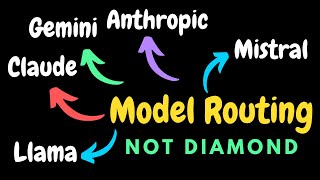
Model Router: Choosing the Right AI Model Using NotDiamond API
Discover how to effectively select and implement AI models using NotDiamond's model routing API, comparing top models like GPT-4, Claude 3, and Gemini for optimal task-specific performance.
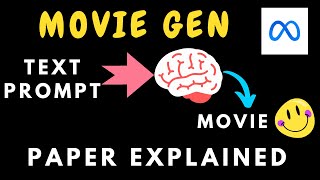
Meta MovieGen: Understanding Video Generation Model Architecture and Training
Dive into Meta's MovieGen AI model's architecture, training pipeline, and innovative features for revolutionary video generation, including temporal auto-encoding and superresolution techniques.

Kolmogorov-Arnold Networks: Understanding KAN Architecture and Comparison with MLPs
Dive into Kolmogorov-Arnold Networks (KAN), a groundbreaking alternative to Multi-Layer Perceptrons, exploring its architecture, implementation, and potential advantages in neural network development.
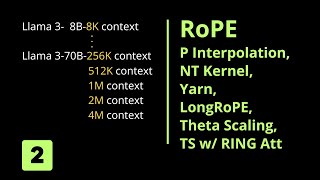
LongRoPE and Theta Scaling for Extended Context Length in LLMs - Part 2
Delve into advanced techniques for extending LLM context lengths through LongRoPE and Theta Scaling, exploring methods to enhance model performance from 8K to 4M tokens.
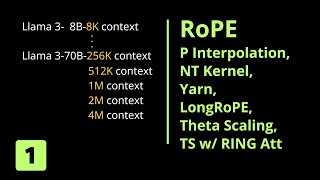
RoPE: Rotary Position Embedding for Extended Context Lengths in Transformers
Dive into Rotary Position Embedding (RoPE) and learn how this innovative technique enhances transformer models by enabling extended context lengths up to 100K tokens.
In-Context Learning - Comparing Extreme Context Length with Fine-Tuning and RAG
Explore groundbreaking research on in-context learning with extended context models, comparing performance against fine-tuning and RAG methods while examining scaling impacts and demonstration effectiveness.
Fine-Tuning Large Language Models: Impact on Knowledge Integration and Hallucinations
Delve into groundbreaking research on how fine-tuning Large Language Models with new knowledge affects their tendency to generate hallucinations, exploring methodologies and practical implications.

Matrix Long Short-Term Memory (mLSTM) - A New Alternative to Transformer LLMs
Explore the innovative xLSTM architecture and its matrix-based approach to neural networks, comparing its potential advantages over traditional transformer models in language processing.
Understanding DSPy - Programming AI Pipelines for Language Models
Explore DSPy's innovative approach to AI pipeline programming, from its ColBERT v2 origins to practical applications in modular pipeline generation and self-improving language programs.
Understanding Retrieval Heads in Large Language Models - From Discovery to Applications
Discover groundbreaking research on retrieval heads in transformer architecture, exploring their impact on RAG systems, long-context processing, and chain-of-thought reasoning for enhanced AI capabilities.

Understanding Snowflake Arctic 480B - A Mixture of Experts LLM Architecture
Dive into the architecture and performance analysis of Snowflake's Arctic 480B LLM, exploring how its 128x4B MoE design compares to traditional transformers for enterprise-level AI tasks.
Unsupervised In-Context Learning Plus: From Few-Shot to Many-Shot Learning in Large Language Models
Explore advanced In-Context Learning techniques for Large Language Models, from few-shot to many-shot approaches, focusing on unsupervised learning and autonomous capabilities with 1M token context.

RecurrentGemma: Moving Past Transformers with Griffin Architecture for Long Context Length
Explore Google's RecurrentGemma-2B architecture, featuring Griffin's innovative approach to language modeling that surpasses traditional transformers with enhanced efficiency and long-context processing capabilities.
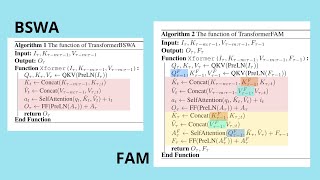
TransformerFAM and BSWA: Understanding Feedback Attention Memory and Block Sliding Window Attention
Dive into Google's revolutionary TransformerFAM architecture, exploring how feedback attention mechanisms and working memory enhance AI's ability to process indefinite sequence lengths with improved efficiency and context awareness.

INFINI Attention: Efficient Infinite Context Transformers with 1 Million Token Context Length
Explore Google's Infini-attention transformer mechanism, featuring compressive memory integration for handling million-token sequences and efficient long-term information processing.