Introducing Two Criteria for Future Data Prediction with ML Models
Explore transparent evaluation methods for ML models through new criteria linking database characteristics to machine learning metrics, focusing on future data prediction and unbiased assessment.
Object Detection Using OpenCV - Building Computer Vision Models
Master object detection fundamentals with OpenCV, from identifying objects in images to implementing practical computer vision solutions for real-world applications.

Implications of Generative AI in Court Systems - A Legal and Constitutional Analysis
Explore the intersection of AI and judicial systems, examining fundamental rights, regulatory needs, and international collaboration for responsible AI implementation in courts.
How Neural Networks Find Polygons to Understand Documents Better
Explore advanced deep learning approaches for document geometry analysis, from template matching to differential rasterization, enhancing computer vision capabilities for various real-world applications.
Under the Hood: Key Algorithms Powering Vector Search - HNSW, LSH, and PQ
Dive into fundamental algorithms like HNSW, LSH, and PQ that power vector search and AI-driven databases, exploring their technical mechanisms and practical applications.
Engineering Intelligence Through Agent Interaction - From RPA to Agentic Process Automation
Explore how Generative AI transforms robotic process automation into agent-based systems, focusing on intelligent solutions for digital workflows and the challenges of engineering complex automated systems.
Using AI for Cheaper and More Efficient Solar Power
Discover how AI and image processing tools can revolutionize solar power adoption, making clean energy more accessible and cost-effective while maximizing environmental benefits.
UAV-based Person Detection and Geolocation for Search and Rescue
Discover how drones and computer vision revolutionize search and rescue operations through advanced person detection systems and deep learning models designed for aerial surveillance in wilderness environments.
Finetuning Stable Diffusion with Low-Rank Adaptation Techniques
Discover how low-rank adaptation techniques enhance Stable Diffusion fine-tuning, exploring implementation strategies, advantages, and practical applications across various computational models.
Revealing the Unseen: Visualizing Attention in Transformer Models
Dive into the visualization techniques of attention mechanisms in Transformer models, understanding their inner workings and practical applications through expert insights.
Optimizing Workloads with Transformers and Diffusers
Discover how Transformers and Diffusers architectures can optimize workloads, enhance efficiency, and revolutionize both natural language processing and computer vision applications in deep learning.
Revolutionizing Automation: Retrieval-Augmentation with LLMs
Discover how Retrieval-Augmented Generation and LLMs transform business automation through practical applications, real-world case studies, and industry-specific implementation strategies.
A Hybrid LLM-Based Enterprise Chatbot Solution - Weaver Peer
Discover how Weaver Peer combines domain-based and LLM chatbots to create an innovative enterprise solution for enhanced customer engagement and query management.
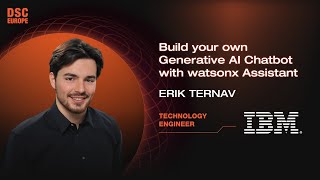
Build Your Own Generative AI Chatbot with Watsonx Assistant
Master the creation of generative AI chatbots using Watsonx Assistant, from basic setup to advanced webhook integration and LLM implementation for sophisticated conversational applications.

Stable Diffusion 3.5 Large Tutorial - Configuration Guide and FLUX DEV Comparison
Master the optimal configuration and usage of Stable Diffusion 3.5 Large and FLUX DEV through SwarmUI, including model comparisons, LoRA implementation, and deployment across various computing platforms.

Creating Instruction Datasets for LLM Fine-tuning - A Beginner's Guide
Discover comprehensive strategies for creating instruction datasets and fine-tuning LLMs, from basic concepts to advanced techniques for both coders and non-coders in AI model development.
Graph-of-Thoughts: From Chain-of-Thoughts to Advanced AI Reasoning Algorithms
Explore the evolution of AI reasoning from Chain-of-Thoughts to Graph-of-Thoughts, discovering advanced algorithms that enhance autonomous agent capabilities and decision-making.
GGUF Quantization of Large Language Models Using LLAMA.cpp
Master GGUF quantization techniques to run large language models efficiently on personal devices using LLAMA.cpp, enabling GPU-free inference and deployment on laptops, phones, and watches.
Segment Anything 2 (SAM2) - Video Segmentation Model Overview and Architecture
Dive into Meta's SAM2 technology, exploring how this advanced model extends image segmentation capabilities to videos through memory encoding, attention mechanisms, and the groundbreaking SA-V dataset.
Chunking Strategies for Retrieval Augmented Generation (RAG) with LangChain and LlamaIndex
Master text chunking techniques for RAG systems using LangChain and LlamaIndex, covering fixed-size, recursive, document, and semantic approaches to optimize LLM performance.
XLSTM: Understanding Extended LSTMs with sLSTM and mLSTM Architecture
Delve into the evolution of LSTM networks, exploring how XLSTM's innovative sLSTM and mLSTM components enable parallel processing and compete with transformers in sequence-related tasks.