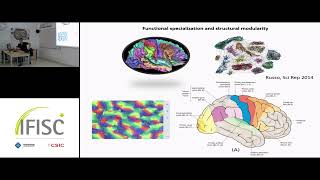
Information Processing in Oscillating Brain
Explore how oscillations in the brain contribute to information processing and cognitive functions. Gain insights into neural dynamics and their role in cognition.
Exploring Ecological and Social Interactions Through the Lens of Complex Systems
Analyze ecological and social interactions using complex systems theory. Gain insights into interconnected dynamics of nature and society.
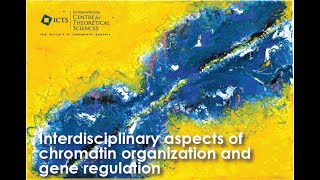
AI-based Chromatin Imaging Biomarkers in Health and Disease
Explore AI-based chromatin imaging biomarkers and their applications in health and disease. Gain insights into cutting-edge techniques for analyzing chromatin organization and gene regulation.
Designing DNA with Tunable Regulatory Activity Using Discrete Diffusion
Explore DNA Discrete Diffusion (D3) for engineering regulatory DNA sequences with targeted functional activity levels. Learn about its advantages, evaluation metrics, and applications in functional genomics.

gRNAde: Geometric Deep Learning for 3D RNA Inverse Design
Explore gRNAde, a geometric deep learning pipeline for 3D RNA inverse design. Learn about its architecture, use cases, and advantages over traditional methods in RNA sequence design.
The Future of Chemistry - Self-Driving Laboratories and AI-Driven Discovery
Explore self-driving laboratories revolutionizing scientific discovery through AI and automation. Learn about cutting-edge applications, key elements, and opportunities in chemistry, materials science, and biotechnology.
EquiReact: An Equivariant Neural Network for Chemical Reactions
Explore EquiReact, an equivariant neural network for predicting chemical reaction properties using 3D structures. Learn its advantages in flexibility, extrapolation, and data efficiency.
HyperPCM: Robust Task-Conditioned Modeling of Drug-Target Interactions
Explore HyperPCM, a robust method for predicting drug-target interactions using hypernetworks. Learn about its state-of-the-art performance on benchmarks and excellence in zero-shot inference for unseen protein targets.

MFBind - A Multi-Fidelity Approach for Evaluating Drugs in Generative Modeling
Explore MFBind, a multi-fidelity approach integrating docking and binding free energy simulations for improved drug discovery generative modeling. Learn its advantages over current methods.
Evaluating Retrosynthesis with Syntheseus and Retro-Fallback
Explore advancements in synthesis planning evaluation through syntheseus and retro-fallback, enhancing molecule discovery with probabilistic uncertainty and new search algorithms.
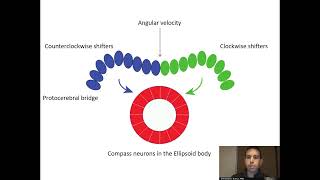
Recurrent Neural Networks in Brains and Machines
Explore neural networks as models for brain activity, examining their evolution and potential for bridging multiple cognitive systems. Gain insights into ongoing research and future directions in neuroscience.
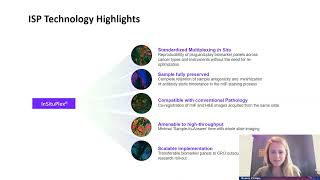
Innovative Biomarker Spatial Analysis for Comprehensive Tissue Immunophenotyping
Explore advanced tissue-based technologies for biomarker identification and disease prognosis using multiplex immunofluorescence assays and complex image analysis techniques.
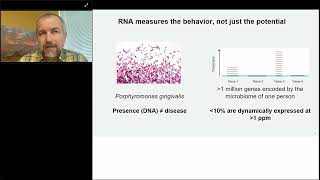
A Systems Medicine Platform Based on RNA Sequencing and Artificial Intelligence
Explore Viome Operating System (ViOS), an open-access platform integrating lab, computational, and logistics components for efficient clinical research and health improvement using big data and AI.
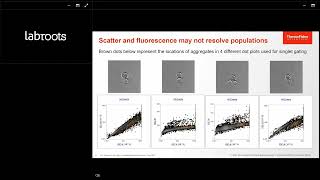
Automated Image Analysis Reduces User-to-User Variability in Flow Cytometry Gating Strategies
Discover how automated image analysis minimizes variability in flow cytometry data analysis, enhancing sample quality assessment and revealing morphological features beyond traditional parameters.
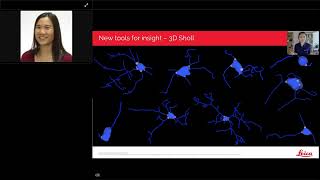
Unlocking Insights in Complex and Dense Neuron Images Guided by AI
Explore AI-guided techniques for analyzing complex 3D neuron morphology, overcoming challenges in multi-modal imaging and diverse neuronal densities.
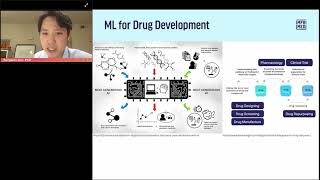
Moving Beyond Mutation - AI-driven Functional Precision Medicine for Cancer
Explore AI-driven functional precision medicine for cancer, combining live-cell assays, immune profiling, and machine learning to predict drug efficacy and improve treatment outcomes.
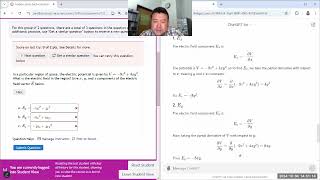
Physics 4B - Problem Solving with ChatGPT 4.0 - Set 6
Enhance problem-solving skills in physics using ChatGPT 4o, focusing on Set 6 exercises from PHYS 4B curriculum.
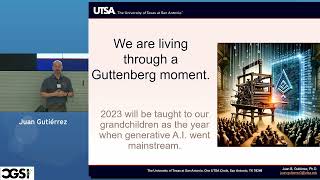
The Flaws of Others: Large Language Models in Biomedical Research
Explore the potential and limitations of large language models in biomedical research, focusing on their application and impact in analyzing complex malaria infection data.
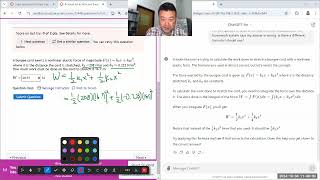
Physics 4A - Problem Solving with ChatGPT - Set 6
Enhance problem-solving skills in physics using ChatGPT 4o, focusing on Set 6 exercises from PHYS 4A curriculum.
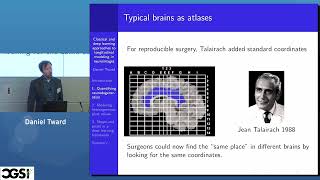
Classical and Deep Learning Approaches to Longitudinal Modeling in Neuroimages - CGSI 2024
Explore classical and deep learning methods for longitudinal modeling in neuroimaging, focusing on disease progression analysis and innovative techniques for tracking brain changes over time.
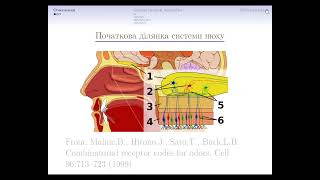
Стохастичний механізм підвищення селективності проекційних нейронів нюхової цибулини
Дослідіть стохастичні механізми та їх роль у підвищенні селективності нейронів нюхової цибулини, розкриваючи фундаментальні аспекти нейробіології.