Neural Mechanisms of Vision
Explore the intricate workings of visual perception, delving into neural processes and computational models that shape our understanding of how the brain interprets visual information.
Computation in Networks of Neurons in the Brain I
Explore neural network computation in the brain, focusing on advanced concepts and recent research findings in computational neuroscience.
Alloys - Artificial Intelligence and Scientific Computing for Fluid Mechanics
Explore the fusion of AI and scientific computing for predicting and controlling complex fluid systems, with insights on novel algorithms and the importance of interdisciplinary expertise.
Machine Learning for Determining Protein Structure and Dynamics from Cryo-EM Images
Explore machine learning techniques for analyzing cryo-EM images to determine protein structure and dynamics, focusing on the cryoDRGN algorithm and its applications in structural biology.
Application of Machine Learning to Electron Microscopy Data - IPAM at UCLA
Explore machine learning applications in electron microscopy, focusing on data modeling and neural networks for distortion compensation in experimental datasets.
Capturing the First Portrait of Our Milky Way's Black Hole & Beyond
Explore the groundbreaking methods used to capture the first image of Sagittarius A*, our galaxy's central black hole, and future directions in black hole imaging technology.
Bits and Atoms - Exploring the Intersection of Machine Learning and Microscopy
Explore the intersection of machine learning and microscopy, focusing on AI models for active learning in materials discovery, automated experiments, and physics discovery through advanced microscopy techniques.
Symbolic Regression for Discovery of a DFT Functional - IPAM at UCLA
Explore symbolic regression for DFT functional discovery, combining AutoML ideas to improve existing models in computational chemistry and materials science.
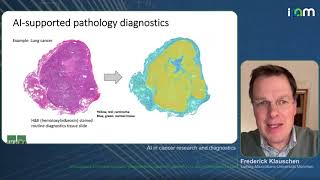
AI in Cancer Research and Diagnostics - IPAM at UCLA
Explore AI's impact on cancer diagnostics, focusing on pathology applications, explainable methods, and multi-modal data integration for research and clinical use.
Pose Estimation, Temperature, Noise, and Biological Temperature Sensors via Cryo-EM
Explore pose estimation, temperature, noise, and heterogeneity in cryo-EM for understanding biological temperature sensors, with focus on TRP channels and advanced analytical techniques.
Detection of Objects in Cryo-Electron Micrographs Using Geometric Deep Learning
Explore geometric deep learning techniques for object detection and segmentation in cryo-electron micrographs, focusing on unsupervised methods and graph-based transformers for complex structures.
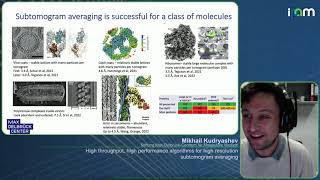
High Throughput, High Performance Algorithms for High Resolution Subtomogram Averaging
Explore high-performance algorithms for subtomogram averaging in cryo-electron microscopy, focusing on tools like TomoBEAR and SUSAN to enhance throughput and resolution in structural biology.
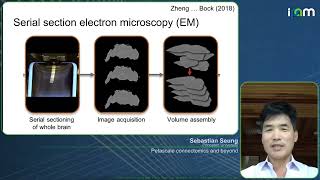
Petascale Connectomics and Beyond - IPAM at UCLA
Explore petascale connectomics, its advancements in brain mapping, and future exascale projects. Learn about automated image analysis techniques and their impact on understanding neural structures and brain function.
Simulation-Based Inference for Gravitational Wave Astronomy - IPAM at UCLA
Explore simulation-based inference techniques for gravitational wave astronomy, covering frequentist vs. Bayesian approaches, summary statistics, and the role of neural networks and inductive bias.
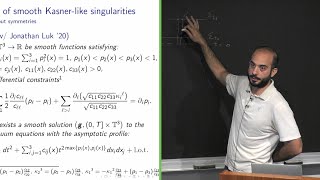
The Mysterious Nature of the Big Bang Singularity - IPAM at UCLA
Explore the enigmatic Big Bang singularity, Einstein's equations, and Kasner solutions in this advanced physics lecture on gravitational theory and cosmological origins.
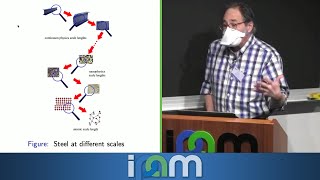
Mesoscale Models and Many-Body Systems - IPAM at UCLA
Explores mesoscale structures in many-body systems, explaining the autonomy of continuum equations and their connection to lower-scale physics, with implications for deep neural networks.
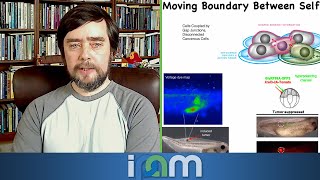
Plasticity Without Genetic Change - Bioelectric Embryos & Synthetic Proto-Organisms
Explore bioelectric embryos and synthetic organisms, delving into morphogenetic control, AI-driven tissue reconfiguration, and collective behaviors challenging traditional biological distinctions.
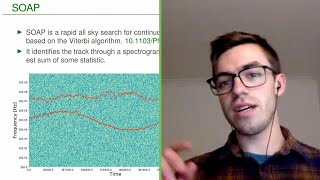
Rapidly Searching for Continuous Gravitational Waves
Explore challenges and solutions in detecting continuous gravitational waves from neutron stars, focusing on SOAP's rapid search method using neural networks for signal identification and parameter estimation.
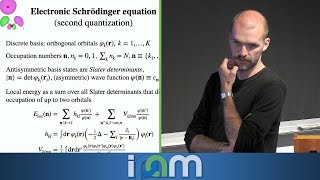
Neural-Network Wave Functions for Quantum Chemistry - IPAM at UCLA
Explore neural-network wave functions in quantum chemistry, covering variational quantum Monte Carlo, antisymmetric ansatzes, and applications to electronic and exciton-phonon Hamiltonians for improved accuracy in molecular modeling.
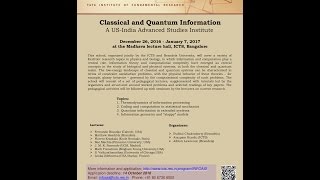
Why Do Simple Models Work? Partial Answers from Information Geometry - Lecture 1
Explores information geometry to understand why simple models effectively describe complex systems, focusing on statistical mechanics, renormalization, and model reduction in physics and biology.
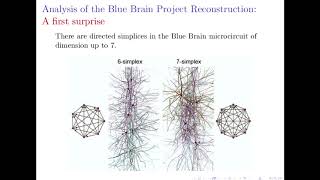
Ran Levi - Bedlewo: Topological Analysis of Neural Networks
Explore topological analysis of neural networks using algebraic topology techniques on biologically accurate digital reconstructions, revealing structural and functional insights into brain connectivity.