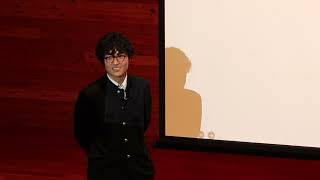
君に挑戦は勧めない - 高校生起業家の視点から
高校生起業家が語る、挑戦を勧めない理由と社会実装への取り組み。AIやアルゴリズムの実用化を目指す若き経営者の視点から、現代の課題に迫る。

自分らしく生きること - 個性と自己実現の探求
自己の捉え方を探求し、世界を飛び回る若き科学者の経験から学ぶ。多様な活動を通じて得た洞察を共有し、自分らしい生き方を見出すヒントを提供。
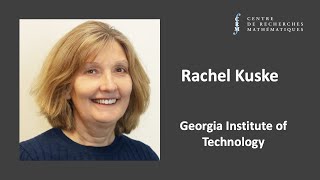
Is the World Smooth or Non-smooth? Mathematical Models in Dynamic Systems
Explore mathematical modeling approaches examining smooth vs non-smooth dynamics across climate, energy transfer, and neural systems, revealing insights into complex real-world phenomena.
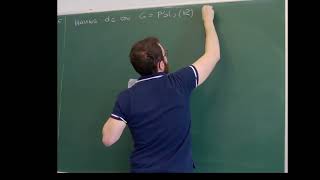
On the Dani Correspondence and Its Applications - Lecture 2
Delve into Diophantine approximation through ergodic theory, exploring the Dani correspondence and its dynamic interpretation of rational number density in the real line.
In-Context Learning Over Graphs for Large Language Models - PRODIGY Method
Explore PRODIGY, Stanford's innovative approach to graph machine learning that enables in-context learning for classification tasks on unseen graphs, advancing LLM reasoning capabilities.
The Minimal Model Program for Varieties of Log General Type - Lecture 3
Delve into advanced birational geometry and minimal model program concepts with Distinguished Professor Christopher Hacon, exploring complex projective varieties and canonical ring theory.
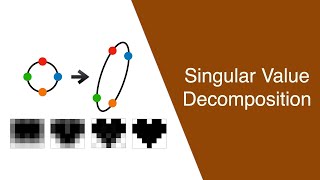
Singular Value Decomposition and Image Compression
Learn singular value decomposition (SVD) and its application in image compression. Explore matrix transformations, dimensionality reduction, and practical implementation techniques.
Deep Learning for Symbolic Mathematics
Explore neural networks for symbolic mathematics, covering expression generation, integration, ODEs, and dataset creation. Learn about sequence decoding and generalization techniques.
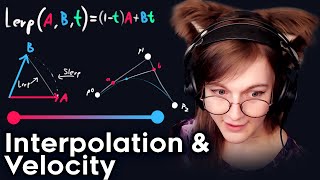
Interpolation and Velocity - Math for Game Devs Part 4
Explore interpolation, velocity, and rotations in game development math. Learn about lerp, bezier curves, and solve practical assignments on polygons, FOV, coils, and inventory systems.
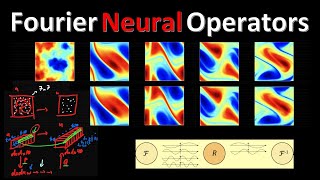
Fourier Neural Operator for Parametric Partial Differential Equations - Paper Explained
Explore a novel neural network architecture for solving partial differential equations efficiently. Learn about Fourier Neural Operators and their potential to revolutionize scientific computing and engineering simulations.
Why Does Maths Give Humans the Edge Over Machines? - With Junaid Mubeen
Exploring human mathematical intelligence and its advantages over machines, highlighting reasoning, imagination, and questioning as key principles that give humans an edge in problem-solving.

Thinking Better with Mathematics – With Marcus du Sautoy
Explore how calculus, geometry, and probability can simplify problem-solving in various fields. Learn about neural networks, efficient packing, and innovative shortcuts that have driven human progress throughout history.
Vector and Matrix Operations
Explore essential linear algebra concepts for neural networks: vectors, matrices, and operations like scalar manipulation, dot product, and matrix multiplication.

Statistical Rethinking 2023 - Modeling Events
Explore statistical modeling for events, covering discrimination, mediation, generative models, and generalized linear models. Learn to analyze and compute interventions, with a bonus on survival analysis.
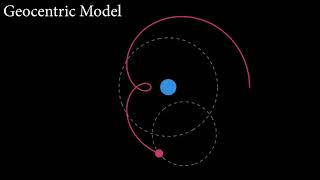
Statistical Rethinking 2023 - Geocentric Models
Explore geocentric models in statistical thinking, covering Gaussian distributions, workflows, generative models, and analysis techniques for improved statistical reasoning.

Statistical Rethinking 2023 - The Garden of Forking Data
Explore Bayesian statistics through the "Garden of Forking Data" metaphor. Learn about generative models, probability, testing, and posterior distributions for improved statistical reasoning and prediction.

Statistical Rethinking 2022 - Modeling Events
Explore statistical modeling of events, covering generative models, generalized linear models, logistic regression, and binomial regression. Learn to analyze gender applications and calculate marginal causal effects.
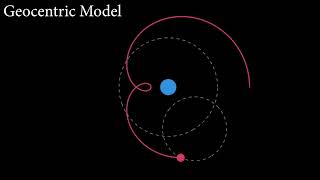
Statistical Rethinking 2022 - Geocentric Models
Explore Bayesian linear regression, covering model language, generative and statistical approaches, validation, and posterior predictions for a comprehensive understanding of statistical modeling.

Perceptual Organization From a Bayesian Point of View
Explore Bayesian approach to perceptual organization, examining how the visual system groups images into distinct units through inverse inference and mixture estimation techniques.
Development of Intelligence - Josh Tenenbaum: Bayesian Inference
Explore Bayesian inference and cognitive neuroscience with Josh Tenenbaum, delving into AI challenges, scene understanding, and advanced mathematical concepts for intelligence development.
Bayesian Inference in Generative Models
Explore approximate Bayesian inference methods, including sampling-based techniques and variational inference, with hands-on exercises in implementing algorithms and using probabilistic programming languages.