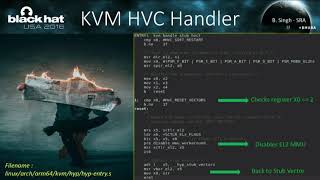
Back to the Future - A Radical Insecure Design of KVM on ARM
Explore ARM architecture vulnerabilities in KVM, focusing on privilege escalation through exception-generating instructions and hypervisor calls. Learn about potential security risks in virtualization.
Sleight of ARM - Demystifying Intel Houdini
Explore Intel's Houdini binary translator for running ARM on x86, its architecture, security implications, and comparison with Apple's Rosetta 2, focusing on Android emulation and Chromebooks.
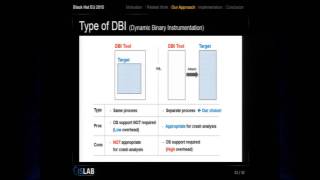
Triaging Crashed with Backward Taint Analysis for ARM Architecture
Explore tools for analyzing crashes on Linux and ARM, using dynamic binary instrumentation and backward taint analysis to determine exploitability. Learn about ARM-Tracer and ARM-Analyzer for efficient crash analysis.
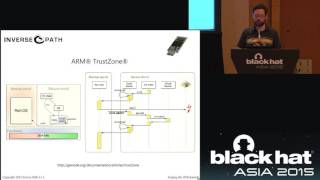
Forging the USB Armory
Explore the development of an open-source USB-sized computer for security applications, featuring advanced SoC technology, secure boot, and ARM TrustZone implementation.
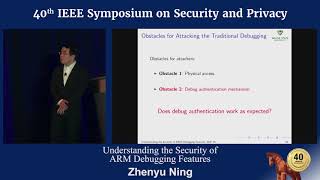
Understanding the Security of ARM Debugging Features
Comprehensive analysis of ARM debugging features' security implications across various platforms, exposing vulnerabilities and demonstrating the Nailgun attack to highlight potential risks.
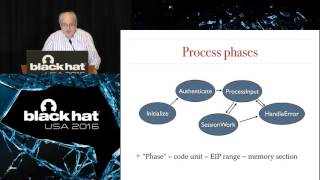
Intra-Process Memory Protection for Applications on ARM and X86 - Leveraging the ELF ABI
Explore intra-process memory protection techniques for ARM and X86 architectures using ELF ABI. Learn about ELFbac system implementation, policy enforcement, and practical applications in software security.
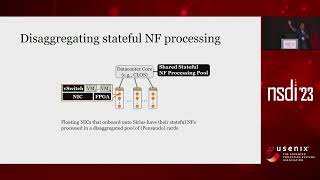
Disaggregating Stateful Network Functions
Innovative approach to network function processing in public clouds, offering improved reliability and performance at lower costs through disaggregation and shared resource pools.
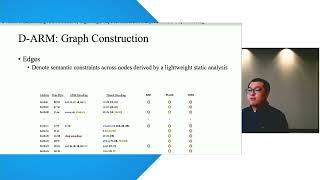
D-ARM - Disassembling ARM Binaries by Lightweight Superset Instruction Interpretation and Graph Modeling
Explore innovative techniques for disassembling ARM binaries using superset instruction interpretation and graph modeling, enhancing reverse engineering capabilities.
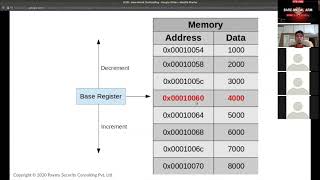
Writing Bare-Metal ARM Shellcode
Learn to write ARM shellcode for IoT devices, covering ARM architecture, system calls, and techniques for creating compact, reliable payloads. Includes hands-on labs and a demo of exploiting an ARM-based IoT device.
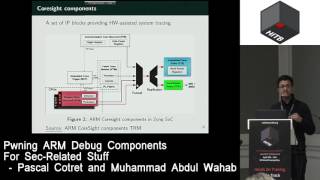
Pwning ARM Debug Components
Exploring ARM debug components for security primitives and information flow tracking. Demonstrates a portable approach to enhance runtime security monitoring in ARM-based systems.
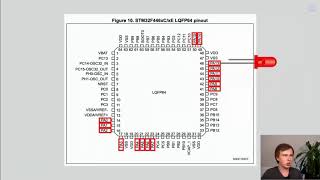
Firmware Hacking With Ghidra
Hands-on firmware hacking workshop using Ghidra for reverse engineering ARM Cortex-M architecture, followed by live demonstration of hardware glitching attacks on microcontrollers.
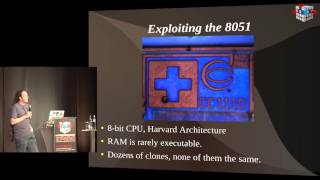
Nifty Tricks and Sage Advice for Shellcode on Embedded Systems
Clever tricks for writing exploits on embedded systems, including tiny shellcode for ARM, memory corruption on 8-bit micros, and developing without debuggers or firmware images.
ARM IoT Firmware Extraction and Emulation Using ARMX
Hands-on workshop on extracting and emulating ARM IoT firmware using ARMX. Covers firmware extraction, unpacking, file system analysis, and device emulation. Practical experience with real IoT devices and tools.
Return-Oriented Flush-Reload Side Channels on ARM and Their Implications for Android Devices
Explore ARM-based side-channel attacks using Return-Oriented Flush-Reload techniques and their potential impact on Android device security.
Reverse Engineering the M1
Explore Apple's M1 chip architecture, including ARM variant quirks, memory access issues, and the AMX vector instruction set. Gain insights into reverse engineering proprietary hardware.
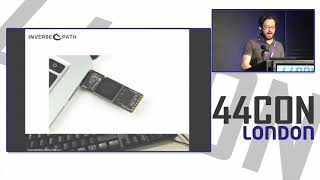
Forging the USB Armory
Explore the development of the USB armory, an open-source hardware device for security applications. Learn about its architecture, security features, and potential uses as a trusted USB device.
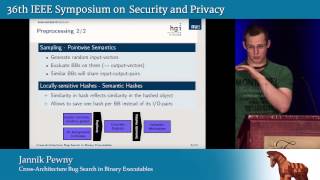
Cross-Architecture Bug Search in Binary Executables
Innovative method for identifying vulnerabilities across different CPU architectures using bug signatures and semantic analysis of binary code, enabling effective security assessments of closed-source software.
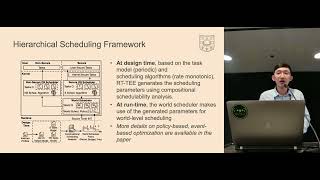
RT-TEE - Real-time System Availability for Cyber-physical Systems using ARM TrustZone
Explore real-time system availability for cyber-physical systems using ARM TrustZone technology, focusing on enhancing security and performance in critical applications.
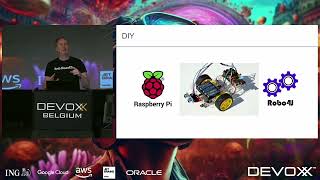
Java on Arm - New Horizons
Explore Java's performance on Arm architecture, uncovering optimization techniques and new possibilities for efficient application development.
Linux in the Cloud, on Prem, or on a Mainframe?
Explore Linux on mainframes: history, benefits, and future potential. Discover alternative architectures like ARM and POWER, and learn about hardware-driven encryption technologies for enhanced data protection.
Picolibc - A C Library for Small 32-Bit Systems
Exploring picolibc: a C library for 32-bit embedded systems, blending newlib and avr-libc functionalities to reduce development costs and enhance capabilities for ARM and RISC-V projects.