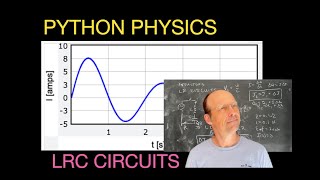
Python Physics: Modeling LR and LRC Circuits
Model LR and LRC circuits using Python, exploring electrical concepts and enhancing programming skills for physics simulations.
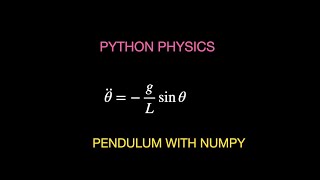
Python Physics: Modeling a Pendulum with Jupyter Notebooks
Model a pendulum's motion using Python and Jupyter Notebooks. Learn to apply Newton's second law in polar coordinates and visualize the results through practical coding exercises.
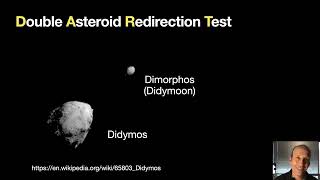
Modeling the DART-Dimorphos Collision in Python
Model the DART-Dimorphos collision using Python, exploring binary orbits, elastic and inelastic collisions, and conservation of momentum. Experiment with different parameters to understand asteroid redirection techniques.
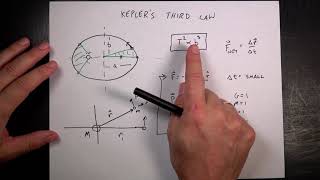
Demonstration of Kepler's Third Law Using Python
Explore Kepler's Third Law through Python modeling, calculating orbital periods and semi-major axes for various orbits to verify the law's validity.
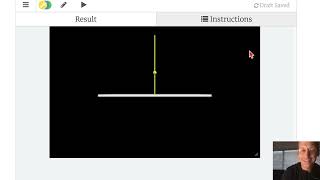
Modeling a Bouncing Ball with Python
Model a bouncing ball using Python, exploring physics concepts and coding techniques to simulate realistic motion and collisions.
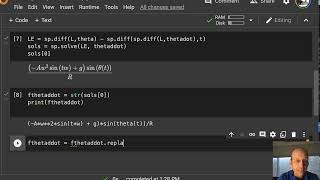
Modeling Kapitza's Inverted Pendulum with Python
Explore Kapitza's inverted pendulum through Python modeling, using Lagrangian mechanics to simulate this fascinating physics phenomenon.
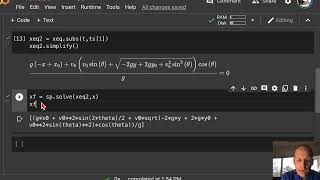
Solving Projectile Motion Problems with Python and SymPy
Explore projectile motion problem-solving using Python and SYMPY, focusing on range calculation and launch velocity determination.
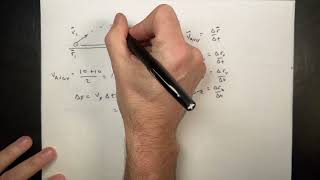
Projectile Motion With Vectors and Python
Explore projectile motion using vectors and Python, solving for flight time, distance, and maximum height of a launched ball.
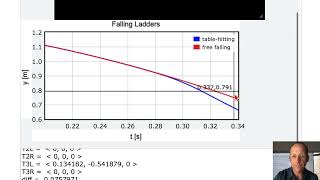
Modeling the Falling Ladder Problem with Python
Explore Python modeling of falling ladder dynamics, comparing scenarios and analyzing accelerations for enhanced physics understanding.
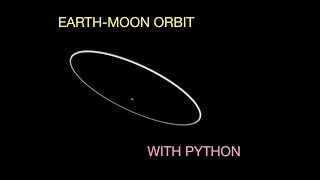
Modeling the Earth-Moon System with Python
Model the Earth-Moon system using Python to simulate orbital dynamics and explore celestial mechanics.
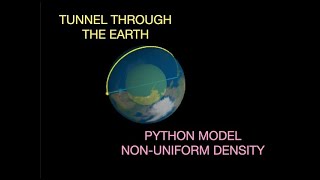
Falling Through the Center of a Non-Uniform Density Earth - Python Simulation
Explore Earth's interior through a 3D Python model, comparing orbital and tunnel travel times with varying density distributions.
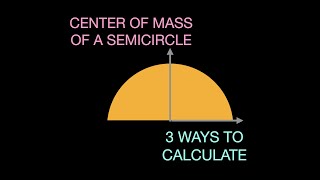
3 Ways to Find the Centroid of a Semicircle
Explore three methods to locate a semicircle's centroid: rectangle, polar coordinates, and Monte Carlo simulation using Python.
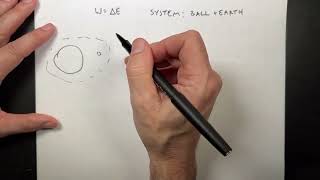
Escape Velocity Calculation and Simulation with VPython
Model Earth's gravitational influence on objects and derive escape velocity using VPython, with accompanying code and derivation resources.
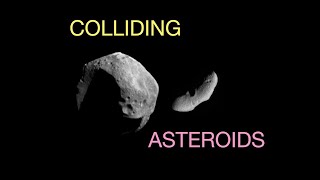
Calculating Asteroid Collision Velocities
Calculate asteroid collision velocities using gravitational potential energy and Python simulations. Explore physics concepts through practical space scenarios.
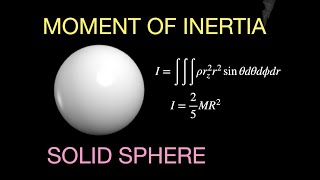
Moment of Inertia for a Sphere About a Fixed Axis
Derive the moment of inertia for a sphere and explore a Monte Carlo simulation using Python, enhancing understanding of rotational dynamics.
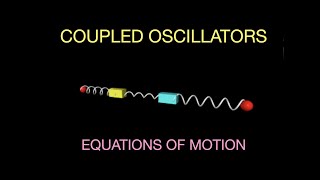
Equations of Motion for Coupled Oscillators
Explore equations of motion for coupled oscillators, focusing on systems with equal masses and springs. Learn to derive and analyze these fundamental physics concepts.
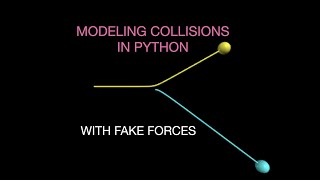
Modeling 2D Collisions in Python with Fake Forces
Simulate 2D collisions using Python and fake forces. Learn a simplified approach to modeling object interactions in programming.
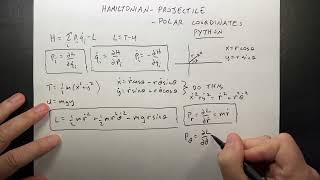
Hamiltonian Mechanics for Projectile Motion in Polar Coordinates
Explore Hamiltonian mechanics for projectile motion using polar coordinates, with Python code implementation for practical understanding.
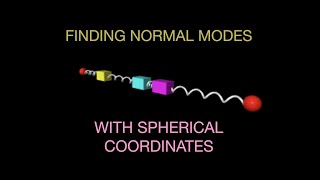
Finding Normal Modes of Oscillation with a Varying Vector
Explore oscillation normal modes using varying vectors, with code examples and animations to visualize complex physical concepts.
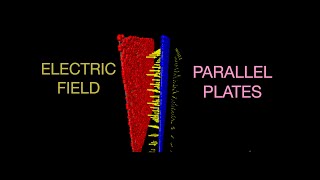
Modeling the Electric Field Due to Parallel Plates Using Python
Model electric fields between parallel plates using Python and 20,000 points, avoiding calculus for a clear visualization.
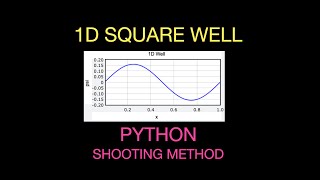
Quantum Mechanics: Using the Shooting Method and Python to Solve the 1D Square Well
Solve the 1D infinite square well numerically using Python and the shooting method, exploring an alternative approach to quantum mechanics problem-solving.