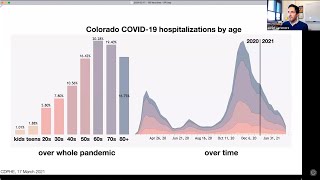
Vaccination Strategies - Prioritization, Dose Sparing, and Decisions Under Uncertainty and Inequity
Explore vaccination strategies for COVID-19, including prioritization and dose-sparing, considering uncertainties in variants, human behavior, and global inequities through mathematical models.
Loss of Self-Organization in Earth's Climate
Análisis de cambios en la autorregulación del clima terrestre mediante herramientas de sistemas complejos, comparando datos de temperatura global con el modelo Daisyworld.
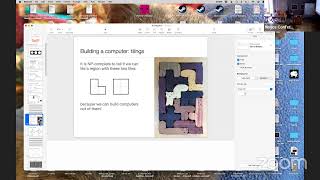
The Dynamics of Computation and the Computational Power of Dynamics
Explore the intersection of computation and dynamics, examining computational models, physical systems, and mathematical concepts to understand the nature of computation and its manifestation in various forms.
Community Detection and Data Topology in Network Science
Exploring network science and mathematical approaches to uncover hidden structures in complex data. Discusses community detection, data topology, and applications in social networks and opinion dynamics.
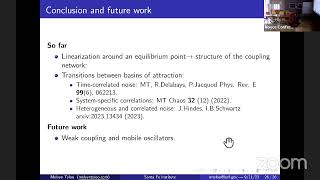
Fluctuations in Complex Network-coupled Oscillators
Explore the dynamics of network-coupled oscillators, examining fluctuations and their impact on complex systems behavior and stability.
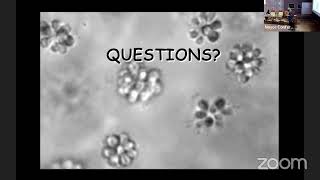
Evolution of Multicellularity in the Ancestors of Animals - Hydrodynamic Performance and Selective Factors
Explore how choanoflagellates provide insights into the evolution of multicellularity in animal ancestors, examining hydrodynamic performance and selective factors affecting colony formation and survival.
Free of Scale - Structural Balance
Explore the concept of structural balance in complex systems and its implications for understanding social networks, organizational dynamics, and decision-making processes.
The Thermodynamics of Communication - Exploring Energy and Information Limits
Exploring the fundamental relationship between energy, information, and matter in communication processes. Discusses nonlinear dynamics of communication channels and their implications for collective intelligence and limits to human knowledge.
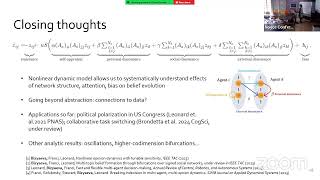
Nonlinear Dynamics of Beliefs over Social Networks
Explore how social networks, internal biases, and belief systems shape group dynamics and decision-making in complex social environments.
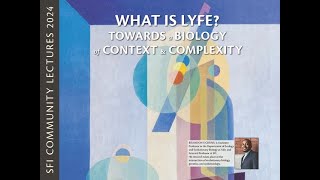
What is Lyfe? Towards a Biology of Context and Complexity
Exploring a multidimensional view of biology beyond genomics, emphasizing history, context, environment, and narrative to reframe our understanding of life and its complexities.

Computational Fluid Dynamics for Incompressible Flows
Explore incompressible flow dynamics through finite difference and volume methods. Master equations, boundary conditions, and numerical techniques for solving fluid dynamics problems.

Astrophysics & Cosmology
Explore the wonders of the universe through comprehensive lectures on celestial bodies, cosmic phenomena, and the origins and evolution of our cosmos.
Constrained and Unconstrained Optimization
Comprehensive exploration of optimization techniques, covering linear and nonlinear programming, integer programming, transportation problems, and multi-objective decision making.
The Law of the Few
Explore how a small group of influencers shape information flow in social networks, using mathematical models and experiments to explain this phenomenon and its economic implications.
Modelling Genes
Explore genetic variation patterns through mathematical models, examining inheritance, natural selection, and population dynamics to interpret DNA data and understand evolutionary mechanisms.
Why There Are No Three-Headed Monsters
Explore developmental constraints, brain tumors, and marriage dynamics through mathematical biology, offering insights into morphogenesis, medical interventions, and relationship predictions.
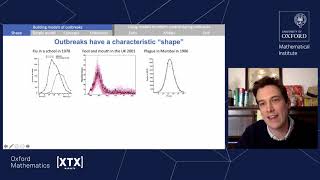
How Do Mathematicians Model Infectious Disease Outbreaks?
Explore mathematical modeling of infectious diseases, including outbreak shapes, compartmental modeling, and using models to inform control strategies and vaccination efforts.

Chasing the Dragon - Tidal Bores in the UK and Elsewhere
Explore tidal bores through physics, mathematics, and cultural perspectives. Discover analogies with tsunamis, rainbows, and quantum concepts in this insightful lecture by Michael Berry.
Scaling the Maths of Life
Explore mathematical links between biological scales, from developmental biology to ecology and neuroscience, through real-life examples, games, and elegant mathematical concepts.
Mathematical Modelling in Biology - Infectious Disease Modelling - Lecture 3
Explore infectious disease spread using the Kermack McKendrick model, deriving the 'R' number and its significance in epidemiology. Gain insights into mathematical biology applications.
Mathematical Modelling in Biology - Neuronal Signalling
Explore Nobel Prize-winning neuronal signalling models, including Hodgkin-Huxley and Fitzhugh-Nagumo, to understand how neurons generate and propagate electrical signals vital for bodily communication.