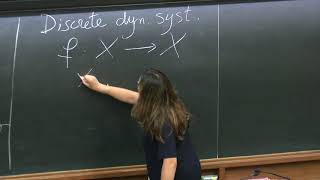
Rotations of the Circle and Renormalization
Explore circle rotations, renormalization, and dynamical systems with Corinna Ulcigrai. Learn key concepts, proofs, and applications in this advanced mathematics lecture.
Taylor McAdam- Almost-Prime Times in Horospherical Flows
Explore effective results in horospherical flows, their applications to number theory, and connections to Sarnak's Mobius disjointness conjecture in this advanced mathematics lecture.
Michael Baake - A Cocycle Approach to the Fourier Transform of Rauzy Fractals
Explore Fourier transforms of Rauzy fractals and their role in analyzing spectra of Pisot inflation tilings, with applications to diffraction theory and dynamical systems.
The Dynamical Systems Approach to Spatially Homogenous Einstein-Vlasov Cosmology
Explore spatially homogenous Einstein-Vlasov cosmology using dynamical systems analysis. Investigate asymptotic solutions near singularities and expanding futures, focusing on Kantowski-Sachs models with Vlasov matter.
Uncertainty Quantification for Kinetic Equations I
Overview of uncertainty quantification for kinetic equations, covering Monte Carlo methods, multi-fidelity techniques, and stochastic Galerkin particle methods. Explores computational challenges and recent advancements in the field.
Antonio Esposito: Nonlinear Degenerate Cross Diffusion Systems with Nonlocal Interaction
Explores nonlinear degenerate cross-diffusion systems with nonlocal interaction, proving global existence of weak solutions using a semi-implicit JKO scheme for applications in social sciences, finance, and biology.
Helmut Abels - Diffuse and Sharp Interface Models for Two Phase Flows
Overview of analytic results for diffuse and sharp interface models in two-phase flow, discussing asymptotic limits as interfacial thickness approaches zero and exploring rigorous analytic results for sharp interface limits.
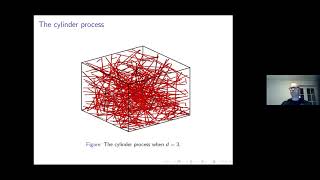
Erik Broman- Higher Dimensional Stick Percolation
Explore higher dimensional stick percolation, its applications in physics and chemistry, and the scaling of critical parameters as stick length increases in arbitrary dimensions.
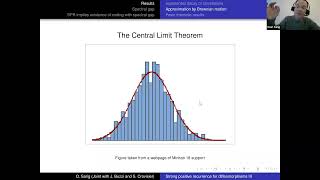
Dynamics of Smooth Surface Diffeomorphisms - Spectral Gap and Stochastic Properties
Explore surface diffeomorphisms, spectral gaps, and stochastic properties in smooth dynamics. Gain insights into symbolic models, entropy continuity, and hyperbolic systems.
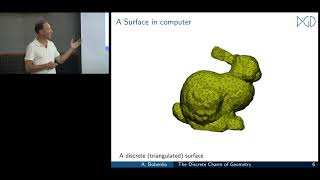
The Discrete Charm of Geometry by Alexander Bobenko
Explore the fascinating world of discrete geometry and its applications in architecture, computer graphics, and physics. Discover structure-preserving discretizations through simple examples and stunning visuals.
A Mathematical Adventure in Immunology by Carmen Molina-Paris
Explore the immune system's complexity through mathematical modeling, examining cell interactions, disease prevention, and quantifying pathogen infectivity.
Chance and Chaos - How to Predict the Unpredictable by Jens Marklof
Explore chaos theory, unpredictability, and mathematical tools for analyzing chaotic systems. Discover applications in weather forecasting, statistical physics, and everyday phenomena like coin tosses and bread kneading.
Phylogenetic Algebraic Geometry
Explore phylogenetic algebraic geometry, its applications in species history reconstruction, and the use of algebraic and geometric perspectives to solve phylogenetic problems.
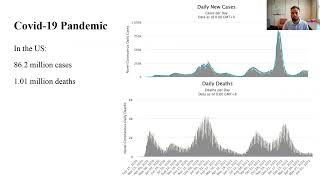
Mathematical Modeling of Diseases Spread - The Dextrous Use of Simple Machine-Learning Tools
Explore machine learning techniques for modeling disease spread, focusing on data preparation, model training, and interpreting results to inform public health policies.
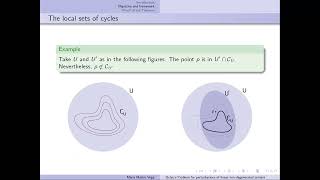
About Dulac's Problem in R3 for Perturbations of Linear Non-Degenerated Centers
Explora el problema de Dulac en R^3 para perturbaciones de centros lineales no degenerados, analizando mapas de retorno, conjuntos de ciclos y técnicas de explosión para sistemas dinámicos.
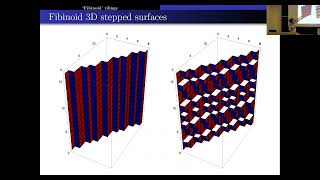
A Class of Two-Dimensional Model Sets from One-Dimensional Substitutions
Explore two-dimensional model sets derived from one-dimensional substitutions, focusing on Fibonacci and Fibinoid patterns, cut-and-project schemes, and Rauzy fractals in aperiodic tilings.
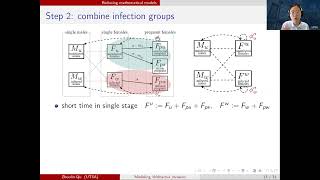
Modeling the Transmission of Wolbachia in Mosquitoes for Controlling Mosquito-Borne Diseases
Explore mathematical modeling of Wolbachia transmission in mosquitoes for disease control. Learn about reproductive numbers, critical thresholds, and spatial models to predict infection spread and intervention success.
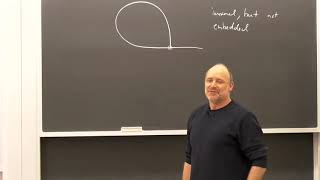
Hilbert's 16th Problem and O-Minimality - Lecture 1
Explore the topology of cycles, limit cycles, and related mathematical concepts in this advanced graduate-level lecture on Hilbert's 16th problem and o-minimality.
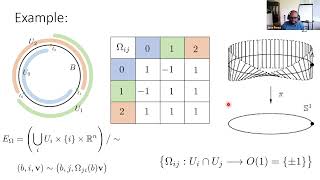
Vector Bundles for Data Alignment and Dimensionality Reduction
Explore vector bundles in data science, focusing on synchronization problems and topology-preserving dimensionality reduction. Applications in computational chemistry and dynamical systems are presented.
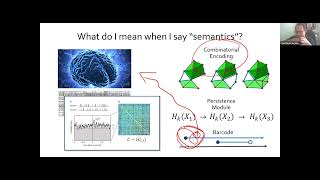
An Approach to Assigning Semantics to Persistent Homology Classes
Explore a novel approach to interpreting persistent homology classes in applied settings, overcoming traditional limitations by leveraging comparative measurements against known models.
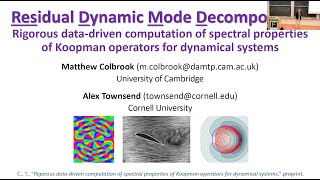
Residual Dynamic Mode Decomposition- Rigorous Data-Driven Computation of Spectral Properties of Koopman Operators for Dynamical Systems
Explore rigorous data-driven methods for computing spectral properties of Koopman operators in dynamical systems, focusing on Residual Dynamic Mode Decomposition and its applications.