Stochastic Pattern Formation in Space and Time: From the Brain to the Biosphere - Class 4
Explore stochastic pattern formation principles across biological systems, from neural networks to ecosystem dynamics, with insights into spatial-temporal mathematical modeling.
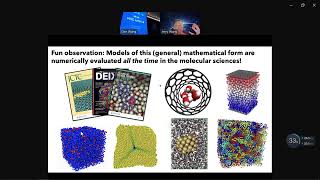
Pico-Scale Science for Pedestrian-Scale Solutions - A Computational Toolbox for Molecular Simulation and Pedestrian Dynamics
Discover how molecular simulation techniques can be applied to analyze and improve pedestrian movement dynamics in crowded spaces through innovative computational methods.
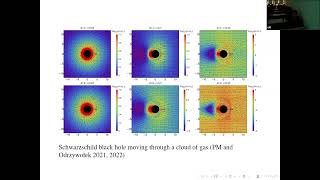
A Monte Carlo Method for Stationary Solutions of General-Relativistic Vlasov Systems
Delve into Monte Carlo methods for solving general-relativistic Vlasov equations, exploring particle trajectory analysis and applications in black hole accretion models.
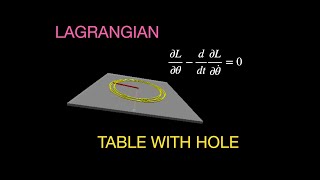
Lagrangian Mechanics - Two Masses Connected by String Through Table
Explore the dynamics of connected masses through a table hole using Lagrangian mechanics, featuring practical Python code implementation and motion equations.

Stochastic Pattern Formation in Space and Time: From the Brain to the Biosphere - Class 3
Explore stochastic pattern formation principles across biological systems, from neural networks to ecosystem dynamics, with insights into spatial-temporal mathematical modeling.

The Paradox of Intransitive Preferences in Rational Choice Theory
Explore the fascinating concept of intransitive preferences in rational choice theory, examining the money pump paradox and its implications for mathematical decision-making models.
Total Positivity, Directed Networks and Integrable Cluster Dynamics - Lecture 3
Delve into advanced mathematical concepts of total positivity, directed networks, and integrable cluster dynamics through rigorous theoretical exploration and problem-solving approaches.
Singularity Patterns of the Discrete and Modified-discrete KdV
Explore singularity patterns in discrete and modified-discrete KdV equations through advanced mathematical analysis of integrable systems and their structural properties.
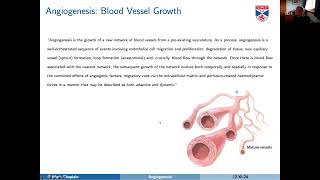
Angiogenesis - Mathematical Models in Cancer Development
Explore the mathematical modeling of blood vessel formation in cancer through advanced mathematical oncology concepts and their clinical applications.
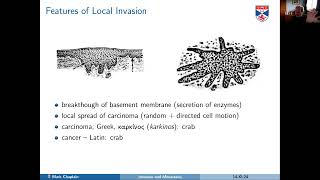
Mathematical Oncology: Invasion and Metastatic Spread
Explore the mathematical modeling of cancer invasion and metastasis through advanced mathematical oncology concepts, focusing on tumor spread patterns and biological mechanisms.
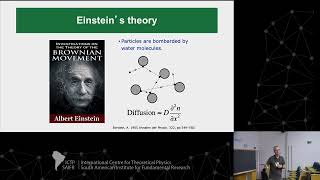
The Physics of Spatial Ecology - Class 2
Delve into spatial ecology principles, exploring pattern formation in biological systems and the physical mechanisms driving ecosystem organization and dynamics in marine environments.
Stochastic Pattern Formation in Space and Time: From the Brain to the Biosphere - Class 2
Explore stochastic pattern formation principles across biological systems, from neural networks to ecosystem dynamics, with insights into spatial-temporal mathematical modeling.
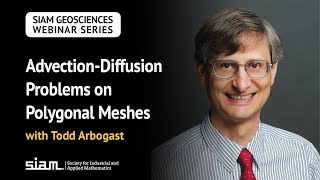
Advection-Diffusion Problems on Polygonal Meshes
Explore advanced mathematical techniques for solving advection-diffusion PDEs on polygonal meshes, covering high-order finite elements, WENO methods, and practical applications in geosciences.
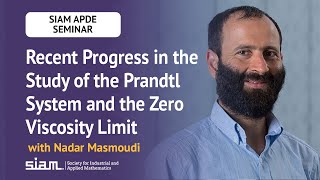
The Study of the Prandtl System and Zero Viscosity Limit in Navier-Stokes Equations
Delve into advanced mathematical analysis of the Prandtl system, boundary layer evolution, and zero viscosity limits in Navier-Stokes equations with expert insights from NYU researcher Nader Masmoudi.
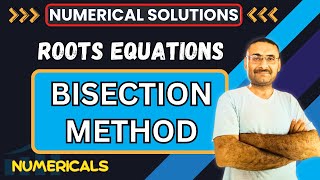
Bisection Method for Finding Roots of Algebraic and Transcendental Equations - Numerical Solutions
Master the bisection method for finding roots of algebraic and transcendental equations through practical numerical solutions and step-by-step examples.
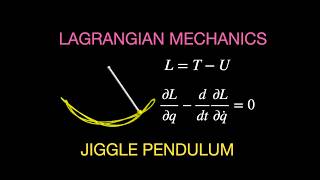
Lagrangian Mechanics - Modeling a Pendulum on an Oscillating Mount
Explore the fascinating dynamics of a pendulum with an oscillating mount through Lagrangian mechanics, including Python-based modeling and motion analysis.
Recurrence Plots and Cross Recurrence Plots for Data Science Visualization and Analysis
Explore advanced visualization techniques using recurrence plots to uncover hidden patterns and trends in complex time series data through interactive analysis methods.

Exponential Curve Fitting Using Least Square Method in Applied Statistics
Master exponential curve fitting through practical examples and learn to apply the least square method for statistical analysis and problem-solving in mathematics.

The Value and Pitfalls of Proof
Explore the critical balance between computational methods and mathematical proofs through real-world examples where simulations fail and theoretical proofs triumph in solving complex problems.
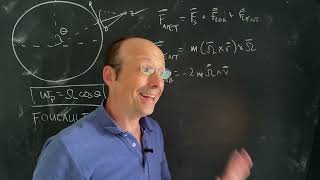
Modeling the Foucault Pendulum with Python - Classical Mechanics Series
Dive into numerical modeling of the Foucault pendulum using Python to understand Earth's rotation through practical simulation and code implementation.
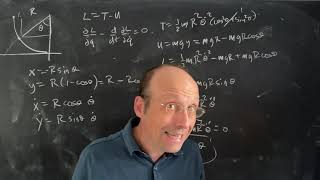
Lagrangian Mechanics - Motion Along Straight, Circular and Parabolic Paths
Explore Lagrangian mechanics through practical examples, modeling frictionless bead motion along straight, circular, and parabolic paths using Python simulations.