
Dynamical Systems and Reservoir Computing - Lecture 1
Explore dynamical systems and reservoir computing applications in climate network analysis, focusing on methods for understanding and predicting climate patterns and phenomena.

Dynamical Systems and Reservoir Computing - Lecture 2
Delve into dynamical systems and reservoir computing applications in climate networks, focusing on analysis methods, bifurcation behavior, and network characterizers for climate data organization.

A First-Principles Approach to Understanding Deep Learning
Delve into the fundamental principles of deep learning through statistical physics, exploring connections between neural networks, Gaussian processes, and scaling laws with insights from a DeepMind researcher.
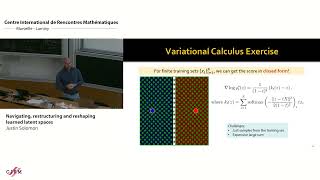
Navigating, Restructuring and Reshaping Learned Latent Spaces
Explore advanced techniques for manipulating learned latent spaces in machine learning, focusing on navigation, restructuring, and reshaping methods for improved model performance and efficiency.
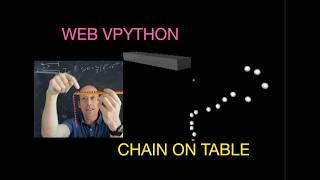
Python Physics: Numerical Modeling of a Chain Sliding Off a Table
Explore the physics of a sliding chain through numerical modeling in Python, demonstrating classical mechanics principles with practical code implementation and visualization.
Emerging Intelligence: From Neurons to Social Dynamics
Explore how internal psychological processes and social interactions shape collective behavior, from neural networks to group dynamics, through mathematical modeling and behavioral theory.
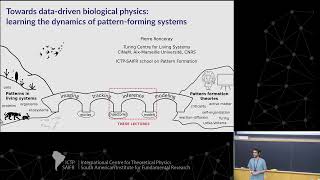
Towards Data-Driven Biological Physics: Learning the Dynamics of Pattern-Forming Systems - Class 1
Explore data-driven approaches in biological physics, focusing on pattern formation dynamics and learning systems through advanced analytical methods and real-world applications.

Towards Data-Driven Biological Physics: Learning the Dynamics of Pattern-Forming Systems - Class 2
Delve into data-driven biological physics principles and pattern formation systems, exploring dynamic learning approaches for understanding complex biological phenomena and their mathematical foundations.

Mathematical Modelling of Microtube Driven Invasion of Glioma
Explore mathematical modeling techniques for understanding glioma invasion through microtubes, featuring advanced research insights and theoretical frameworks for cancer progression analysis.
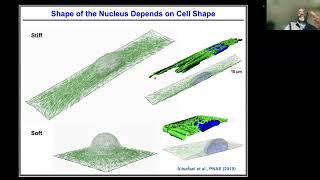
How Does the Tumor Microenvironment Regulate Genome Organization of Cancer Cells?
Explore the complex relationship between tumor microenvironments and cancer cell genome organization through mathematical modeling and cutting-edge research insights.
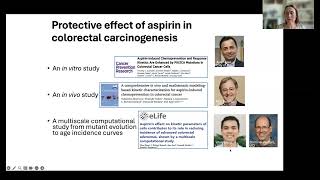
Protective Effect of Aspirin in Colorectal Carcinogenesis
Explore the mathematical modeling of aspirin's protective mechanisms in colorectal cancer development through advanced analytical approaches and research findings.
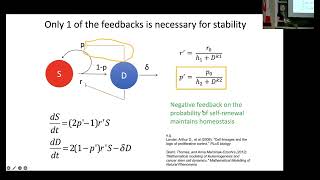
Mathematical Models of the Hematopoietic System at Homeostasis and the Clonal Evolution of Cells
Explore mathematical modeling approaches to understand hematopoietic system homeostasis and cellular clonal evolution patterns in cancer development and progression.
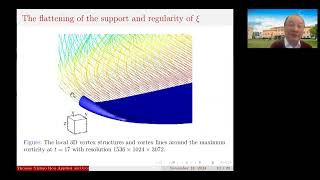
Potentially Singular Behavior of the 3D Incompressible Navier-Stokes Equations
Delve into advanced mathematical analysis exploring potential singularities in 3D incompressible Navier-Stokes equations, with insights from leading researcher Thomas Hou.
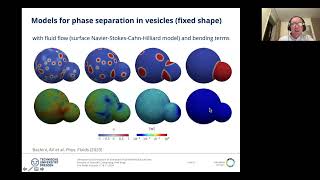
Two-Phase Flows on Deformable Surfaces in Mathematical Oncology
Explore mathematical modeling of two-phase flows on deformable surfaces, focusing on applications in glioma invasion and mathematical oncology principles.
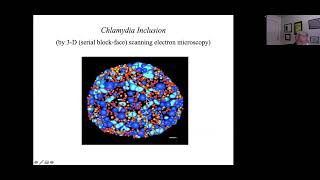
Growth of Reticulate Body (RB) Population in the Conversion Phase of Chlamydia Life Cycle
Explore mathematical modeling of reticulate body population dynamics in Chlamydia's life cycle, focusing on conversion phase analysis and population growth patterns.
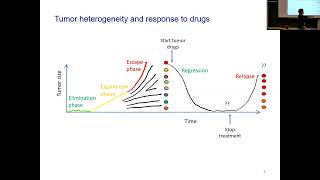
Statistical Dynamics of Tumor Initiation and Progression
Explore the mathematical modeling of tumor development through statistical dynamics, focusing on glioma invasion patterns and microtube-driven cancer progression mechanisms.

What Do the Folds in Your Brain Say About You? - Understanding Brain Convolutions and Their Development
Explore the fascinating mathematics behind brain folding patterns, their development, and what these intricate structures reveal about brain size, evolution, and potential pathologies.

Marked Length Spectral Invariants of Birkhoff Billiard Tables and Compactness of Isospectral Sets
Delve into advanced spectral geometry concepts, exploring marked length spectra of planar billiard tables, Mather's beta function, and isospectral compactness in dynamic systems.
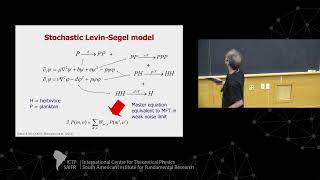
Stochastic Pattern Formation in Space and Time: From the Brain to the Biosphere - Class 5
Explore stochastic pattern formation principles across biological systems, from neural networks to ecosystem dynamics, with insights into spatial-temporal mathematical modeling.
Stochasticity and Collective Escape Responses in Moving Animal Groups
Explore the fascinating dynamics of animal group behavior, focusing on stochastic influences and collective escape responses through theoretical models and empirical data analysis.

Mechanistic Theory of Social Foraging
Explore the quantitative framework of animal foraging behavior, examining decision-making strategies and cognitive dynamics in both individual and social contexts through mechanistic theoretical models.