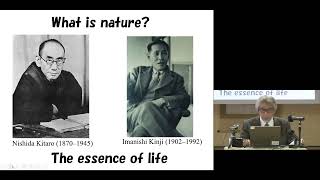
Nishida's Logic and Japanese Primatological Concepts of Nature and Culture
Explore Japanese primatology's unique perspective on nature-culture relationships through Nishida's philosophical framework and its intersection with human-animal communication and cultural evolution.
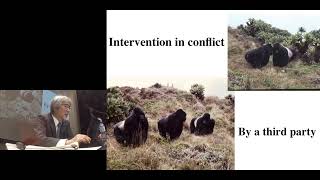
Prediction for the Origin of the Human Family - Japanese Concepts on Living Things
Découvrez une réflexion approfondie sur la relation unique japonaise avec la nature, explorant les concepts d'intégration entre culture et nature, de synchronisation et de coexistence harmonieuse à travers les perspectives traditionnelles japonaises.
Neogene Life and Human Evolution from Early Apes to Australopithecus to Homo
Explore Neogene life and human evolution, from early apes to Australopithecus and Homo. Learn about key evolutionary events, environmental changes, and the development of human traits like bipedalism and tool use.
The Rise and Reign of the Mammals - With Steve Brusatte
Explore 325 million years of mammalian evolution, from surviving dinosaurs to modern diversity. Discover fossil finds, extinction events, and humanity's impact on Earth's mammals.
Anthropometric Measurement of 2D Foot Impressions in Philippine Tagalog Population
Explore anthropometric measurements of 2D foot impressions in the Philippine Tagalog population, gaining insights into forensic applications and population-specific characteristics.

An Overview of Toolmarks on Bones and Cartilages in Crime Scene Investigation
Explore tool mark identification in forensics, focusing on bones and cartilages. Learn about implement classification, tissue analysis, and key aspects of violent death investigations.
Facial Identification Through Somatometry and Somatoscopy - Dr. Ranjeet Singh
Explore forensic photo facial identification techniques, including somatometry and somatoscopy. Learn lab procedures, comparison parameters, and essential requirements for reliable results in various case types.
Isotope Analysis in Teeth - A Novel Forensic Tool for Human Identification
Explore isotope analysis in teeth as a novel forensic tool for identifying unknown remains, overcoming limitations of traditional methods in longstanding cases.

Ancient DNA: A Promising Genetic Tool in Forensic Investigation
Explore ancient DNA as a powerful genetic tool for forensic investigations, focusing on degraded samples and its potential to enhance DNA-based forensics in India.

Understanding Heat-Induced Changes in Bone and Embracing a Bioarchaeology of Cremation
Explore heat-induced changes in bones and new methods in bioarchaeology of cremation. Learn how burned remains provide insights into life and death contexts in forensic science.

Cultural Challenges in Forensic Investigation
Explores cultural challenges in forensic investigations, offering a unique perspective on how cultural factors impact evidence collection, analysis, and interpretation in diverse settings.

Forensic Gala - Day 3: Forensic Science Perspectives and Applications
Explore diverse forensic topics: US practices, crime scene insights, anthropology, child abuse impacts, biological profiling, and UK forensic physician roles.
Advancement in Forensic Pathology and Anthropology - New Technologies and Case Studies
Dr. Evi Untoro explores the distinctions between forensic pathology and anthropology, highlighting new technologies and case studies in deceased identification, advancing the field of forensic science.
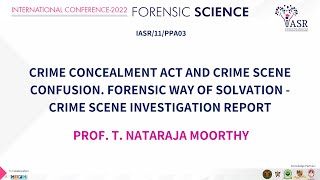
Crime Concealment Act and Crime Scene Confusion
Explores crime concealment techniques, their impact on forensic investigations, and real-world cases from India and Malaysia, offering insights into perpetrators' methods and investigative challenges.
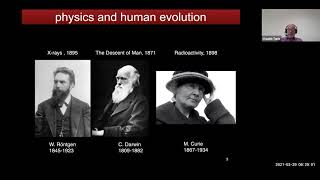
How Physics Can Measure Human Evolution
Explore how physics techniques like radioactive dating, X-ray microscopy, and ion microprobes revolutionize our understanding of human evolution by analyzing fossils and artifacts.
NOAA Arctic Report Card 2021 - Climate Change Impacts in the Polar Region
NOAA's 2021 Arctic Report Card reveals ongoing climate-driven transformations in the polar region, impacting weather, climate, and communities worldwide. Experts discuss rapid changes and the need for improved observations.
NOAA 2022 Arctic Report Card - Climate Change Impacts in the Arctic
Experts discuss the 2022 NOAA Arctic Report Card, highlighting climate change impacts on the Arctic region, including new findings on precipitation, shipping trends, and effects on Indigenous communities.

Forensic Science: Secrets of a 1,000-Year-Old Skeleton - Christmas Lecture 1
Professor Dame Sue Black explores forensic science through the story of a 1,000-year-old skeleton, revealing innovative techniques in victim identification and criminal conviction using vein pattern analysis.

Living Body - Forensics in the Courtroom - Christmas Lecture 3
Forensic anthropologist Sue Black investigates a heist, demonstrating forensic techniques and their courtroom applications in this engaging Royal Institution Christmas lecture.
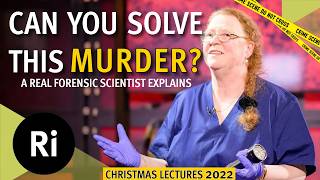
Christmas Lectures 2022: Forensic Techniques for Solving Crimes - Lecture 2
Forensic anthropologist Sue Black explores crime scene investigation techniques, revealing methods used to track criminals in this engaging Royal Institution Christmas lecture.

The Science of Collaboration
Explore the evolutionary importance and cognitive science behind human collaboration with experts Uta and Chris Frith, examining advantages, decision-making, and social cognition in group settings.