
Build Industrial-Grade TinyML Applications with Edge Impulse - Tutorial
Learn to build industrial-grade tinyML applications using Edge Impulse. Covers dataset collection, model design, training, optimization, and integration into embedded systems running on MCUs.
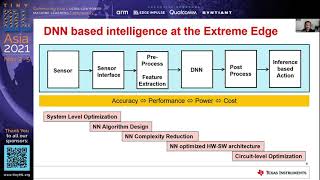
Machine Learning at the Extreme Edge of Always-on Intelligent Sensor Networks
Explore ML optimization techniques for resource-constrained IoT sensor nodes, focusing on system, algorithm, architecture, and circuit levels to achieve significant area-power improvements.
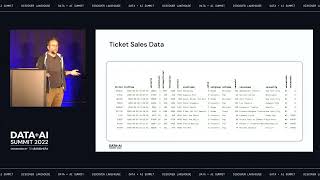
Unsupervised Machine Learning for Scaling Data Quality Monitoring in Databricks
Explore unsupervised ML algorithms for scalable data quality monitoring in Databricks, covering implementation, strengths, weaknesses, and practical applications for effective data management.
Observability in ArgoCD and Rollouts Using Streaming ML for Reducing MTTR
Explore real-time anomaly detection in Kubernetes using streaming ML and DAG-based processing. Learn how Intuit reduces outage response time with AIOps and integrates observability into Argo CD.
Connected Observability Pipelines in the OpenTelemetry Collector
Explore connectors in OpenTelemetry Collector for advanced data flow control. Learn to link pipelines, replicate data, and implement multi-signal logic for sophisticated observability signal processing.
AI and Observability Role in E-Government Ecosystem
Explore how AI and observability enhance e-government IT operations, using open-source tools for telemetry data analysis and deep learning to improve service delivery and efficiency.
Building on-Premises MLOps for ISS Columbus Ground Operations
Explore the development of an on-premises MLOps platform for ISS Columbus operations, covering anomaly detection, root cause analysis, and automated deployment using GitLab, microk8s, and Kubeflow.
Customer Centric Observability at Scale Leveraging AIOps and OpenTelemetry
Explore how Intuit leverages OpenTelemetry and AIOps for real-time customer experience monitoring, anomaly detection, and rapid issue resolution in complex infrastructure environments.
Cluster Golden Signals: Avoiding Alert Fatigue at Scale
Learn to implement Cluster Golden Signals for efficient Kubernetes observability, reducing alert fatigue and improving incident response through effective metrics pipeline and anomaly detection techniques.

Anomaly Detection with Deep Learning: Finding the Needle in the Haystack in the Enterprise
Exploring deep learning applications in anomaly detection for enterprise use cases, including preventative maintenance, network intrusion, and fraud detection, with a production case study.

Detecting Anomalous Behavior in Containerized Environments with Sysdig Falco
Explore Sysdig Falco, an open-source behavioral activity monitor for containerized environments. Learn about its functionality, detection capabilities, and customization options for enhanced security.
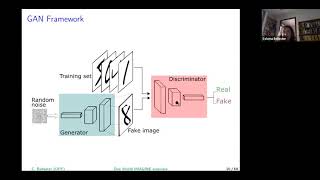
Adversarial Strategies for Anomaly Detection and Image Restoration - SIAM-IS Virtual Seminar
Adversarial approaches in imaging: anomaly detection using GANs and image restoration techniques for inpainting and colorization. Explores efficient methods for unsupervised learning and data distribution analysis.
Proactive Kubernetes Security: Anomaly Detection and Runtime Alerting in Kubernetes Workloads
Explore innovative anomaly detection for Kubernetes security using KubeCop. Learn about ApplicationProfile baselines, real-world attack scenarios, and hands-on deployment for enhanced cloud-native protection.
Efficient Integration of Kubeflow Tools - ISS Data Case Study on Anomaly Detection
Explore Kubeflow's integrated tools for ML workflows through an ISS anomaly detection case study, showcasing Dask, Katib, PyTorch Operator, and KServe in a unified KFP pipeline.
A Scalable Platform for Training and Inference Using Kubeflow at CERN
Explore CERN's Kubeflow-based machine learning platform for data preparation, analysis, training, and inference in physics research, with insights from the ATLAS experiment.

Driving Edge Automation with Events
Leverage event-driven Ansible automation for efficient edge device management, handling anomalies and configuration drifts in challenging environments.

Stop and Step Away from the Data - Rapid Anomaly Detection via Ransom Note File Classification
Explore rapid anomaly detection techniques for identifying ransomware threats using innovative file classification methods, enhancing cybersecurity defenses against evolving attacks.

Graph Me, I'm Famous! - Malware Analysis
Explore advanced malware analysis techniques using graph theory to uncover hidden connections and patterns in malicious code, enhancing threat detection and understanding.
Graph-Charged Cybersecurity Intelligence
Explore Oracle's graph-powered cybersecurity intelligence system for real-time threat detection, featuring interactive visual interpretation for investigators to analyze machine learning model explanations.
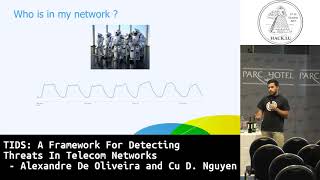
TIDS - A Framework for Detecting Threats in Telecom Networks
Explore a framework for detecting threats in telecom networks, covering monitoring, data collection, and analytics to protect infrastructure and subscribers from various attacks and privacy issues.
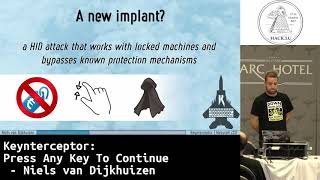
Keynterceptor - Press Any Key to Continue
Explore USB security vulnerabilities and the Keynterceptor, a stealthy keyboard implant for capturing and injecting keystrokes, with real-world demonstration and implications.