
Optimizing Dynamic-Graph Data Structures on Multicores with the Locality-First Strategy
Explore techniques for optimizing dynamic-graph data structures on multicores, focusing on locality-first strategies to enhance performance for large-scale problems in real-world applications.
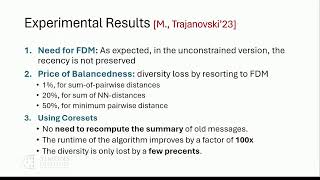
Recent Advances in Diversity Maximization in the Offline and Composable Coreset Models
Explore recent advancements in diversity maximization for data summarization and recommendation systems, focusing on offline and composable coreset models for handling massive datasets efficiently.
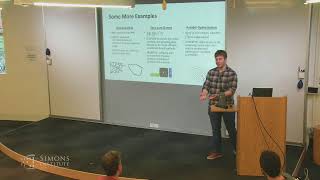
Introduction to Data Structures and Optimization for Fast Algorithms
Explore essential data structures and optimization techniques for designing efficient algorithms, enhancing problem-solving skills in computer science and software engineering.

Pseudopolynomial-Time Algorithms for Optimization Problems
Explore fine-grained complexity theory and best-possible algorithms for discrete optimization problems, focusing on Subset Sum and related challenges in theoretical computer science.

Scheduling with Communication Delays via LP Hierarchies and Clustering
Explore advanced scheduling algorithms for jobs with precedence constraints and communication delays, focusing on LP hierarchies and clustering techniques for improved approximation ratios.
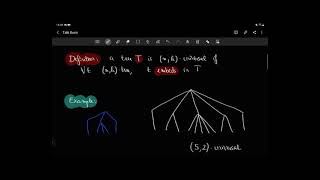
Understanding and Extending the Quasipolynomial Time Algorithms for Parity Games
Explore quasipolynomial algorithms for parity games, universal trees, and their extensions to universal graphs. Discover recent advancements in game-solving algorithms and complexity bounds.
Matthias Mnich - Time- and Space-Optimal Algorithms for the Many-Visits TSP
Optimizing algorithms for the many-visits TSP problem, improving time and space complexity while maintaining logarithmic dependence on tour length. Discusses applications and compares with previous work.
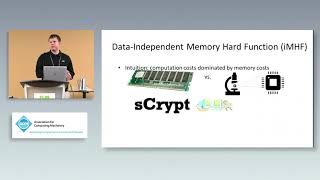
Bandwidth-Hard Functions - Reductions and Lower Bounds
Explore memory hard functions, their applications in cybersecurity, and the metrics used to evaluate their effectiveness. Learn about ASIC advantages and strategies to mitigate them.
Quantum Algorithms
Explore quantum algorithms for lattice-based cryptography, focusing on speedups, security models, and practical implications for cryptographic systems.
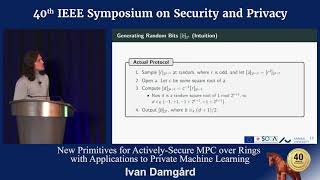
New Primitives for Actively-Secure MPC over Rings with Applications to Private Machine Learning
Explore new primitives for secure multi-party computation over rings, with applications to private machine learning. Efficient protocols for equality test, comparison, and truncation are presented and benchmarked.
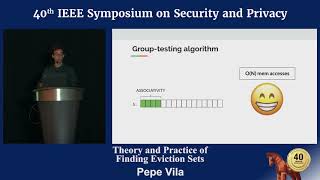
Theory and Practice of Finding Eviction Sets
Explores efficient algorithms for finding minimal eviction sets in cache attacks, improving speed and practicality through threshold group testing techniques and rigorous empirical evaluation.
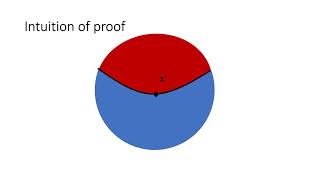
HopSkipJumpAttack - A Query-Efficient Decision-Based Attack
Explore a query-efficient decision-based adversarial attack algorithm for generating adversarial examples, analyzing its theoretical foundations and performance against defense mechanisms.
Fractional Pseudorandom Generators
Explore pseudorandom generators for Boolean functions, including fractional generators and the polarizing random walks framework. Learn about recent advancements in constructing generators from Fourier tail-bound assumptions.
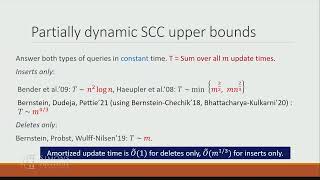
Conditional Hardness and Fine-grained Complexity
Explore advanced concepts in computational complexity, focusing on conditional hardness and fine-grained analysis of algorithms for deeper understanding of efficiency limits.
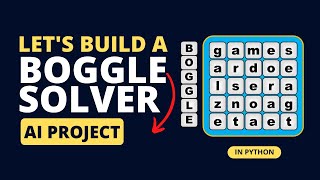
Solving Boggle Using AI - Dynamic Programming + Trie in Python
Learn to build an AI algorithm using dynamic programming and trie data structure to efficiently solve Boggle puzzles in Python, covering key concepts in graph theory and algorithm design.
How Simulating Balls and Springs Captures the Power of Quantum Computing
Explore how simulating classical ball-spring systems relates to quantum computing power, offering insights into BQP-complete problems and new quantum algorithm design approaches.
Quantum Algorithms for Approximating Partition Functions
Explore advanced quantum algorithms for approximating partition functions, focusing on computational techniques and applications in statistical physics and machine learning.

Making Machines That See - Geometry, Uncertainty and Deep Learning
Explore computer vision advancements, from 3D object reconstruction to real-time deep learning systems incorporating geometry and uncertainty, with applications in robotics and mobile technology.

Binary Search Explained - Theory + Code
Comprehensive tutorial on binary search algorithm, covering theory, implementation, optimization, and real-world applications. Includes code examples and comparisons with linear search.
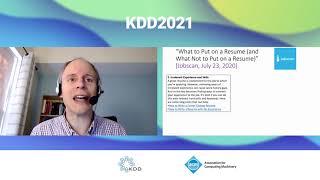
Automated Mechanism Design for Strategic Classification - Vincent Conitzer
Explore automated mechanism design for strategic classification, covering key concepts, optimization techniques, and future research directions in this field.

STOC 2020 - Online Algorithms
Explore online algorithms, including caching with time windows, vector balancing, and primal-dual matching. Learn about recent advancements and open problems in this dynamic field of computer science.