
InfoSec Deep Learning in Action
Explore deep learning applications in cybersecurity, including use cases, data pipelines, algorithms, and real-world deployment challenges. Learn how AI can combat ransomware and other cyber threats.

Zen and the Art of Adversarial Machine Learning
Explore security concerns in machine learning integration, including data extraction, model evasion, and biased outcomes. Learn operational guidance and tools for addressing these challenges.
Smashing the ML Stack for Fun and Lawsuits
Explore legal risks and ethical considerations of testing commercial ML systems' security, with insights on potential lawsuits and regulatory implications for researchers.
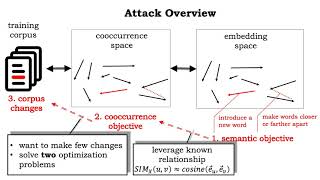
Humpty Dumpty - Controlling Word Meanings via Corpus Poisoning
Explore how attackers can manipulate word embeddings through corpus modifications, affecting downstream NLP tasks and fooling defenses. Learn about implications for information retrieval and translation.
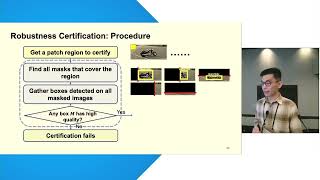
ObjectSeeker - Certifiably Robust Object Detection against Patch Hiding Attacks via Patch-agnostic Masking
Explore a novel approach to robust object detection that counters patch hiding attacks using patch-agnostic masking, enhancing security in computer vision applications.
Hardening AI - ML Systems - The Next Frontier of Cybersecurity
Explore the critical need for integrating resilience and assurance into AI/ML capabilities to protect against adversarial attacks and safeguard cyber-physical infrastructure in this expert panel discussion.

Making and Measuring Progress in Adversarial Machine Learning
Explore adversarial machine learning progress with Nicholas Carlini, focusing on measurement techniques and recent advancements in this critical field of AI security research.

Squint Hard Enough - Attacking Perceptual Hashing with Adversarial Machine Learning
Explores vulnerabilities in perceptual hash matching systems used for detecting illicit content, demonstrating potential for targeted attacks and detection avoidance in online communications.

Why Security Is Important in ML and How To Secure Your ML-based Solutions
Explore security risks in AI/ML adoption, focusing on secure coding practices in Python. Learn techniques to improve code hygiene and protect against vulnerabilities in ML-based solutions.

Analyzing the Security of Machine Learning for Algorithmic Trading
Explore adversarial attacks on ML-based algorithmic trading systems, evaluating robustness and discussing realistic attack scenarios in financial markets.

Tactics and Impacts of Adversarial Machine Learning
Explore adversarial attacks on ML systems, AI jailbreaks, and their impact on popular AI models. Gain insights into cybersecurity risks and preparedness strategies in the rapidly evolving AI landscape.

The Simple Yet Lethal Anatomy of an AI Attack
Dive into the anatomy of AI security threats through live demonstrations, exploring attack strategies from reconnaissance to LLM poisoning, and learn to defend against emerging vulnerabilities in AI systems.

A Beginner's Guide to Adversarial Machine Learning
Explore adversarial machine learning attacks, their impact on AI systems, and effective mitigation strategies. Gain insights into poisoning, inference, extraction, and evasion attacks with real-world examples.

Unveiling Hidden Backdoors in Manifold Distribution Gaps
Explore backdoor attacks in deep neural networks, focusing on manifold distribution gaps. Learn to generate stealthy triggered samples and extend decision boundaries for enhanced security understanding.
The Five Pillars of MLSecOps - Episode 134
Explore the five pillars of ML SecOps with Ian Swanson: supply chain vulnerabilities, model provenance, GRC, trusted AI, and adversarial machine learning. Learn to secure AI systems and comply with emerging regulations.
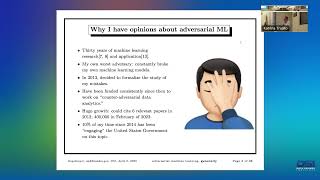
Adversarial Machine Learning: Categories, Concepts, and Current Landscape
Explore adversarial machine learning vulnerabilities, including data subversion, evasion, and model revelation. Learn to identify potential threats and build robust defense strategies.
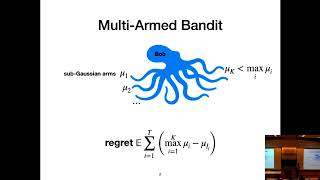
Adversarial Machine Learning: Beyond Manipulating Pixels and Words
Explore vulnerabilities in sequential machine learning and challenge assumptions about imperceptible attacks on image classification through human behavioral studies.
AttackGNN: Red-Teaming GNNs in Hardware Security Using Reinforcement Learning
Discover how reinforcement learning can generate adversarial examples to challenge GNN-based hardware security systems, demonstrating vulnerabilities in IP piracy detection and Trojan identification methods.