Modular Tensor Categories, Quantum Groups and Vertex Algebras - Lecture 4
Explore connections between modular tensor categories, quantum groups, and vertex algebras. Delve into the logarithmic Kazhdan–Lusztig conjecture linking quantum groups and vertex algebras.
Modular Tensor Categories, Quantum Groups and Vertex Algebras - Lecture 1
Explore modular tensor categories, focusing on nonsemisimple theory. Gain insights into these mathematical structures and their connections to quantum symmetries and algebraic concepts.
Braided Fusion Categories - Lecture 5: Witt Equivalence and Categorical Witt Group
Explore advanced concepts in braided fusion categories, including gauging, Picard groups, Witt equivalence, and categorical Witt groups. Suitable for graduate-level mathematics students.
Braided Fusion Categories - Lecture 4
Explore algebraic theory of semisimple braided tensor categories, covering properties, examples, centralizers, equivariantizations, gauging, and Witt equivalence. Suitable for graduate students.
Braided Fusion Categories - Lecture 2
Explore algebraic theory of semisimple braided tensor categories, covering structure, classification, and applications in quantum symmetries and topological quantum field theories.
Braided Fusion Categories - Lecture 1
Explore semisimple braided tensor categories, their structure, and classification. Learn about centralizers, non-degeneracy, equivariantizations, gauging, and Witt equivalence in fusion categories.
Ergodicity in Smooth Dynamics 1
Explore ergodicity in smooth dynamics, covering introductory concepts, examples, proofs, and higher dimensions with experts Jana Rodriguez-Hertz and Amie Wilkinson.
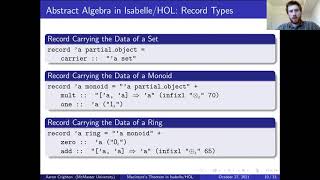
Formalizing Macintyre's Theorem in Isabelle-HOL
Exploration of formalizing Macintyre's Theorem in Isabelle/HOL, covering proof strategies, challenges, and foundational elements needed for a verified proof in the context of p-adic numbers.
Efficient Supersingularity Testing over F_p and CSIDH Key Validation - Part 1
Explore efficient supersingularity testing over F_p and CSIDH key validation techniques, including random point tests and product tree methods.
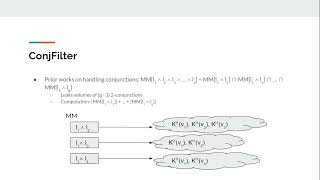
Homomorphic Encryption and Encrypted Search - Asiacrypt 2021
Explore advanced cryptographic techniques including balanced non-adjacent forms, encrypted data search, homomorphic encryption for finite fields, and improved bootstrapping for TFHE.
Parameterized Inapproximability of the Minimum Distance Problem over All Fields
Explores inapproximability of Minimum Distance Problem for linear codes over finite fields, proving W[1]-hardness. Extends results to Shortest Vector Problem on integer lattices.
Fast List-Decoding of Univariate Multiplicity and Folded Reed-Solomon Codes
Explore advanced techniques for efficient list-decoding of Reed-Solomon codes, focusing on univariate multiplicity and folded variants in error-correcting code theory.
Codes with the Multiplication Property - Advances in Error-Correcting Codes Theory
Explore error-correcting codes with multiplication properties, focusing on recent advancements and theoretical implications in coding theory.
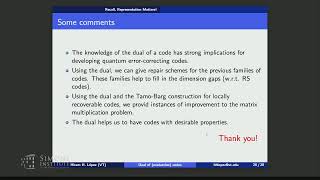
Dual of Evaluation Codes in Error-Correcting Theory
Explore the mathematical concept of dual codes in error correction, focusing on evaluation codes and their properties in coding theory.

Higher Order MDS Codes - Advances in Error-Correcting Code Theory
Explore advanced concepts in error-correcting codes, focusing on Higher Order MDS Codes and their applications in data integrity and communication systems.
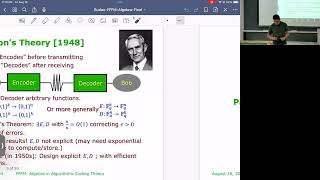
Algebra in Algorithmic Coding Theory
Explore algebraic techniques in algorithmic coding theory, focusing on error-correcting codes and their applications in computer science and information theory.
Automated Detection of Under-Constrained Circuits in Zero-Knowledge Proofs
Discover a novel technique for detecting vulnerabilities in zero-knowledge proof circuits, combining SMT solving with uniqueness inference to enhance security in blockchain applications.
Hecke Eigensheaves via Chiral Homology - Talk 26
Delve into advanced mathematical concepts exploring Hecke eigensheaves through chiral homology, examining the quantized global Hitchin fibration and Kac-Moody localization applications.
Localizing Motives, Algebraic KK-Theory and Refined Negative Cyclic Homology
Delve into advanced algebraic geometry concepts exploring localizing motives, their rigidity properties, and applications in refined negative cyclic homology and topological cyclic homology.
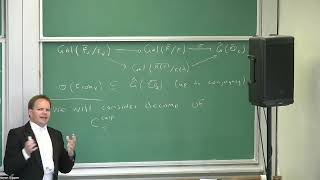
Shtukas and Global Langlands for Function Fields - Talk 37
Delve into V. Lafforgue's groundbreaking proof of global Langlands correspondence, exploring shtukas, geometric Satake, and excursion operators in function fields through expert analysis.
The Stacks of n-Truncated Barsotti-Tate Groups - Part 3
Delve into advanced algebraic geometry concepts focusing on n-smooth group schemes over F_p-schemes and their relationship with BT_n groups, exploring commutative structures and theoretical foundations.