Coding Theory
This course provides an introduction to traditional and modern coding theory. Topics covered include linear block codes, cyclic codes (BCH and RS codes), convolutional codes, turbo codes and low-density parity-check (LDPC) codes.
A Polynomial Bogolyubov-Type Result for the Special Linear Group
Explore a mathematical lecture on a polynomial Bogolyubov-type result for the special linear group. Delve into the analogy between subset properties in finite dimensional vector spaces and the special linear group over a finite field. Learn about the ach…
The Weil Conjectures and A1-homotopy Theory
Dive into the Weil Conjectures and A1-homotopy theory, exploring connections between algebraic topology and finite field equations in this mathematical colloquium.
Representations of Reductive Groups Over Local and Global Fields
Dive into Langlands' theory of reductive groups and their representations in number theory, exploring local and global fields and their connections to arithmetic and geometry.
Algebraic Attacks for the Rank Decoding Problem - Lecture 1
Explorez les attaques algébriques pour le problème du décodage de rang dans cette conférence mathématique approfondie, mettant l'accent sur les concepts clés et les techniques avancées.
Sharp Fourier Restriction Theory Over Finite Fields
Explore recent developments in sharp Fourier restriction theory over finite fields, examining the intersection of two key areas in mathematical research.
On the Fourier Weight of F2 Polynomials
Explore Fourier weight of F2 polynomials, focusing on level k and degree d relationships. Gain insights into pseudorandom generators and recent mathematical proofs.
The Stacks of n-Truncated Barsotti-Tate Groups - Part 2
Delve into advanced algebraic geometry concepts, focusing on n-truncated Barsotti-Tate groups and n-smooth group schemes over F_p-algebras, with emphasis on their structural properties and relationships.
Cryptanalysis 2
Explore cryptanalysis techniques, focusing on discrete logarithm problems in finite fields. Learn about L notation, historical developments, and computational complexity.
Differential Geometry With Finite Fields - Differential Geometry
Exploring differential geometry in finite fields, introducing arithmetic in prime fields, polynomial operations, and tangent conics to cubics. Highlights unique patterns and combinatorial structures in finite calculus.
Infinitesimal Calculus with Finite Fields - Famous Math Problems
Explore infinitesimal calculus in finite fields through the semi-cubical parabola over F_7, challenging traditional real number analysis and emphasizing polynumbers and de Casteljau Bezier curves.
How to Construct the True Complex Numbers I - Famous Math Problems
Exploring the construction of true complex numbers using field theory and linear algebra, challenging traditional approaches and introducing novel concepts for a modern understanding.
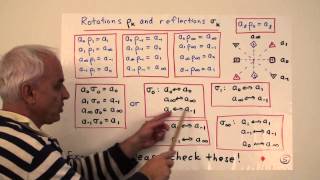
Isometry Groups of the Projective Line - Rational Geometry Math Foundations
Exploring finite field geometry: isometries, rotations, and reflections on the projective line, revealing connections to relativistic geometry and offering a new perspective on Euclidean concepts.
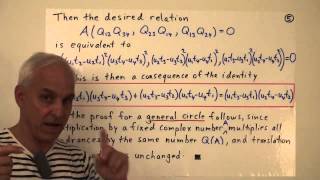
Ptolemy's Theorem and Generalizations - Rational Geometry Math Foundations
Explores Ptolemy's theorem in rational geometry, extending it to finite fields and relativistic planar geometry. Demonstrates how classical results can yield broader insights when formulated without infinite processes.
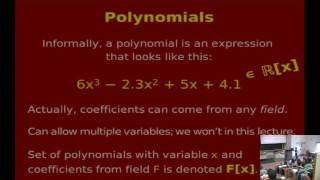
Polynomials
Explore polynomials, from formal definitions to applications in finite fields, interpolation, and error-correcting codes for noisy communication channels.
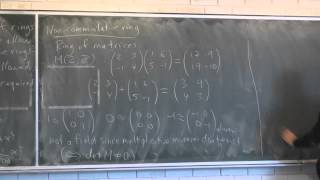
An Informal Introduction to Abstract Algebra
Informal introduction to abstract algebra, covering fields, rings, and vector spaces. Explores key concepts and examples, from basic number systems to advanced constructions, providing essential background for algebraic topology.
Randomness in Number Theory
Explore randomness in number theory, covering topics like finite fields, graphs, quantum gates, and the Riemann Hypothesis with Princeton's Peter Sarnak.
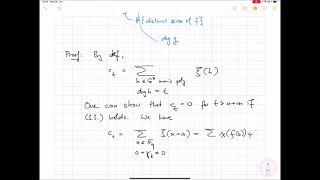
Valentin Blomer - The Polynomial Method for Point Counting and Exponential Sums, Lecture III
Explore advanced techniques for counting points on curves over finite fields and estimating exponential sums using auxiliary polynomials and character sums.
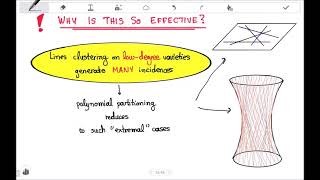
Marina Iliopoulou- Three Polynomial Methods for Point Counting, Lecture II
Explore three powerful polynomial methods for point counting: Dvir's Kakeya problem solution, Guth-Katz's polynomial partitioning, and the slice rank method for arithmetic progressions.
Marie-France Vignéras- Modular Representations of P-Adic Groups
Explore modular representations of p-adic groups in the Langlands program, examining their connections to number theory and geometry using various vector spaces and modules.

Marina Iliopoulou- Three Polynomial Methods for Point Counting, Lecture III
Explore advanced polynomial techniques for solving geometric problems, including Dvir's method, polynomial partitioning, and slice rank method in finite-field settings.