Python, Docker, Kubernetes, and Beyond
Journey through deploying Python applications: from standalone to Docker containers, and finally to Kubernetes. Learn about CI implementation, image storage, and efficient deployment using YAML and templating.
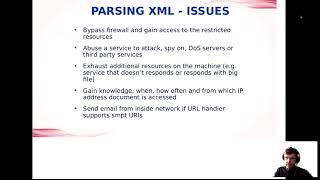
Python Security Best Practices
Discover essential Python security practices, covering input validation, XML parsing, assert statements, temporary files, and data serialization. Learn to identify vulnerabilities and implement robust defenses.
Machine Readable Description for Netlink Protocols
Explore machine-readable descriptions for netlink protocols, focusing on YAML implementation. Gain insights into enhancing network communication efficiency and standardization in Linux systems.

Dynamic Configuration with ComponentConfig and the Control Loop
Explore dynamic configuration in Kubernetes using ComponentConfig and Control Loop, enabling self-reconfiguring controllers and simplified debugging through customized status reporting.

Safely Deploying a 100K Line Envoy YAML Configuration to Production
Learn strategies for safely managing and deploying large-scale Envoy configurations, including validation techniques, auditing, and tools to empower service owners while preventing production incidents.
Building Better Communication for Kubernetes Contributors with Marketing
Explore effective communication strategies for Kubernetes contributors, including storytelling techniques, multichannel messaging, and leveraging bots for improved collaboration and community engagement.
Kubernetes-native Security with Starboard
Explore Starboard, an open-source tool integrating security information into Kubernetes CRDs. Learn its motivations, design challenges, and how to generate actionable security insights.
Migration 101 - From VMs to Kubernetes
Learn to migrate apps from VMs to Kubernetes: Dockerize, create YAML specs, configure routing, perform no-downtime migration, and monitor with logging and metrics tools. Hands-on tutorial for managing hybrid environments.
What We Learned from Reading 100+ Kubernetes Post-Mortems
Insights from 100+ Kubernetes post-mortems: Learn common pitfalls, anti-patterns, and root causes of outages to prevent your next production disaster in Kubernetes-based systems.
Easy Static Checking for Embedded DSLs in Scala with Contextual
Explore compile-time checking for embedded DSLs in Scala using Contextual, enabling custom error messages and enhanced safety without macros. Learn to create powerful string interpolators.
Dissecting Kubernetes - An Intro to Main Components
Explore Kubernetes' inner workings: learn about container deployment, scheduling, scaling, and component interactions. Gain insights into cluster architecture and YAML file processing.
Intent Realization in Self-Serve Platforms - PlatformCon 2024
Explore intent realization's impact on reducing friction and improving developer experience in self-serve platforms, focusing on Netflix's data infrastructure and user-friendly tooling.
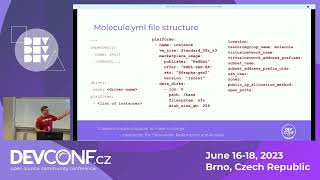
Ansible Molecule for DevOps
Discover how Ansible Molecule enables rapid cloud infrastructure provisioning and testing for complex Ansible roles in DevOps environments.

Automated Ambiguity Detection in Layout-Sensitive Grammars
Explore automated ambiguity detection in layout-sensitive grammars using SMT solving. Learn about local ambiguity, reachability conditions, and their application to language design.
Единый подход к CI/CD Store - Создание универсального фреймворка для DevOps
Discover how to implement a unified CI/CD framework using GitLab templates, enabling streamlined pipeline creation with Vault integration, artifact management, and deployment automation for multiple technology stacks.
A YAML Parser in APL - Design and Implementation
Explore YAML parsing in APL, focusing on implementation challenges, design decisions, and APL's potential contributions to YAML development.

How to Make a Data Science Portfolio With GitHub Pages
Create a free, no-code data science portfolio website using GitHub Pages. Learn step-by-step process, from repo creation to deployment, with tips for effective self-presentation.
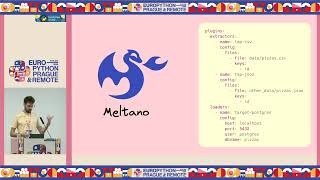
The Rise of the YAML Engineer - Declarative Paradigms in Data Systems
Explore the declarative paradigm in data frameworks, its impact on data practitioners, and the role of YAML. Dive into state management, GitOps, and the future of data engineering.

Cloud Run Deployments with YAML - Creating and Updating Services
Aprenda a implantar e gerenciar serviços Cloud Run usando arquivos YAML para configuração, atualizações e controle de tráfego, mantendo as configurações atualizadas e facilitando reversões.

Ansible for Beginners: Learn the Fundamentals of IT Automation - Part 1
Discover the fundamentals of IT automation with Ansible. Learn to create and run your first playbook, streamlining infrastructure management and task execution.

Ansible Project Structure: A Beginner's Guide to Inventory, Hosts, Roles, and Tasks - Part 3
Learn Ansible project structure essentials: inventory, hosts, roles, and tasks. Create your first project, understand key components, and execute playbooks effectively.