AutoXGB - Automated ML with XGBoost + Optuna + FastAPI - Kaggle Demo
Explore AutoXGB, a Python library for automated machine learning using XGBoost, Optuna, and FastAPI. Learn its parameters and application in a Kaggle competition.
XGBoost and Data Leakage in Machine Learning - Day 14 of 30 Days of ML
Explore XGBoost and data leakage in machine learning. Learn to build optimized models, prevent leakage issues, and enhance your ML skills with practical tutorials and exercises.
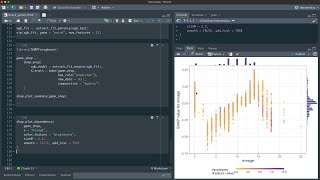
Feature Engineering & Interpretability for XGBoost with Board Game Ratings
Explore advanced modeling with board game ratings data: feature engineering, XGBoost tuning, and explainability methods for data-driven insights and predictive analysis.
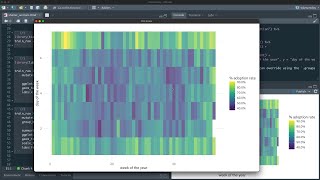
Tune XGBoost With Early Stopping to Predict Shelter Animal Status
Learn to optimize xgboost models using early stopping techniques for predicting animal shelter outcomes, featuring practical examples and efficient coding strategies.
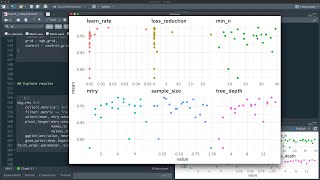
Tuning XGBoost Using Tidymodels
Optimize XGBoost models for beach volleyball match prediction using tidymodels, exploring data, tuning hyperparameters, and interpreting results.

Time Series Forecasting with XGBoost - Advanced Methods
Explore advanced time series forecasting with XGBoost, covering outlier removal, cross-validation, lag features, and future predictions. Enhance your skills in handling complex time-dependent data for improved forecasting accuracy.

Time Series Forecasting with XGBoost - Use Python and Machine Learning to Predict Energy Consumption
Learn to predict energy consumption using XGBoost and Python in this hands-on tutorial. Covers data preparation, feature engineering, model building, and forecasting techniques for time series analysis.
Boosted Trees and Deep Neural Networks for Better Recommender Systems
Explore GPU-accelerated boosted trees and deep neural networks for building winning recommender systems, featuring insights from Kaggle Grandmasters on the ACM RecSys Challenge.

Object Classification Using VGG16 and XGBoost for Vehicle Classification with TensorFlow
Learn to classify vehicles using VGG16 and XGBoost in TensorFlow. Covers data preparation, feature extraction, model training, and testing. Gain practical skills in object classification and deep learning.
Introduction to XGBoost - Machine Learning Tutorial
Comprehensive tutorial on XGBoost: from basic principles to hands-on implementation. Learn gradient boosting, parameter tuning, and model evaluation for real-world machine learning applications.

Machine Learning for NCAA Tournament Bracket Predictions
Learn to build a machine learning model for predicting NCAA tournament outcomes, from data setup to final bracket creation, enhancing your predictive modeling skills and tournament strategy.
MLOps: Databricks MLFlow and Optuna Hyper-parameter Tuning
Optimize XGBoost models using Databricks, MLflow, and Optuna for efficient hyperparameter tuning and improved machine learning workflows.
MLOps: Databricks and MLFlow Hyper-parameter Tuning for XGBoost Models
Optimize machine learning models using Databricks and MLflow for hyperparameter tuning with XGBoost and HyperOpt.

XGBoost para clasificación - construyendo modelos precisos y eficientes
Aprende a utilizar XGBoost para crear modelos de clasificación precisos y eficientes, explorando conceptos básicos, técnicas de construcción y evaluación, y ventajas clave de esta poderosa herramienta.
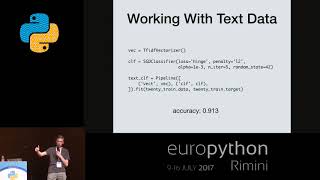
Explaining Behavior of Machine Learning Models with ELI5 Library
Explore techniques for interpreting and debugging ML models using eli5 library. Learn to explain linear models, decision trees, ensembles, and classifiers, improving trust and quality in ML solutions.
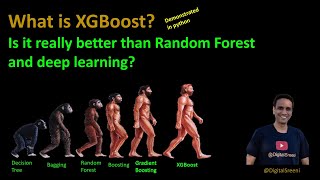
What Is XGBoost and Is It Really Better Than Random Forest and Deep Learning?
Explore XGBoost's advantages over Random Forest and Deep Learning, comparing performance and understanding its unique features for machine learning tasks.

10 Decision Trees are Better Than 1 - Random Forest and AdaBoost
Explore tree ensembles: Random Forest and AdaBoost. Learn bagging, boosting techniques, and their benefits. Apply knowledge to breast cancer prediction using example code.
MRI Brain Scan Classification Using FastSurfer, XGBoost and 3D CNNs
Master medical image classification techniques using FastSurfer pipeline, XGBoost, and 3D CNNs for MRI brain scan analysis. Learn preprocessing steps and implement neural networks in PyTorch for advanced medical data analysis.

From Concept to Production - Template for the Entire Machine Learning Journey
Develop a production-ready ML pipeline from concept to deployment, covering data prep, model training, and orchestration using Kubeflow on Google Cloud Platform's Vertex AI.