Word Embeddings from Deep Space Nine using Machine Learning
Explore word embedding techniques using Star Trek Deep Space Nine scripts, from Bag of Words to BERT, with practical insights for production environments.
How Far is the Empire State Building from the Eiffel Tower? Semantic Vectors in Travel Discovery - Haystack US 2023
Explore semantic vector applications in travel marketplaces for improved recommendations, ranking, and ad optimization. Learn about evolving algorithms and practical advice for implementation.
Deep Learning in NLP and Beyond - 2015
Explore advanced machine learning in NLP, focusing on recurrent neural networks and deep learning. Gain insights into future research directions for developing language-understanding machines.
Discovering Pattern and Structure in Cultural Traces: Death and Dreams in Low Dimensions
Explore data-efficient methods for analyzing large corpora using word embeddings and sparse dictionary learning. Discover patterns in violent death reports and dream narratives through innovative topic modeling techniques.
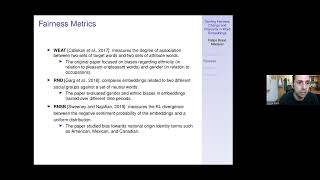
Tackling Fairness, Change, and Polysemy in Word Embeddings
Explore fairness, change, and polysemy in word embeddings with Felipe Bravo's presentation on cutting-edge research in natural language processing and machine learning.
The Trajectory of Information Retrieval - Past, Present, and Future
Explore the evolution and future of information retrieval with insights from NSF's Division Director, covering historical developments, current challenges, and emerging opportunities in AI and computing.
Inside GPT - Large Language Models Demystified
Demystifying GPT algorithms: from fundamentals to advanced applications. Explore NLP concepts, model training, ChatGPT capabilities, and practical implementation strategies for leveraging AI in your solutions.
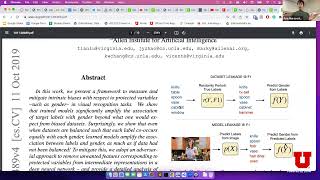
Data Mining: Embeddings and Representations in Machine Learning - Spring 2023
Explore data representation techniques from TF-IDF to contextualized embeddings, covering word analogies, societal biases, and image representations for advanced data mining applications.
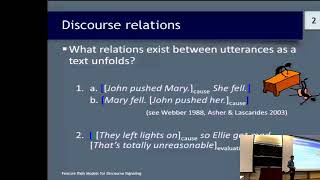
Feature Rich Models for Discourse Signaling - 2018
Explore computational models for discourse relations using rich annotations beyond text, including syntactic and semantic information, to capture complex discourse structures.
CS 201: Introduction to Natural Language Processing - Lecture 11/17/2022
Explore natural language processing with Dan Jurafsky in this UCLA Computer Science lecture, covering key concepts and applications in computational linguistics.

Encoder-Only Transformers: Understanding BERT and RAG Architecture
Discover how encoder-only transformers power RAG, sentiment analysis, and classification through clear explanations of word embedding, positional encoding, and attention mechanisms.