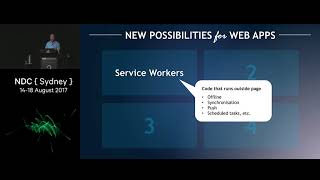
Web Apps Can't Really Do That, Can They?
Explore cutting-edge JavaScript APIs and features that enable web applications to rival native apps in functionality, including offline capabilities, OS integration, and hardware access.

Blazor, a New Framework for Browser-Based .NET Apps
Explore Blazor, a revolutionary framework for building browser-based .NET applications using WebAssembly. Learn its component-based architecture, routing, DI system, and JavaScript interop capabilities.

An Introduction to WebAssembly
Explore WebAssembly as a powerful alternative to JavaScript for web applications, covering its fundamentals, implementation, and practical usage with Rust and WebAssembly Text Format.

Blazor - A New Framework for Browser-Based .NET Apps
Explore Blazor, a revolutionary framework enabling .NET applications in browsers via WebAssembly. Learn its component-based architecture, routing, DI system, and JavaScript interop for building responsive client-side UIs.
Blazor - C# Running in the Browser via WebAssembly
Explore WebAssembly and Blazor for running C# client-side in browsers. Learn how this technology differs from Silverlight and see practical demonstrations of its capabilities.

An Introduction to WebAssembly
Explore WebAssembly as a byte-code alternative to JavaScript for web applications. Learn its workings, integration, and module creation using Rust, C++, and WebAssembly Text Format.
MAKERS & BUILDERS - A Drupal-Inspired Render API for Cloud and Edge Computing
Explore a Drupal-inspired Render API for cloud and edge computing, leveraging design systems as WebAssembly microservices with an innovative data format.

AI Prompts for Instructional Design Tasks
Unlock AI's potential in instructional design. Learn to leverage AI for common tasks, explore its impact on the field, and gain skills to future-proof your career as an instructional designer.

Interactive Command-Line Tutorials with WebAssembly
Explore WebAssembly's role in bringing command-line tools to the web, focusing on sandbox.bio's development and the technology's benefits and limitations.
Using WebAssembly for In-Database Machine Learning
Explore in-database machine learning with WebAssembly. Learn installation, implementation, deployment, and execution steps for efficient ML integration in databases.

Go Containerless on Kubernetes with WebAssembly and Rust - Conf42 Rustlang 2024
Explore containerless deployment on Kubernetes using WebAssembly and Rust. Learn advantages, limitations, and practical implementation for efficient, secure application deployment.
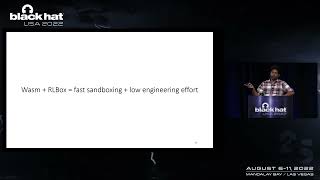
How Firefox Uses In-process Sandboxing to Protect Itself From Exploitable Libraries
Explore Firefox's innovative approach to mitigating zero-day attacks using in-memory sandboxes for third-party C libraries, enhancing security against memory safety vulnerabilities.

Continuing WebAssembly with Effect Handlers
Explore WasmFX, an extension to WebAssembly enabling direct translation of non-local control features via effect handlers, improving compiler efficiency for various programming languages.
Owi: An Interpreter and Toolkit for WebAssembly in OCaml
Explore Owi, an OCaml-based interpreter and toolkit for WebAssembly. Learn about its architecture, features, and advantages for experimentation and symbolic manipulations of Wasm code.
Indexed Types for a Statically Safe WebAssembly - POPL 2024
Explore Wasm-prechk, a WebAssembly extension using indexed types for enhanced static safety. Learn about performance gains, type safety proofs, and implementation trade-offs in this innovative approach.
Iris-Wasm: Robust and Modular Verification of WebAssembly Programs
Explore robust and modular verification of WebAssembly programs using Iris-Wasm, a mechanized higher-order separation logic for specifying and verifying individual modules with strong isolation guarantees.

WasmRef-Isabelle: A Verified Monadic Interpreter and Industrial Fuzzing Oracle for WebAssembly
Explore a verified monadic interpreter for WebAssembly, its adoption as a fuzzing oracle, and its performance compared to other interpreters and oracles.

Bringing the WebAssembly Standard up to Speed with SpecTec
Explore SpecTec, a DSL toolchain streamlining WebAssembly specification and feature standardization. Learn how it generates artifacts, detects errors, and aims to revolutionize Wasm standards development.

Combinator-Based Fixpoint Algorithms for Big-Step Abstract Interpreters
Explore combinator-based fixpoint algorithms for big-step abstract interpreters. Learn to develop and ensure soundness of sophisticated fixpoint algorithms using reusable combinators for static analysis.
Wasocaml: A Compiler from OCaml to WebAssembly - Lecture
Explore OCaml to WebAssembly compilation, addressing challenges and strategies for garbage-collected languages. Learn about Wasocaml compiler, value representation, and future plans for FFIs and effects handlers.

Using Rust and WebAssembly
Explore WebAssembly's potential in Rust development, from key benefits to practical applications. Learn to build, optimize, and integrate WASM with JavaScript, while understanding its challenges.