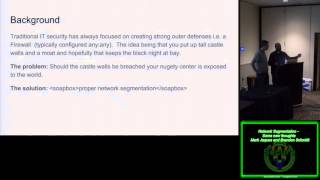
Network Segmentation - Some New Thoughts
Network segmentation strategies for enhanced security, including risk-based approaches, data protection, access control, and layered defense. Learn from government and industry best practices.
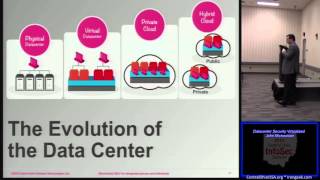
Datacenter Security Virtualized
Explore datacenter security in virtualized environments, covering DNS importance, perimeter evolution, hypervisor challenges, and automation strategies for modern infrastructure protection.
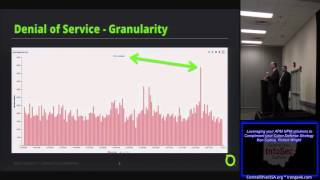
Leveraging Your APM NPM Solutions to Compliment Your Cyber Defense Strategy
Explore how APM and NPM solutions enhance cyber defense strategies, covering topics like denial of service, network flow, authentication, and cloud services.
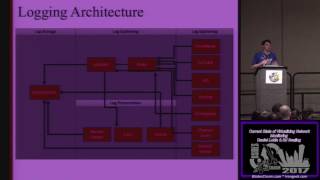
Current State of Virtualizing Network Monitoring
Explore the current state of virtualizing network monitoring, covering prototypes, hardware architecture, logging, and new technologies like containers and Intel X79 XL7.
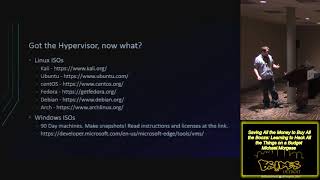
Saving All the Money to Buy All the Booze - Learning to Hack All the Things
Learn to hack ethically on a budget with tips on affordable hardware, free tools, and learning resources for aspiring cybersecurity professionals and enthusiasts.

Using Technology to Defend Digital Privacy Human Rights
Learn to protect digital privacy using technology. Explore threats, risk assessment, secure browsing, anonymous operating systems, VPNs, and secure messaging to safeguard your online presence and human rights.
Sky High IR - IR at Cloud Scale
Explore cloud-scale incident response strategies, challenges, and critical components for effective security management in AWS environments.
Stable 40 Virtual Smart Cards for Lab Environments
Learn to create and manage virtual smart cards for secure lab environments, enhancing authentication and access control in testing scenarios.

How Hackers Evade Your AI-Enabled Endpoint Detection Tools
Explore techniques hackers use to bypass AI-enabled endpoint detection, including malware disguises and virtualization isolation. Learn about vulnerability exposure and privileged access management.
The Telecom Network of Tomorrow - How We Learned From the Mistakes We Did In the Future
Explore the telecom industry's shift to open-source software development, driven by a federation of companies and vendors. Learn about the reasons, challenges, and potential benefits of this collaborative approach.
Core Slicing - Closing the Gap Between Leaky Confidential VMs and Bare-Metal Cloud
Explores core slicing, a novel approach to enhance cloud security by enabling multiple untrusted guest OSes to run on shared bare-metal hardware, addressing vulnerabilities in confidential VMs.
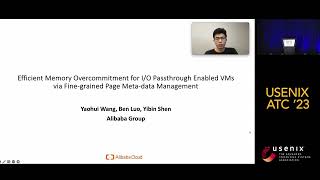
Efficient Memory Overcommitment for I/O Passthrough Enabled VMs via Fine-grained Page Meta-data Management
Innovative approach for efficient memory management in virtualized systems, enhancing resource utilization while ensuring DMA safety through fine-grained page meta-data management.
Translation Pass-Through for Near-Native Paging Performance in VMs
Innovative memory virtualization mechanism achieving near-native performance in VMs. Enables direct guest-to-host address translation while maintaining isolation through hardware-supported memory tagging.
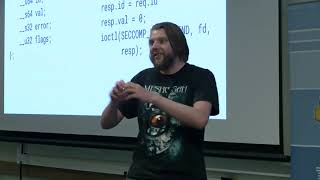
Forwarding Syscalls to Userspace
Explore syscall forwarding to userspace for enhanced container capabilities, enabling safe kernel module loading and filesystem mounting while maintaining security boundaries.
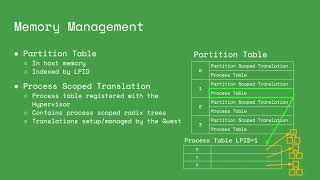
Taking it to the Next Level - Nested KVM on the POWER9 Processor
Explore nested virtualization on POWER9 processors, including KVM implementation, challenges, and future developments. Gain insights into running VMs within VMs and their practical applications.
Faucet SDN Tutorial
Hands-on tutorial for installing and configuring Faucet SDN controller, exploring features like VLANs, ACLs, and routing. Includes network monitoring with Prometheus and Grafana dashboards.
Docker for Novices
Comprehensive introduction to Docker for beginners, covering basic concepts, terminology, image building, container running, port mapping, and Docker Compose, with hands-on examples.
RISC-V Software Ecosystem in 2020
Explore RISC-V software ecosystem's evolution, current status, and future goals. Gain insights into key projects and opportunities for developers to contribute to this growing open-source platform.
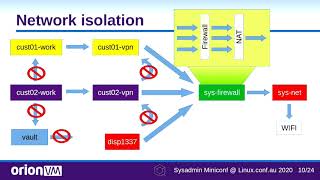
Using a Cloud to Manage a Cloud
QubesOS overview and its application in OrionVM's sysadmin, highlighting benefits, challenges, and potential improvements in managing cloud infrastructure through hypervisor-backed containers.
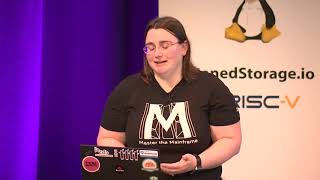
Why Linux Systems Administrators Should Care About the Mainframe
Discover the relevance of mainframes in modern computing, their unique hardware features, and why Linux administrators should consider them for career opportunities and technological advancements.

How Australian IaaS OrionVM Uses FreeBSD
Explore how OrionVM leverages FreeBSD's unique features for cloud environments, including guest OS, OpenZFS storage, FreeNAS for VPC, and PFSense for security in hybrid workloads.