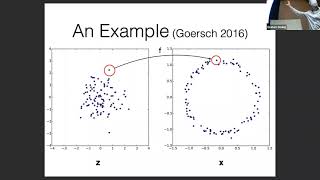
CMU Advanced NLP 2021 - Latent Variable Models
Explore advanced NLP concepts like variational autoencoders, discrete latent variables, and their applications in natural language processing tasks.
All Things VQGAN - Variational AutoEncoder and VQ-VAE with Codebook Explanations - Part 2
Explore Variational AutoEncoders and Vector Quantized VAE, focusing on codebook explanations. Learn how these advanced techniques improve upon traditional autoencoders for better image generation and representation.
Variational Autoencoder Paper Walkthrough
Comprehensive walkthrough of the Variational AutoEncoder research paper, explaining key concepts, mathematical foundations, and practical applications in deep learning and generative modeling.
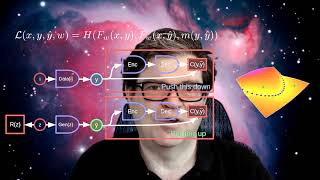
Self-Supervised Learning and Variational Inference
Explore self-supervised learning, variational inference, and advanced deep learning concepts with Yann LeCun. Gain insights into GANs, sparse modeling, and Variational Autoencoders (VAEs) in this comprehensive lecture.

From LV-EBM to Target Prop to Autoencoder
Explore various autoencoder types, from target propagation to variational autoencoders, understanding their mechanisms, applications, and differences in deep learning and neural network architectures.
Generating Sound Digits with a Variational Autoencoder
Learn to generate audio spectrograms of sound digits using a trained Variational Autoencoder, then convert them into audio. Includes implementation, scripting, debugging, and result evaluation.
From Autoencoders to Variational Autoencoders - Improving the Encoder
Explore the transformation from autoencoders to variational autoencoders, focusing on improved encoding using multivariate normal distributions for enhanced generative capabilities in AI and sound processing.
Generation with AutoEncoders - Results and Limitations
Explore image generation using autoencoders, analyze latent space representations, and understand limitations in generative tasks. Learn why variational autoencoders are necessary for improved generation.
A Deep Generative Model for Molecular Graphs by Niloy Ganguly
Explores a deep generative model for molecular graphs using variational autoencoders, discussing its design, properties, and applications in drug discovery and molecule optimization.

Deep Generative Modeling
Explore deep generative modeling, including autoencoders, VAEs, GANs, and diffusion models. Learn about latent variables, training techniques, and recent advances in generative AI.

Deep Generative Modeling - MIT 6.S191 Lecture 4
Explore deep generative modeling, including autoencoders, VAEs, GANs, and recent advances. Learn about latent variables, training techniques, and applications in AI-driven content creation and data analysis.
Machine Learning for Molecular Structures and Drug Discovery
Explore machine learning applications in molecular structures, generative models, and protein analysis. Learn about tools like LigDream, TorchMD, and PlayMolecules for drug discovery and chemistry research.
Identifiable Deep Generative Models via Sparse Decoding
Explore sparse VAE for unsupervised learning, uncovering identifiable latent factors in high-dimensional data. Discover theoretical guarantees and practical applications in various domains.
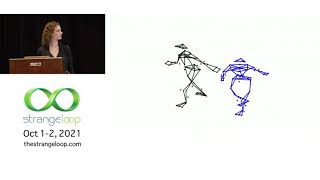
Dancing With Myself
Explore AI-generated choreography using motion capture and machine learning, blending technology with creative expression to reflect personal identity and movement style.

An AI Approach to Malware Similarity Analysis - Mapping the Malware Genome With a Deep Neural Network
Explore AI-driven malware similarity analysis using deep neural networks for improved accuracy and adaptability in threat detection and classification.
Efficient Evaluation of Activation Functions over Encrypted Data
Explore techniques for approximating activation functions on encrypted data, with applications in secure machine learning for image classification and representation learning.

Unsupervised Learning with Autoencoders
Explore autoencoder variants, their applications in unsupervised learning, and real-world use cases. Learn about anomaly detection, denoising, and generative models in this comprehensive overview.
Moving Beyond Screening via Generative Machine Learning Models for Materials Discovery
Explore generative machine learning models for materials discovery, moving beyond screening to generate novel structures and chemistries using advanced algorithms and techniques.
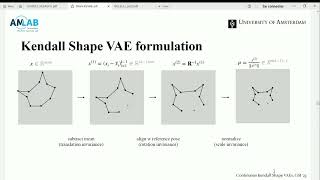
Continuous Kendall Shape Variational Autoencoders
Explore unsupervised learning of geometric representations using equivariant VAEs with hyperspherical latents, extending Kendall-shape VAEs for improved representation capacity.
Generative AI Overview - Foundations, Models, and Applications
Explore foundational concepts of Generative AI, its evolution, and key models like DALL·E and GPT. Learn how these technologies reshape creativity and innovation across various industries.
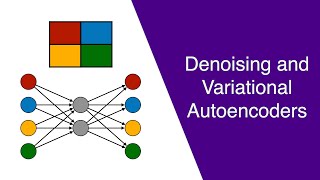
Denoising and Variational Autoencoders
Explore autoencoders, powerful generative models for dimensionality reduction and data generation. Learn about denoising and variational autoencoders, their applications, and training techniques.