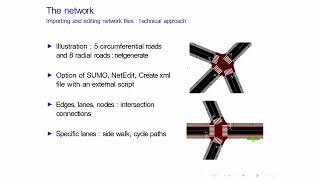
Evaluating the Benefits of Promoting Intermodality and Active Modes in Urban Transport - A Microsimulation Approach
Discover how microsimulation analyzes urban transport systems, demonstrating significant reductions in congestion and emissions through intermodal transportation and active mobility solutions in city planning.

Optimized Design of Low Emission Zones in SUMO - A Dual Focus on Emissions Reduction and Travel Time Improvement
Discover how genetic algorithms and SUMO simulation optimize Low Emission Zones (LEZ) design to reduce urban CO2 emissions while improving traffic flow and travel times in cities.
Bus Priority Procedure for Signalized Intersections Based on Bus Occupancy and Delay
Explore an innovative bus prioritization framework for signalized intersections that uses occupancy and delay metrics to enhance public transport efficiency through advanced vehicle-to-infrastructure communication and simulation testing.
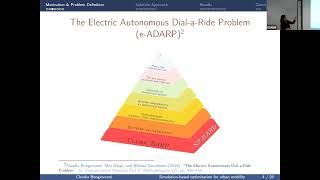
Guiding Metaheuristics Through Machine Learning Predictions for Dynamic Autonomous Ridesharing
Explore machine learning-guided metaheuristics for dynamic autonomous ridesharing optimization, improving efficiency by 9% over benchmarks using Uber data and innovative ML-based local search techniques.
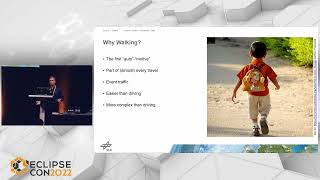
Simulating Pedestrians and Vehicle Traffic Integration Using SUMO and JuPedSim
Discover how to simulate integrated traffic scenarios combining pedestrian and vehicle movements using SUMO and JuPedSim tools for enhanced road safety and event planning analysis.
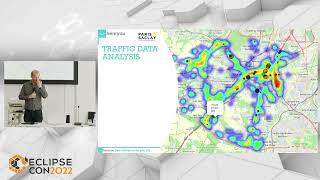
Smart City Mobility Management: Using IoT and AI for Environmental Impact
Discover how Eclipse sensiNact helps cities leverage IoT, big data, and AI to monitor mobility infrastructure, reduce emissions, and make data-driven decisions for sustainable urban transportation.
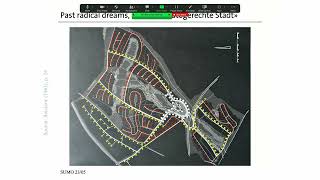
E-Bike City: Exploring Sustainable Urban Transport Solutions
Explore how e-bikes and sustainable transport could revolutionize urban mobility, examining innovative solutions for achieving net-zero targets through the e-bike-city project research.
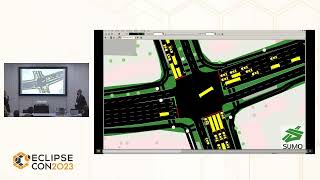
Create Detailed Traffic Models and Simulations with Open Source Tools and Open Data
Discover how to build digital twins for traffic systems using open-source tools like Eclipse SUMO and TAPAS, enabling data-driven decisions for urban mobility optimization and planning.
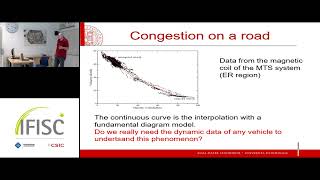
A City Digital Twin for Sustainable Mobility: Big Data Analytics and Predictive Models
Explore big data analytics and predictive models for sustainable urban mobility using digital twin technology.
Amazon India Commute On-Demand Review
Explore innovative solutions for urban mobility challenges in India, focusing on Amazon's on-demand commute program and its impact on traffic congestion and employee satisfaction.
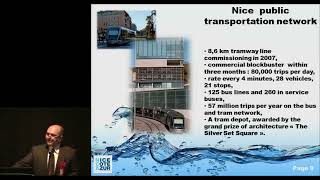
The Tramway in Nice and Transportation Policy in France
Discover France's sustainable transportation initiatives through Nice's tramway system implementation and its role in creating low-carbon urban environments, featuring insights from transportation policy expert André von der Marck.
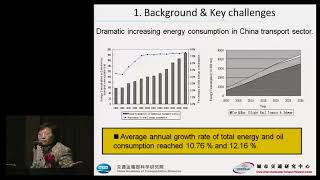
Transportation Development Policy for Low-Carbon Cities in China
Explore China's sustainable transport policies and strategies for developing low-carbon cities through expert insights on urban passenger systems, standardization efforts, and environmental impact reduction.
Tools for Equitable Transportation Planning with TDEI Infrastructure
Explore innovative tools for equitable transportation planning using TDEI Infrastructure. Learn how technology can enhance accessibility and promote inclusive urban mobility solutions.
Achieving More Equitable Market-Based Congestion-Mitigating Policies
Explore equitable congestion-mitigating strategies, including second-best pricing and tradable mobility credits, to address inequality concerns in transportation systems and improve public acceptance.

Rediscovering Cities through AI | Momin Uppal | TEDxSICAS DHA Youth
Dr. Momin Uppal explores how artificial intelligence is transforming the way cities are studied and planned. Using Lahore as a case study, he explains how AI helps analyze urban expansion, environmental change, and transportation accessibility. His work highlights how data-driven insights can reveal

The Road to Self-Reliance Begins with Biking | Darren Grant | TEDxSHSU
Walking and biking to school, once common in the U.S., have become rare. Nearly 90% of today’s children are driven to school, by car or bus, even as walking and cycling have become safer than they were in the past. How can we make sense of this puzzling development? What should we do about it? Grant