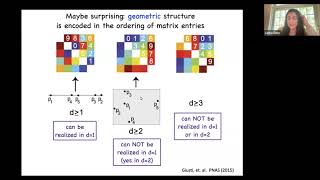
Using Topology to Study the Geometry of Neural Correlations
Explore how topology and persistent homology uncover hidden structures in neural data, focusing on Betti curves and their applications in analyzing hippocampal, olfactory, and zebrafish brain activity.
Demystifying Latschev's Theorem for Manifold Reconstruction
Explores quantitative approaches to Latschev's theorem for topological manifold reconstruction, advancing finite sample analysis in data science and manifold learning applications.
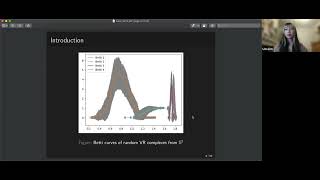
Strange Random Topology of the Circle
Explore the intriguing behavior of "topological noise" in random Cech complexes constructed from the circle, revealing unexpected homotopy equivalences and higher Betti numbers in specific filtration radii intervals.
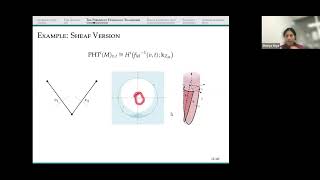
A Sheaf-Theoretic Construction of Shape Space
Sheaf-theoretic approach to construct shape space using Persistent Homology Transform. Explores homotopy sheaves, metrics, stability theorems, and approximation of manifolds.
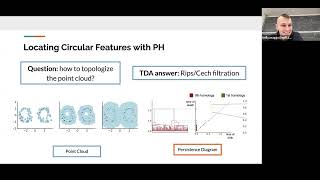
Cohomology Classes in the RNA Transcriptome
Explore how cohomology classes in single-cell sequencing data can model transient biological processes, using persistent cohomology and differential forms to infer gene expression dynamics.
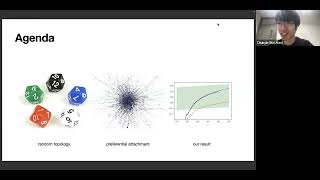
The Asymptotics of Betti Numbers in Preferential Attachment Clique Complexes
Explore the higher-order connectivity of preferential attachment networks through Betti numbers, examining growth rates and asymptotic behavior in this advanced mathematical analysis.
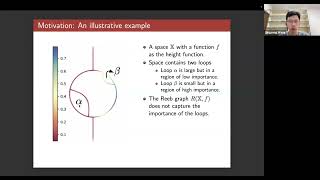
Measure Theoretic Reeb Graphs
Explore measure-theoretic Reeb graphs, enhancing scalar function representation on topological spaces. Learn about stability, local smoothing, and applications in metric measure spaces.
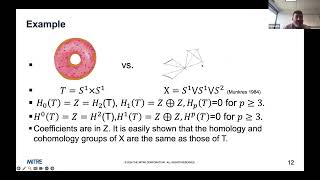
Steenrod Squares and Data Science - Exploring Connections in Algebraic Topology
Explore the potential link between advanced algebraic topology concepts and data science classification, examining how increasing algebraic complexity may solve harder geometric problems.
Some Remarks on the Cohomology of the Vietoris-Rips Complex of a Hypercube Graph
Explore advanced algebraic topology concepts, focusing on the cohomology of Vietoris-Rips complexes in hypercube graphs, with insights from expert Martin Bendersky.

Topological Perspectives on Networks
Explore algebraic topology tools for network analysis, focusing on their application in neuroscience to understand structure-function relationships.

Topological Perspectives on Networks
Explore algebraic topology tools for network analysis, focusing on their application in neuroscience to understand structure-function relationships.
Understanding Complex Biological Systems: A Journey into Computational Topology
Explore computational topology's role in decoding complex biological systems. Learn how algorithms interpret data from molecular biology, genetics, and medicine, offering unique insights into disease progression and protein structures.
On the Applications of Topology
Explore topological methods for analyzing complex data sets, focusing on persistent homology and mapper, with applications in computer vision, biology, and medicine.
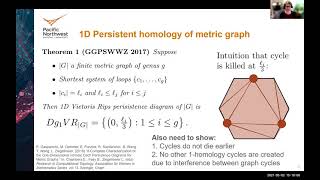
Homology of Graphs and Hypergraphs
Explore topological structures of graphs and hypergraphs, including recent findings on homology and persistent homology, with applications in combinatorial and metric space analysis.
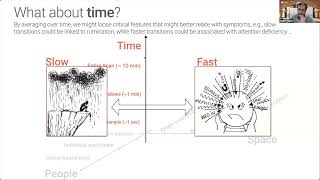
Precision Dynamical Mapping to Characterize Brain Activity Fluctuations
Exploring Topological Data Analysis to map brain activity fluctuations in psychiatric disorders, overcoming neuroimaging limitations and enhancing understanding of neurobiological underpinnings.

Inferring and Characterizing Neuronal Connectivity with Deep Geometry and Topology
Exploring novel geometric and topological methods to decode neural connectivity rules in C. elegans, revealing insights into embryonic development and nervous system architecture.

Cracking the Code: Using Data Analysis to Engineer Stronger and Tougher Glasses
Explore data analysis techniques for engineering stronger glasses. Learn how topological data analysis and machine learning accelerate the discovery of fracture-resistant glass compositions.
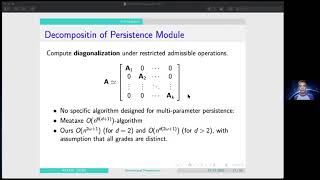
Generalized Persistence Algorithm for Decomposing Multi-Parameter Persistence Modules
Explore a generalized persistence algorithm for decomposing multi-parameter persistence modules, enhancing topological data analysis with improved computational efficiency and structural insights.
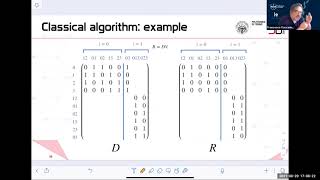
Parallel Decomposition of Persistence Modules Through Interval Bases
Exploring parallel decomposition of persistence modules using interval bases, with applications in Topological Data Analysis and connections to the Hodge Laplacian.
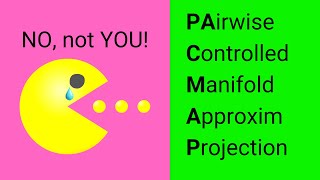
Dimensional Reduction Using PaCMAP: From High-Dimensional Data to Vector Spaces - MNIST Case Study
Explore dimensional reduction using PaCMAP algorithm, from basic implementation to advanced applications with MNIST datasets, featuring hands-on Python coding in Colab notebooks.

Gapped Clique Homology is QMA1-Hard and Contained in QMA
Explore the complexity of homology problems in computational topology, focusing on clique complexes and their quantum complexity classification through innovative eigenvalue analysis techniques.