Phi-2: Small Language Model Performance Tutorial - Google Colab with Python
Explore Microsoft's Phi-2, a compact yet powerful language model outperforming larger counterparts. Learn its training methods and test capabilities in coding, math, reasoning, and data extraction using Google Colab.

Building an AI Rap God - Cloning a Rapper Using Machine Learning
Learn to create an AI-powered rap generator using Python, combining text generation, voice cloning, and lip-syncing technologies to produce custom rap performances.

Pytorch Text Generator With Character Level LSTM
Learn to build a character-level LSTM text generator in PyTorch, focusing on generating new baby names. Explore practical implementation of RNNs for creative text generation tasks.
OPT-175B Language Model Tutorial - GPT-3 Alternative Using Hugging Face
Learn about Meta AI's OPT-175B language model, including a live demo and hands-on coding for text generation using Hugging Face Transformers. Explore this open-source alternative to GPT-3.
Alpaca & LLaMA - Can it Compete with ChatGPT?
Explore Stanford Alpaca's capabilities, learn inference techniques, and compare its performance to ChatGPT in this step-by-step tutorial on setting up and optimizing the model.

ChatGPT vs Bard AI by Google - Surprising Results
Comparative analysis of ChatGPT and Google's Bard AI, testing their capabilities with challenging prompts to reveal unexpected performance differences.

Unlock the Power of OpenAI Playground - A Beginner's Guide
Explore OpenAI Playground's text generation capabilities in this hands-on guide. Learn to create content, plan trips, write speeches, and generate quizzes using AI technology.
LLaMA2 Tokenizer and Prompt Tricks
Explore LLaMA2 tokenizer tricks, prompt engineering techniques, and JSON conversion strategies to enhance your language model interactions and outputs.
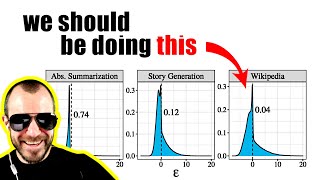
Typical Decoding for Natural Language Generation - Get More Human-Like Outputs From Language Models
Explore typical sampling, a new decoding method for language models that balances high-probability and high-information outputs, resulting in more diverse and interesting generated text.
Stoic Philosophy Text Generation with TensorFlow
Learn to build a RNN text generator using TensorFlow and Python, focusing on Stoic philosophy texts. Explore key components and techniques for creating AI-generated philosophical content.
Learning How to Learn Efficiently - Nando de Freitas, DeepMind
Explore efficient learning techniques for neural networks to solve multiple tasks with limited data, focusing on developing adaptable "prior" networks for rapid task-specific learning.
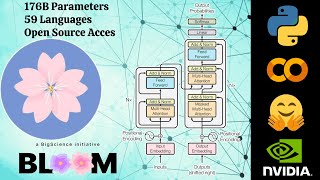
Bloom - Text Generation Large Language Model - LLM: Step by Step Implementation
Step-by-step implementation of Bloom LLM for text generation in Google Colab, covering model setup, error handling, and result interpretation.
Natural Language Processing - Mark Riedl - Georgia Tech School of Interactive Computing
Explore AI-driven storytelling, focusing on neural text generation control and long-term knowledge retention. Discover challenges and applications in automated narrative creation and other NLP tasks.
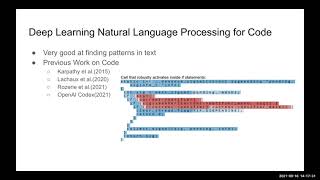
Automated Software Vulnerability Detection with Deep Learning for Natural Language Processing
Explore deep learning techniques for automated software vulnerability detection using natural language processing, covering data sets, pretraining, architecture, and results.
Generative AI: Disruptions and Implications for Institutions, Enterprises and Society
Explore the impact of generative AI on institutions, enterprises, and society. Learn about deployment, scalability, sustainability, and governance of this powerful technology.
Alternatives to OpenAI APIs for Building AI SaaS
Explore alternative AI API solutions and open-source projects for hosting your own models, reducing reliance on OpenAI and building more reliable GPT wrappers for AI SaaS development.
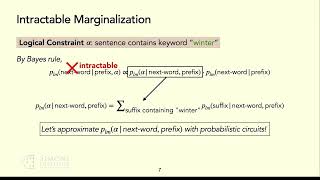
Tractable Control for Autoregressive Language Generation
Explores using tractable probabilistic models to impose lexical constraints in autoregressive text generation, achieving state-of-the-art performance on constrained text generation benchmarks.
Complete Tutorial of Top Generative AI Tools - ChatGPT, GitHub Copilot, Claude, and Google Gemini
Comprehensive guide to top Generative AI tools: ChatGPT, GitHub Copilot, Claude, and Google Gemini. Learn functionalities, applications, and limitations to unlock AI's creative potential across various domains.

Transformer Models: Understanding Their Architecture and Functionality - Part 3
Demystifying Transformer models with visuals and examples, covering key concepts like attention mechanism, tokenization, embeddings, and fine-tuning for various NLP tasks.
Prompt Engineering with Watsonx - Workshop
Aprenda técnicas de engenharia de prompts para otimizar modelos de linguagem, equilibrando inteligência e segurança. Exercícios práticos para dominar habilidades essenciais na interação com LLMs.
GPT-4o API Deep Dive: Text Generation, Streaming, Vision, and Function Calling
Explore GPT-4o's advanced capabilities in text generation, streaming, vision, and function calling. Learn to leverage the OpenAI API for enhanced AI-driven projects and applications.