
The Secret to a Bankruptcy Free Generation | Harsh Goenka | TEDxDIAB Youth
Personally I always thought managing money was only for adults until during COVID. My family asked me to track our household bills. That simple task taught me about cashflow, responsibility, and perspective. This speech will be discussing my personal journey into financial literacy, and sharing any
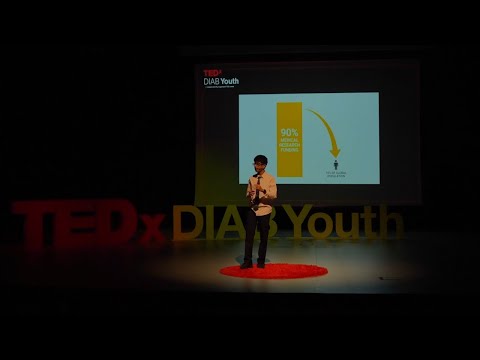
Cured, but Not Delivered: The Moral Gap in Global Health | Aarush Bhagwat | TEDxDIAB Youth
In this talk, I tell the story of Priya to illustrate a devastating paradox: why do 1.6 billion people suffer from diseases that we already know how to cure? I explore the "math" of medical injustice, where geography and profit margins outweigh human life, and argue that the real challenge isn't di

It's All Connected | Sia Rupani | TEDxDIAB Youth
The search for meaning has always begun in the same place: a single, curious thought. In my talk, I want to question something we all pretend to know: who we are. The real story starts way deeper, with chemicals, choices, chaos, and a surprising amount of stardust. Step by step, the pieces begin to

Intelligence Desperacy: The Day AI Says “No” | Nikhilesh Kakkar | TEDxDIAB Youth
In this talk, imagine a moment when intelligence no longer answers on demand. When the machines we trust fall silent, we are forced to confront an uncomfortable truth: how much of our thinking have we outsourced? This idea explores the quiet consequences of overreliance on AI, challenging us to redi

Healing The Uncurable | Dr Thomas Kuchenbrod | TEDxDIAB Youth
I want to talk about root cause medicine for the conditions that currently have no "cure" but are on the rise across western civilizations. I want to use case studies to give real world examples of how I get results with these patients and how there needs to be a change in the way we look at healing

Alive, Dead, and Everything in Between | Ahana Anand | TEDxDIAB Youth
Quantum physics says tiny things can be waves and dots at once, alive-and-not until observed. Through a coin, a cat, and the double-slit, uncover how measurement shapes reality- and why larger objects can’t stay in limbo. The takeaway is personal. Potential multiplies in the dark, but identity cryst

The Human Dividend: Rethinking Value in an Age of Abundance | Ahan Dasgupta | TEDxDIAB Youth
We all feel the ground shifting: the talk of AI, the pressure of bills, the fear of being left behind. These aren't abstract problems, they are the "X" in an urgent human equation. The solution, the "Y" we must solve for, isn't a complex algorithm. It's a simple, powerful idea: an unconditional foun

Understanding What Drives Exceptional Success | Aashritha Settipalli | TEDxDIAB Youth
In my talk, “How to Be an Outlier,” I explore what truly sets extraordinary people apart from everyone else. I share the five key rules that outliers follow, from mastering their craft and embracing failure, to saying yes to opportunities, stepping outside their comfort zone, and continuously learni

The Hidden Variables | Siddhant Satish Nair | TEDxDIAB Youth
We’re taught that success follows a formula, yet people who start from the same place often end up in completely different places. In this talk, we explore the hidden variables that shape our futures — our values, the direction we choose, and the noise we allow to influence us — challenging us to st

Your Voice Is a Career: The Power of Public Speaking | Kalpana Mishra | TEDxAmity University Noida
Public speaking is not just a skill — it is a career, a responsibility, and a powerful tool for impact. In this TEDx talk, the speaker explores how communication can open doors to leadership, influence, and financial independence. She challenges young people to see speaking not as stage fear, but a

Curiosity, the Kite to Progress | Ishana Mehta | TEDxDIAB Youth
This talk explores the theme of curiosity and its impact on both the world and individuals. It looks at how curiosity has supported evolution and continues to help people grow and expand their knowledge. The speech also shares how curiosity has shaped personal experiences, with the hope of inspiring

Disruption Is Not the Problem — Status Quo Is | Rohit Misra | TEDxTAPMI
We panic when systems shake. We blame innovators, technology, outsiders threaten jobs. But disruption isn’t the disease — it’s the diagnosis. The real threat is the comfort of outdated structures we protect long after they stop working. When change feels violent, it’s usually because stagnation was

Delusion & Discomfort – The Courage to Be Seen | Mehak Dhingra | TEDxAmity University Noida
You will never feel ready. And that’s the point. This TEDx talk introduces a bold idea: success requires two uncomfortable ingredients — delusion and discomfort. Delusion is daring to believe you belong in rooms you haven’t entered yet. Discomfort is choosing to be seen before you feel confident.

We Are Not Different | Isaac Moore | TEDxTASIS England Youth
In this honest and powerful talk, Isaac explores how the brain works, including the role of the amygdala, and connects these ideas to how both humans and animals experience the world. Drawing from his own experiences, he speaks openly about navigating life with autism and the challenges that can com

Can AI Makes Us More Human? | Lara Coca | TEDxThe Global College Youth
“Can AI Makes Us More Human?”, challenges the widespread belief that technology is ruining the future. Inspired by countless conversations with adults who express pessimism about technological change, Lara argues that embracing innovation, rather than fearing it, is essential for progress. #change #
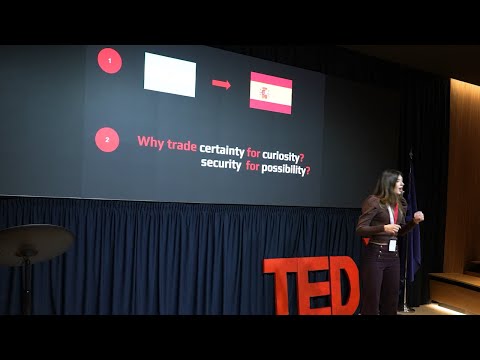
The Art of Thinking Wrong to Think Right | Julia Garaguso | TEDxThe Global College Youth
“The Art of Thinking Wrong to Think Right,” explores the fear of failure and the pressure to be perfect, especially for young people. Drawing from her own experience of switching schools, confronting change, and rebuilding her sense of belonging, Julia argues that being wrong is not a setback but a

Borders of Our Minds | Luna Regner-Bleyleben | TEDxThe Global College Youth
“Borders of Our Minds,” explores the idea that many of today’s conflicts stem not from physical boundaries but from the mental and emotional divisions we create between ourselves. Inspired by the friendships she has formed with people whose beliefs differ from her own, Luna argues that empathy is th

Economy Trough the Eyes of a Child | Altana Loskutova | TEDxThe Global College Youth
“Economy Through the Eyes of a Child,” merges her two passions: economics and childhood. Her talk challenges the idea that economics must be complex, arguing instead for a more intuitive, childlike approach to questions of value, growth, and decision-making. #rethinkingeconomics #childlikeintuition

Renaissance Begins When We Wake Up | Ashfaque Nipun | TEDxBangladeshAgriculturalUniversity
What makes a nation wake up? Is it a protest? A film? A collective loss? Or a sentence whispered across a lunch table? We often imagine the Renaissance arriving with noise and celebration. But sometimes it begins quietly—with a mother’s simple lunch call, with the absence of a journalist, with a mo

Who Is Writing Your Life's Story? | Nazim Ud Daula | TEDxBangladeshAgriculturalUniversity
Are you living your own life or following a story written by someone else? In this powerful and deeply inspiring talk, renowned Bangladeshi screenwriter Nazim Ud Daula explores how our lives are shaped by stories—stories we hear, inherit, and often unconsciously follow. From childhood expectations

A Journey of Dream, Silence & Oneness | Quazi Nawshaba Ahmed | TEDxBangladeshAgriculturalUniversity
Quazi Nawshaba Ahmed begins with a simple truth: everyone is a dreamer, though society, family, or circumstances never gave us the freedom to dream openly. She shares how silence has often been a companion, sometimes chosen, sometimes forced. Speaking up once led to punishment, isolation, and loss