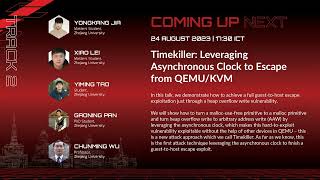
Timekiller: Escape From QEMU/KVM - Exploiting Asynchronous Clock Vulnerabilities
Demonstrating a novel guest-to-host escape exploit in QEMU/KVM using asynchronous clock vulnerabilities. Introduces "Timekiller" technique to turn heap overflow into arbitrary address write, achieving full VM escape.
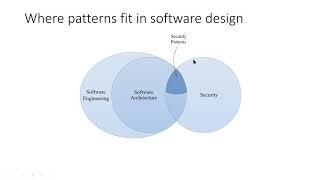
Building Secure Software Systems Using Security Patterns
Learn to create secure software systems using proven security patterns, enhancing your ability to design robust and protected applications in today's cybersecurity landscape.
Protecting Data vs Systems: Practicality, Performance, and Problems
Explore data protection strategies, encryption options, and trade-offs. Learn about record-level security and performance considerations for safeguarding information beyond system-level defenses.
Breaching the Depths of the Abyss: Exposing Rootkits - Track 2, Session 4
Dive deep into rootkits: explore their inner workings, detection techniques, and countermeasures. Learn to identify and neutralize these stealthy threats using advanced tools like Living Off The Land Drivers.
Civil Infrastructure Platform - Empowering Sustainable Living with Industrial Grade Linux
Explore Industrial Grade Linux for sustainable, secure, and long-lasting civil infrastructure systems. Learn how CIP enhances reliability and fosters collaborative development.
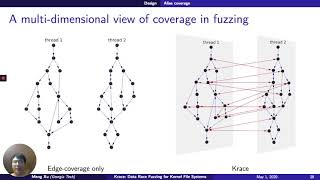
Krace: Data Race Fuzzing for Kernel File Systems
Innovative fuzzing technique for detecting data races in kernel file systems, enhancing concurrency coverage tracking and active interleaving exploration through delay injection.
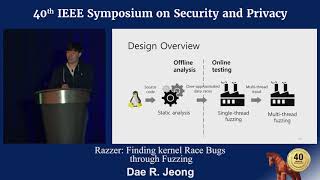
Razzer - Finding Kernel Race Bugs through Fuzzing
Discover efficient kernel race bug detection through fuzzing with Razzer. Learn static analysis and deterministic thread interleaving techniques to identify vulnerabilities in Linux kernels.
Fuzzing the Linux Kernel - Mentorship Session
Explore advanced techniques for identifying vulnerabilities in the Linux kernel through fuzzing, enhancing system security and stability.
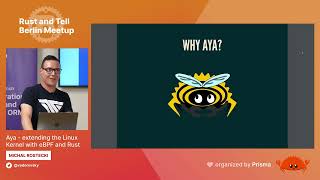
Aya - Extending the Linux Kernel with eBPF and Rust
Explore extending the Linux kernel using eBPF and Rust with Aya, a powerful framework for kernel development and system programming.

The Sheer Terror of PAM - Extending UNIX Authentication with Rust
Explore UNIX authentication challenges and PAM's complexities. Learn to leverage Rust for safer, more efficient authentication logic, with practical examples and research insights.

Develop Android Context Hub Runtime Environment (CHRE) Nanoapps in WebAssembly
Learn to develop Android CHRE nanoapps using WebAssembly, enhancing security, cross-architecture compatibility, and battery efficiency for always-on, contextually aware features.
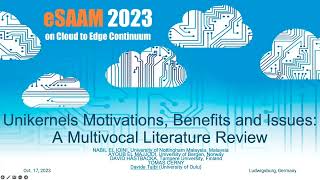
Unikernels Motivations, Benefits and Issues - A Multivocal Literature Review
Explore the potential of unikernels through a comprehensive analysis of their motivations, benefits, and challenges in cloud computing, focusing on performance optimization and security enhancements.
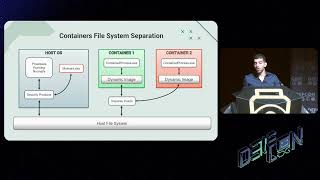
Staying Undetected Using the Windows Container Isolation Framework
Delve into Windows Container isolation mechanisms, file system separation techniques, and security implications, including methods to manipulate container frameworks for enhanced system protection.

APRON: Authenticated and Progressive System Image Renovation
Innovative approach to secure OS recovery, minimizing downtime through progressive block repair and verification. Outperforms conventional methods, enabling swift system restoration with minimal performance impact.
All About RPC, LRPC, ALPC, and LPC in Your PC
Comprehensive exploration of Windows inter-process communication mechanisms, including RPC, LRPC, ALPC, and LPC, detailing their architecture, security implications, and practical applications.
Practical State Recovery Attacks Against Legacy RNG Implementations
Systematic study of FIPS 140-2 certifications reveals vulnerabilities in ANSI X9.31 RNG implementations, highlighting risks of static keys and emphasizing the importance of secure random number generation.

Baby Sharks - Small-Subgroup Attacks to Disrupt Large Distributed Systems
Explore small-subgroup attacks on distributed systems, focusing on MPC implementation vulnerabilities and real-world implications for cryptographic protocols and distributed key generation.
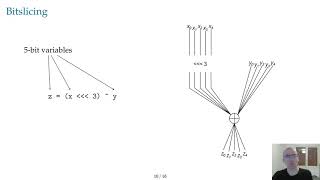
Tornado- Automatic Generation of Probing-Secure Masked Bitsliced Implementations
Explore automatic generation of secure masked bitsliced implementations for cryptographic algorithms, addressing probing attacks and enhancing performance in hardware security.
Exploring Hacker Operating Systems - Manjaro
Explore Manjaro, an Arch-based OS for user-friendly Linux experience. Learn installation, setup, and how to transform it into a powerful pentesting platform using BlackArch repository.
DIGLIM eBPF - Secure Boot at Application Level with Minimal Distro Changes
Explore secure boot implementation at the application level using eBPF technology, minimizing distro modifications for enhanced system integrity and security.
Resurrection of /dev/bpf Discussion for Implementing Trusted Unprivileged BPF
Explore the revival of /dev/bpf for implementing trusted unprivileged BPF, delving into its implications and potential benefits for Linux kernel development and security.