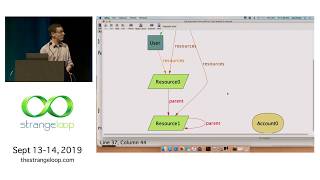
Finding Bugs Without Running or Even Looking at Code
Discover how model checkers like Alloy can find complex bugs and validate architectural proposals without running or viewing code, through formal specifications and simulations of system operations.

Scalable Anomaly Detection - With Zero Machine Learning
Explore Netflix's innovative approach to detecting anomalies in complex distributed systems using stream processing and simple algorithms, without relying on machine learning.
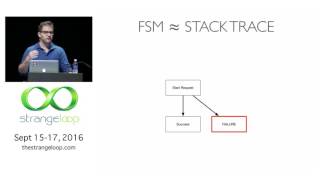
A Frontend Server, Front to Back
Explore the implementation of Fitbit's frontend server, covering queueing theory, software design, GC tuning, and Netty library, with practical insights on building fast, stable, scalable, and extensible systems.
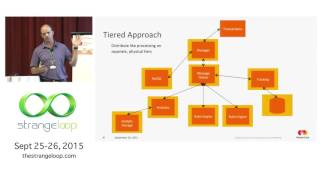
Performance Engineering at MasterCard
Explore high-volume, low-latency performance engineering at MasterCard, covering real-time fraud detection, system architecture, testing strategies, and optimization techniques for millisecond-level transaction processing.

Zipline - A Declarative Feature Engineering Library
Explore Zipline, Airbnb's declarative feature engineering library for ML, reducing data preparation time from months to days and enabling efficient point-in-time correct feature generation.
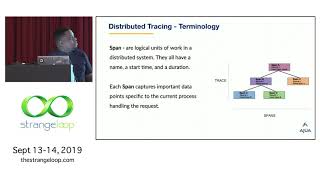
Everything You Wanted to Know About Distributed Tracing
Explore distributed tracing in microservices: concepts, implementation patterns, and troubleshooting techniques. Learn about OpenTelemetry and its benefits for modern, polyglot environments.

Building a Distributed Build System at Google Scale
Explore the evolution and challenges of distributed build systems, focusing on Google's scalable solutions for fast and resilient development workflows.
Availability, Latency, and Cost - Withstanding Regional Outages
Explore Netflix's multi-region strategy for improved availability and latency, including algebraic models, incident management, and design considerations for efficient failovers and user steering.
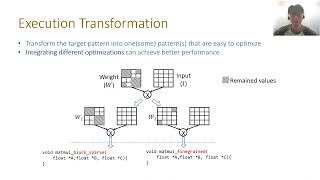
SparTA - Deep-Learning Model Sparsity via Tensor-with-Sparsity-Attribute
Explores deep learning model sparsity via Tensor-with-Sparsity-Attribute, enabling efficient sparse models across various patterns and optimization techniques, delivering significant speedups compared to state-of-the-art solutions.
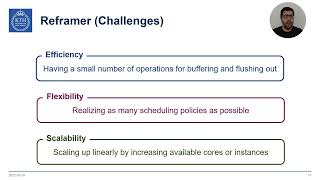
Packet Order Matters! Improving Application Performance by Deliberately Delaying Packets
Explores improving application performance by deliberately delaying and reordering network packets to increase traffic locality, enhancing cache efficiency in high-speed network interfaces.
Backdraft - A Lossless Virtual Switch that Prevents the Slow Receiver Problem
Innovative virtual switch solution preventing packet loss and improving network performance through dynamic queuing, doorbell queues, and overlay network techniques for enhanced application responsiveness.
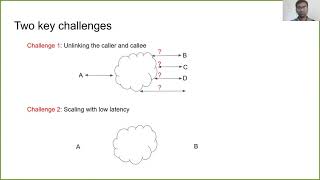
Addra - Metadata-Private Voice Communication Over Fully Untrusted Infrastructure
Innovative system for metadata-private voice communication, scaling to 32K users with low latency. Utilizes untrusted infrastructure and novel mailbox assignment, improving on existing solutions for secure communication.
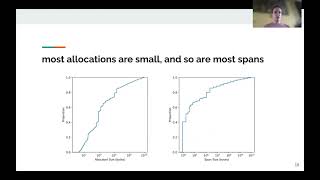
Beyond Malloc Efficiency to Fleet Efficiency - A Hugepage-Aware Memory Allocator
Explore TEMERAIRE, a hugepage-aware memory allocator enhancing TCMALLOC to reduce CPU overheads, improve application performance, and optimize fleet efficiency in warehouse-scale computing.
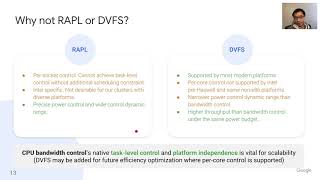
Thunderbolt - Throughput-Optimized, Quality-of-Service-Aware Power Capping at Scale
Explore power capping in data centers with Thunderbolt, a system optimizing throughput and quality of service. Learn about hardware-agnostic solutions for safe power oversubscription and task-level QoS differentiation.
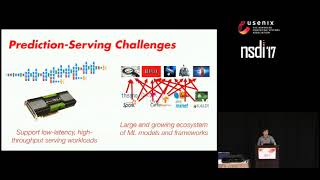
Clipper - A Low-Latency Online Prediction Serving System
Explore Clipper, a low-latency prediction serving system that enhances machine learning deployment with improved latency, throughput, accuracy, and robustness across various frameworks and applications.
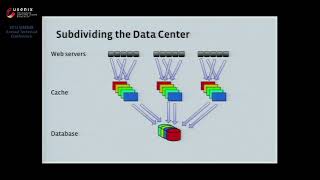
TAO - Facebook’s Distributed Data Store for the Social Graph
Explore Facebook's TAO, a distributed data store designed for efficient social graph access. Learn about its architecture, API, and how it handles billions of reads and millions of writes per second.
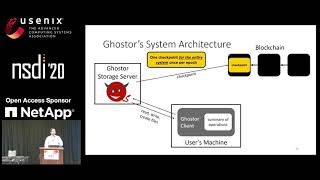
Ghostor - Toward a Secure Data Sharing System from Decentralized Trust
Explore a secure data-sharing system that protects user privacy and ensures data integrity through decentralized trust, hiding identities and detecting server-side violations.
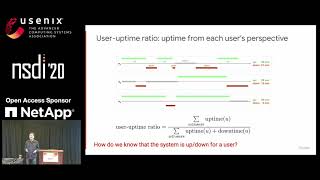
Meaningful Availability
Explores a new availability metric for cloud applications: windowed user-uptime. Discusses its advantages over traditional metrics in accurately reflecting user experience and distinguishing outage patterns.

What Happens When You Type en.wikipedia.org
Explore Wikipedia's server-side architecture, from routers to microservices, and learn how open-source technologies power one of the world's top websites.
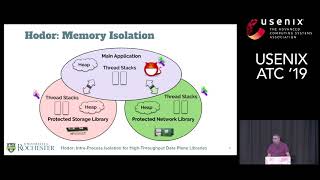
Hodor - Intra-Process Isolation for High-Throughput Data Plane Libraries
Explores intra-process isolation for high-throughput data plane libraries, proposing protected libraries as a new OS abstraction to achieve safety and performance in kernel-bypass approaches for managing high-speed devices.
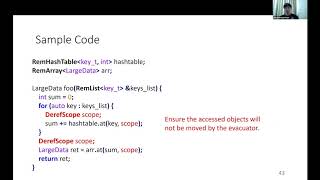
AIFM - High-Performance, Application-Integrated Far Memory
Explore AIFM, a high-performance system enabling efficient use of remote memory in datacenters. Learn about its API, runtime, and benefits for applications facing memory constraints.