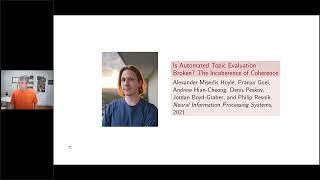
Measuring Interpretability in AI - Transforming Black Box Systems into Transparent Tools
Explore novel metrics for measuring AI interpretability in unsupervised and supervised methods, enhancing transparency in topic models and question-answering systems for broader applications.
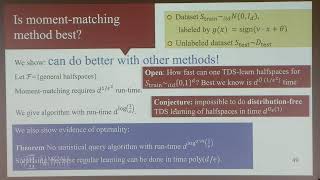
Testing Assumptions of Learning Algorithms
Explore how property testing can mitigate reliance on distributional assumptions and no distribution shift in supervised learning algorithms, ensuring more reliable theoretical guarantees.
How ChatGPT Works - Behind the Scenes
Explore the inner workings of ChatGPT, from its neural network foundation to its training process, and discover how it generates human-like responses using vast datasets and advanced algorithms.
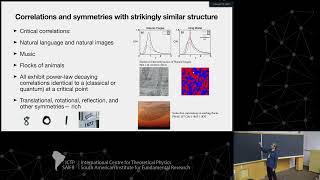
Machine Learning for Quantum Matter - Lecture 1
Explore machine learning applications in quantum matter, covering classical algorithms, high-dimensional data, supervised learning, neural networks, and practical examples in physics.
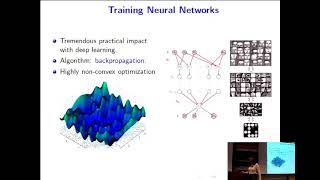
Guaranteed Training of Neural Networks Using Tensor Methods - 2015
Explore guaranteed neural network training using tensor methods. Learn about overcoming non-convexity, risk bounds, and combining unsupervised learning with supervised tasks.
Supervised Learning Algorithms - Lecture 3
Explore supervised learning algorithms, model evaluation, and Python implementation for classification and regression tasks in petroleum engineering and energy transition.
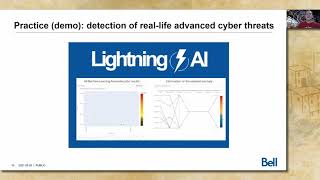
Data Science Way to Deal With Advanced Threats
Explore data science methods for advanced threat detection in SOCs, combining unsupervised and supervised learning to reduce false positives and streamline anomaly triage using ML and interactive visualizations.
Training Machines for Application Scanning in Retro Style
Explore machine learning for offensive security testing, focusing on building an intelligent application scanner using supervised and unsupervised learning techniques to improve web application vulnerability detection.
Alfred, Find the Attacker - A Primer on AI and ML Applications in the IT Security Domain
Explore AI and ML applications in IT security, covering classification, outlier detection, and user behavior analysis for enhanced protection and threat detection.
Temporal - Bot or Human? Detecting Malicious Bots with Machine Learning in 2021
Explore advanced techniques for detecting sophisticated bots using machine learning, combining server-side and client-side signals, and leveraging supervised and unsupervised approaches for maximum accuracy.
Building a Predictive Pipeline to Rapidly Detect Phishing Domains
Explore techniques for building a predictive pipeline to detect phishing domains using machine learning, focusing on data acquisition, algorithm selection, and performance metrics.
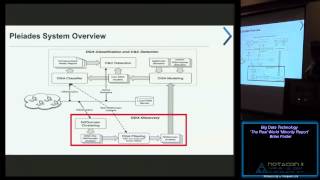
Big Data Technology - The Real World Minority Report
Explore big data's role in cybersecurity, including network analysis, domain reputation, and machine learning techniques for threat detection and prevention.
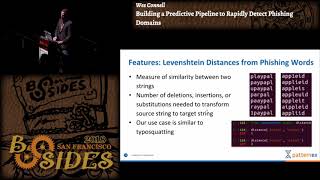
Building a Predictive Pipeline to Rapidly Detect Phishing Domains
Learn to build a predictive pipeline using Python and machine learning to detect phishing domains in real-time, leveraging Certificate Transparency logs and supervised learning techniques.
Histogram-based Gradient Boosting in scikit-learn 0.21
Explore the new Histogram-based Gradient Boosting implementation in scikit-learn 0.21, offering competitive performance with XGBoost and LightGBM for efficient machine learning on tabular data.
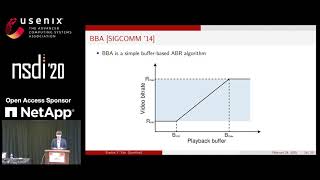
Learning in Situ - A Randomized Experiment in Video Streaming
Randomized trial of video-streaming algorithms reveals challenges for sophisticated schemes in real-world settings. New algorithm developed using in situ learning outperforms others.

Making PHP See
Explore image processing with PHP and OpenCV, covering basics to advanced features like face detection and panorama stitching. Learn to detect and track features in images and video.
Know Thy Operator
Explore industrial process data analysis, machine learning techniques, and behavior-based event detection systems for improved facility monitoring and state-of-health assessment.
Machine Learning Exposed - Introduction to Machine Learning
Gentle introduction to machine learning concepts, APIs, and platforms. Covers supervised, unsupervised, reinforcement, and deep learning, with an approachable explanation of underlying mathematics.
AI and Minecraft
Explore AI experimentation using Minecraft as a testing ground with Project Malmo. Learn to solve problems through reinforcement learning in a unique and engaging virtual environment.
Machine Learning Exposed - Introduction to Machine Learning
Gentle introduction to machine learning concepts, APIs, and platforms. Covers supervised, unsupervised, reinforcement, and deep learning, with an approachable overview of underlying mathematics.
Computer Vision - British Clay
Explore AutoML techniques for image classification, comparing tools to build models from labeled samples. Discover the ease of detecting Wallace vs. Gromit in this hands-on demo.