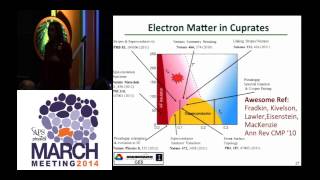
Deciphering Electron Matter in Novel Superconductors
Explore electron behavior in novel superconductors, focusing on unconventional materials, pseudogap phenomena, and electronic nematic phases. Gain insights into predictive design of superconductors beyond conventional rules.
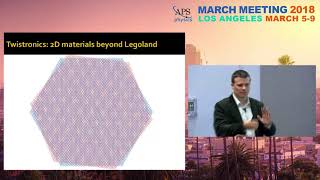
Magic-Angle Graphene Superlattices - A New Platform for Strongly Correlated Physics
Discover surprising properties of misaligned graphene sheets, from Mott insulator to superconductor. Explore this new platform for strongly correlated physics and its similarities to cuprate superconductivity.
Accelerate, Collide, Detect
Nobel Laureate Barry Barish explores particle physics, examining the future of accelerators and their potential to push the boundaries of scientific understanding.
A Guided Tour at D-Wave
Explore D-Wave's quantum computing lab, from superconducting processors to real-world applications. Learn about QPUs, quantum effects, and how D-Wave's technology is advancing the field of quantum computing.
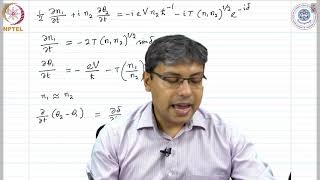
AC Josephson Effect and Microscopic Quantum Interference - Lecture 70
Explore AC Josephson effect and microscopic quantum interference, focusing on applications in high-precision magnetometers.
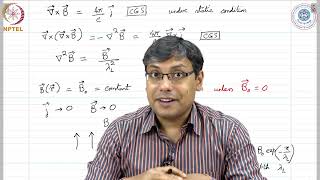
BCS Theory of Superconductivity - Lecture 67
Explore BCS theory of superconductivity, its key features, and the BCS ground state concept without formal derivations. Gain insights into cooper pairs and superconductivity fundamentals.
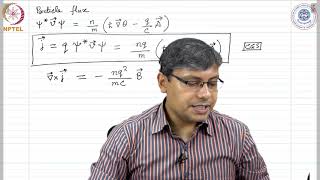
Flux Quantization in a Superconducting Ring - Lecture 68
Explore the phenomenon of magnetic flux quantization in superconducting rings, understanding its fundamental principles and implications.
Superconducting Quantum Links
Explore quantum interactions between atoms and light, focusing on superconducting quantum links and their applications in modern quantum optical systems and experimental platforms.
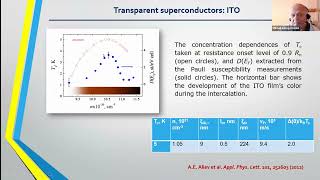
Superconducting Electronics: Transparent Samples and SQUID-like Josephson Junctions
Explore advancements in superconducting electronics, focusing on transparent samples and SQUID-like Josephson junctions for quantum computing, communications, and sensing applications.
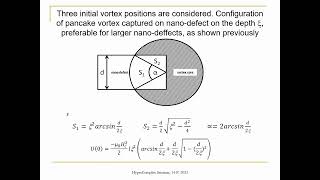
Influence of Quantized Vortex Dynamics on Superconducting Electronics
Explore quantized vortex dynamics in superconductors and their impact on electronic devices. Analyze current-voltage characteristics, critical current density, and applications in quantum sensors and Josephson junctions.
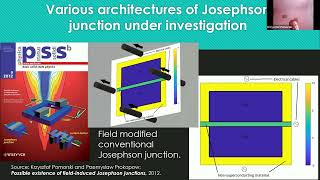
Hybrid Schrödinger-Ginzburg-Landau Approach in Study of Superconducting Integrated Structures
Explore a hybrid Schrödinger-Ginzburg-Landau approach for simulating superconducting lattices and integrated structures. Learn about relaxation algorithms and modeling techniques for superconducting devices.
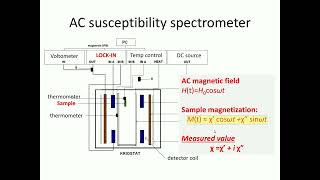
Application of Unsupervised Learning to AC Susceptibility Measurements of High-Temperature Superconductors
Explore unsupervised learning applications in analyzing AC susceptibility measurements of high-temperature superconductors, focusing on clustering techniques and data representation methods.
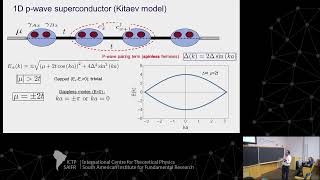
Majorana States in Vortices - Can You Know It When You See It?
Explore Majorana states in vortices and their identification challenges through an in-depth analysis of quantum phenomena in condensed matter systems.
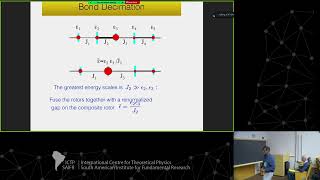
A Cloaked Griffiths Phase in a Low Dimensional Superconductor
Explore the Griffiths phase in low-dimensional superconductors, examining rare regions, multiple crossings, and anomalous behavior in quantum materials.
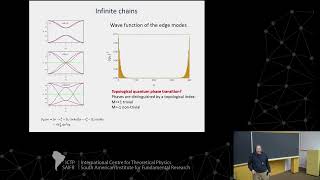
Hybridization Induced Superconductivity in Non-Interacting Chains
Explore hybridization-induced superconductivity in non-interacting chains, examining its effects on quantum materials with strong electron correlations.
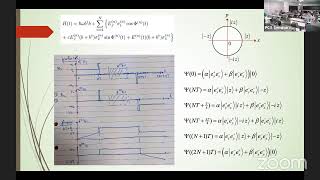
Nanomechanical Control of Superconducting Charge-Qubit Networks
Explore nanomechanical manipulation of superconducting charge-qubit networks using nanoelectromechanical setups and time-protocols for quantum information transduction and entanglement.
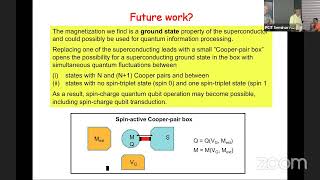
Magnetizing a BCS Superconductor by Spin-Dependent Tunneling
Explore spin-dependent tunneling in BCS superconductors and its potential for unlocking spin degrees of freedom, enabling novel spintronics applications and dissipation-less spin currents.
Generation, Modulation, and Enhancement of Superconductivity by Quantum Geometry
Explore quantum geometry's role in superconductivity, from high-temperature systems to finite-momentum pairing states and spin-triplet superconductivity triggered by ferromagnetic fluctuations.
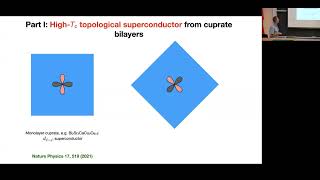
D-mon: An Improved Transmon Qubit Based on a Cuprate Josephson Junction
Explore advancements in quantum computing with the d-mon, an enhanced transmon qubit utilizing cuprate Josephson junctions, presented by Marcel Franz from UBC.
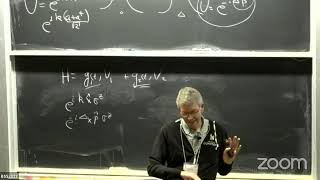
Superconducting Qubits and Quantum Simulation - Lecture 3
Explore advanced concepts in superconducting qubits and quantum simulation with Steven Girvin's in-depth lecture at BSS Physics School.
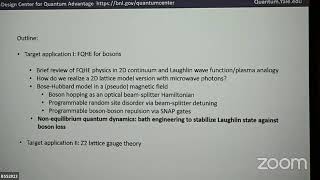
Superconducting Qubits and Quantum Simulation - Lecture 2
Explore advanced concepts in superconducting qubits and quantum simulation with Steven Girvin, delving into cutting-edge research and applications in quantum physics.