Inference Poses for Reconstruction of 3D Molecular Volumes from Cryo-EM Images
Explore innovative techniques for reconstructing 3D molecular structures from cryo-EM data, focusing on the cryoAI algorithm that combines machine learning and physics-based approaches for efficient processing of large datasets.
Molecular Structure Extrapolation to Zero Dose with CryoEM - IPAM at UCLA
Explore zero-dose extrapolation in cryoEM, enhancing structural detail and insights into radiation damage for improved molecular visualization and atomic model refinement.

Musculoskeletal System - Type I Muscle Fibers
Explore the structural, metabolic, and functional characteristics of Type I (slow oxidative) muscle fibers in this comprehensive lecture on musculoskeletal physiology.

OpenFold - Lessons and Insights From Rebuilding and Retraining AlphaFold2
Insights from rebuilding AlphaFold2: OpenFold's optimized implementation, training process analysis, and implications for protein structure prediction and broader applications in structural biology.
Pose Estimation, Temperature, Noise, and Biological Temperature Sensors via Cryo-EM
Explore pose estimation, temperature, noise, and heterogeneity in cryo-EM for understanding biological temperature sensors, with focus on TRP channels and advanced analytical techniques.
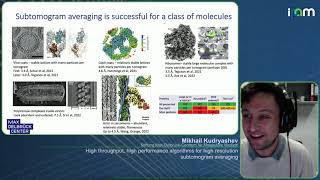
High Throughput, High Performance Algorithms for High Resolution Subtomogram Averaging
Explore high-performance algorithms for subtomogram averaging in cryo-electron microscopy, focusing on tools like TomoBEAR and SUSAN to enhance throughput and resolution in structural biology.

Antibody Therapeutics and Pathways to Prevention
Explore cutting-edge antibody therapeutics and prevention strategies for COVID-19 with experts from Rockefeller University, discussing ongoing research and clinical efforts to combat the pandemic.
Momentum Grows for the African Light Source
Explore the importance of an African Light Source for addressing challenges, developing skills, and driving innovation in science and technology across the continent.

More Synchrotron Light for Latin America in the Greater Caribbean
Explore the potential for expanding synchrotron light facilities in Latin America and the Caribbean, discussing scientific advancements, regional collaborations, and socioeconomic impacts.

The Effect of Osmotic Pressure on Collagen Mimetic Sequences
Groundbreaking analysis of collagen molecule behavior upon dehydration using collagen mimetic peptides. Reveals sequence-dependent elongation or contraction, crucial for understanding biological materials.
The State of Protein Structure Prediction and Related Advancements
Explore advancements in protein structure prediction, focusing on OpenFold's optimized implementation of AlphaFold2 and its implications for structural biology research.
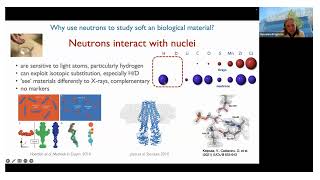
Neutron Scattering - Exploring Cell Membrane Mechanisms
Neutron scattering techniques for studying cellular membrane structure and dynamics, focusing on model membrane systems and their interactions with biologically relevant molecules.

AI in Structural Biology: Roots of Success
Explore the history and impact of AI in protein structure prediction, focusing on AlphaFold 2's breakthrough and its implications for structural and cell biology research.
Generalized Biomolecular Modeling and Design with RoseTTAFold All-Atom
Explore advanced biomolecular modeling using RoseTTAFold All-Atom. Learn to predict and design complex biological assemblies, including proteins, nucleic acids, and small molecules, with applications in drug discovery and synthetic biology.
Protein Folding and Design - Day 5
Explore protein folding and design techniques with Alex Tong, delving into advanced machine learning applications for drug discovery and structural biology.

OpenFold: Lessons Learned and Insights from Rebuilding and Retraining AlphaFold2
Explore insights from rebuilding AlphaFold2, including performance analysis, learning mechanisms, and current progress in protein structure prediction.

Protein Folding Algorithms - Lecture 9
Explore protein folding algorithms, their applications, and computational approaches in structural biology and drug discovery.
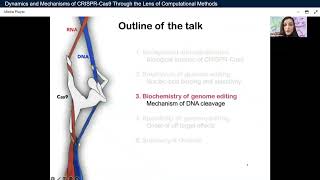
Dynamics and Mechanisms of CRISPR-Cas9 Through the Lens of Computational Methods
Explore computational methods revealing CRISPR-Cas9 dynamics and mechanisms, from RNA binding to large-scale conformational changes, enhancing understanding of this revolutionary genome-editing tool.
Cracking the Nuclear Codes: Finding Order in Chaos
Explore interdisciplinary research blending virology, biology, and genomics to uncover genetic circuits in viral replication and cancer growth, with insights from the Salk Institute.

gRNAde: Geometric Deep Learning for 3D RNA Inverse Design
Explore gRNAde, a geometric deep learning pipeline for 3D RNA inverse design. Learn about its architecture, use cases, and advantages over traditional methods in RNA sequence design.
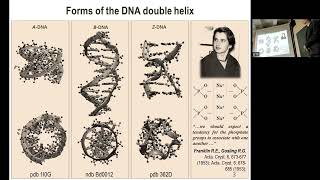
Конформаційна гнучкість молекул поліамінів у комплексах з ДНК
Дослідіть конформаційну гнучкість молекул поліамінів та їх взаємодію з ДНК через призму теоретичної фізики та молекулярного моделювання.