Ansible Best Practices for Startups to Enterprises
Discover best practices for Ansible automation, from project layouts to inventory management, ensuring reliable and easy-to-maintain solutions for organizations of all sizes.
Red Hat Business Automation Primer - Vision and Roadmap
Explore Red Hat's vision for business automation, featuring cloud-native tools, intuitive user experiences, and dynamic process development for enhanced efficiency and agility in digital transformation projects.
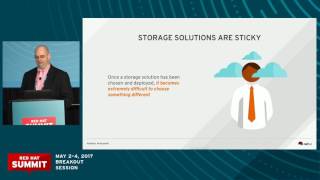
Why Storage Matters for Your Digital Transformation
Explore software-defined storage solutions for flexible, scalable services to meet digital transformation challenges. Learn how Red Hat Storage can help organizations adapt to growing demands efficiently.
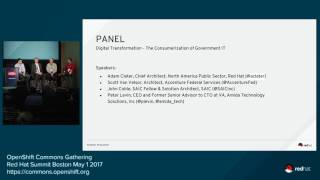
Digital Transformation - The Consumerization of Government IT
Digital transformation in government IT: Modernizing practices, tools, and platforms to meet stakeholder needs and expectations. Insights on consumer-facing infrastructure, open source health records, and developer satisfaction.
An Open Platform to Support Digital Transformation
Explore Red Hat OpenShift Application Runtimes for transitioning from monolithic to microservices architecture, enabling legacy and new applications to coexist on a unified cloud platform.
Empowering Digital Transformation Together
Microsoft and Red Hat's partnership for digital transformation: combining technologies and support for holistic hybrid cloud solutions, empowering enterprises and individuals in their cloud journey.
Impact of the Individual
Explore the impact of individual participation on innovation, featuring insights from industry leaders and real-world examples of open-source collaboration in government and technology.

Bug Bounties - Relationship Advice for the Hunters and the Hunted
Explore bug bounty dynamics, structure, and benefits for both hunters and companies. Learn strategies for successful programs and navigating challenges in this evolving cybersecurity landscape.
Can Twitter Really Expose Psychopath Killers' Traits?
Explore the potential of Twitter data to reveal psychopathic traits in killers. Delve into psychological research, profiling techniques, and the intersection of social media and criminal behavior analysis.
Unmasking the Chameleons of the Criminal Underground
Unmasking cybercriminals' sophisticated techniques for account takeover attacks, focusing on machine fingerprint markets, their impact on Canadians, and strategies for protection against this growing threat.
Digital Technologies
Explore digital technologies' impact on industry, from digital twins to generative adversarial networks. Learn about disruptive innovations and their potential to drive exponential growth in Thailand's industrial sector.
How to Think - About Complex Adversarial Systems
Eleanor Saitta explores advanced security thinking, focusing on patterns, system-wide approaches, and human factors. She discusses key concepts like resource conflicts, intuition, vulnerabilities, and adaptive capacity for effective security practices.
Zero Trust Networks - In Theory and in Practice
Comprehensive exploration of Zero Trust Networks, covering theory, implementation strategies, key systems, and practical considerations for enhanced network security.
Innovating with Big Data and Data Science on Oracle Cloud Infrastructure
Explore Oracle's cloud-native platform for data science and big data, featuring product updates, demos, and customer stories on leveraging AI and machine learning for digital transformation.
Cloud Platform and Middleware Strategy and Roadmap
Explore Oracle's cloud platform services and on-premise software strategy, covering workload modernization, SaaS transition, API-first applications, IT optimization, and real-time analytics for digital transformation.
The Race to Reinvent the Future
Sandra Ng discusses digital transformation, highlighting the Future Enterprise concept and key factors for success in the digital era, including culture, leadership, digital powerhouses, empathy, and resilience at scale.
Intelligent Automation - Delivering Automation that Funds Digital Innovation
Explore data science, AI, and ML for operational savings and digital innovation. Learn strategies for optimizing processes and leveraging technology to drive business transformation.

Driving Impactful Business Results
Oracle CEO Safra Catz and global business leaders discuss innovative solutions for complex challenges, leveraging technology to drive growth, reduce costs, and transform industries in the digital age.
Predict the Future - or Don't - with Machine Learning in Applications
Explore machine learning for data-driven predictions in enterprise applications using Oracle Machine Learning. Learn through code examples and demos how to build models and apply insights on database data.
From Managerial Feudalism to the Revolt of the Caring Classes
Exploring the paradox of digitization's impact on productivity across sectors and proposing a new economic paradigm based on different values to understand modern economies.
MRMCD2019 Politik und OpenSource "Brettspiele"
Überblick über Herausforderungen bei Open-Source-Hardware im Vergleich zu Software: Lizenzen, Distribution, Verkauf, Finanzierung, Abfall, Haftung, Logistik und Support.