
A People-First Strategy for Digital Transformation
Discover strategies for human-centered digital transformation, focusing on problem-solving techniques to create successful innovations that prioritize user needs and improve experiences.

How to Stay Competitive Through Disruption
Discover strategies for business model innovation and adaptation in disruptive markets. Learn to analyze, evaluate, and optimize your company's approach to creating and capturing value.

AI Transforms Health Care - The Future of Medicine and Health Care
Explore AI's transformative role in healthcare, focusing on ethical implementation, data structure, and real-world applications. Learn about Stanford's innovative AI projects and their impact on patient care.

The Logic of a Campaign in the American Revolution - Lecture 17
Explore British military strategy during the American Revolution, examining logistical challenges, underestimations, and shifting tactics as the conflict unfolded from displays of force to major battles.

Game Theory: Understanding Others' Perspectives and Strategic Decision-Making - Lecture 2
Explore game theory concepts like dominant strategies, rationality, and common knowledge through real-world examples. Gain insights into strategic decision-making and player interactions.

Introduction to Game Theory - Strategies, Payoffs, and Strategic Thinking
Explore game theory fundamentals through interactive play, learning strategic thinking, decision-making, and real-world applications. Understand key concepts like dominant strategies and coordination problems.

Best Responses in Game Theory - Soccer Penalties and Business Partnerships
Explore game theory concepts through soccer penalty kicks and business partnerships, focusing on best responses and introducing Nash Equilibrium.

Efficient Markets vs. Excess Volatility - Financial Markets
Explore theories of stock price analysis, including efficient markets and random walk, and their implications for predicting market behavior and beating the market.
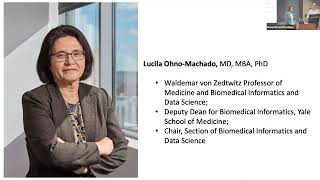
Biomedical Informatics Strategies to Enhance Individualized Predictive Models
Explore strategies for enhancing individualized predictive models in biomedical informatics, focusing on cutting-edge approaches and their potential impact on personalized healthcare.

Markets Without Limits - Jason Brennan, Hayek Lecture Series
Explore the ethics of market exchanges, challenging anti-commodification arguments and examining the societal norms that shape our perceptions of controversial transactions like organ sales.

Industry Insights: COVID-19 Impact on Supply Chain and Logistics
Industry professionals discuss COVID-19's impact on logistics and supply chain operations, exploring trends, technology adaptation, manufacturing changes, job prospects, and pathways to graduate roles in the field.
Design Thinking - A Primer
Explore design thinking principles and techniques through lectures, workshops, and case studies to enhance problem-solving skills and foster innovation.

Transboundary Problems in Infectious Diseases
Explore global infectious disease challenges, behavioral impacts on epidemics, and strategic approaches to healthcare. Learn about international case studies and innovative solutions in disease control.

Cris Moore on Algorithmic Justice and The Physics of Inference
Exploring algorithmic justice and inference physics, this talk delves into the limits of AI decision-making, emphasizing transparency, model suitability, and the importance of understanding technology's boundaries in complex problem-solving.

The Brain and the Law - How Neuroscience Will Shift Blameworthiness
Explore how neuroscience challenges criminal justice assumptions, examining brain equality, incarceration effectiveness, and rehabilitation technologies. Insights into unconscious behavior drivers and future-focused legal approaches.
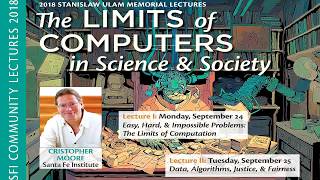
Data, Algorithms, Justice and Fairness - Lecture 2
Exploring algorithmic fairness in justice systems: accuracy, data sources, and potential biases. Discusses AI decision-making, explainability, and societal implications of algorithms in criminal justice.
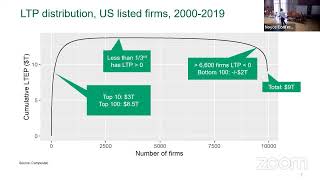
A Simple Law for the Distribution of Long-term Profits
Explore the distribution of long-term profits among US firms, examining statistical models and their implications for understanding economic dynamics and 'superstar' effects.

Media Complexity: Towards a Research Agenda to Study News Media Ecosystems
Explore how complexity theory can revolutionize journalism research, offering new insights into digital media ecosystems, narrative evolution, and audience engagement in the modern news landscape.
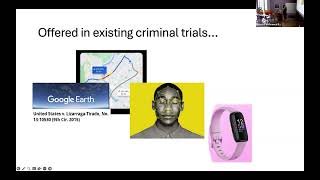
Beyond Prediction: Algorithmic Proof of Guilt or Innocence in Criminal Trials
Explore the use of algorithms in criminal trials for evidence, examining accuracy, fairness, and transparency concerns. Discuss challenges and potential solutions for courts and researchers.

Marketing Analytics
Learn R programming and advanced marketing analytics techniques, including consumer behavior, segmentation, pricing, forecasting, and data-driven decision-making for business success.

Manufacturing Systems Technology Part II
Explore quality engineering, design experiments, and statistical tools for manufacturing. Learn robust design, control charts, and probability distributions to enhance product quality and process efficiency.