Nonlinear and Scaling Processes in the Atmosphere and Ocean at All Scales
Explore cutting-edge research on nonlinear and scaling processes in atmospheric and oceanic systems, covering climate reconstructions, sensitivity, long-range memory, megadroughts, turbulence, and micro-scale phenomena.
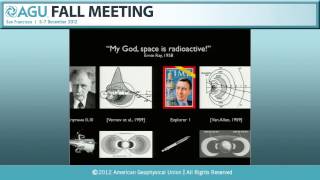
Dynamic Regimes of Space Plasmas - Deterministic or Stochastic? - Lecture 1
Explore statistical and physical aspects of self-organized criticality in solar flares and astrophysical phenomena, and the complexity of radiation belt electron transport at Earth.
Martin Hairer - Stochastic Quantisation of Yang-Mills
Explores recent progress in constructing a stochastic process with Yang-Mills measure as its invariant measure, focusing on gauge-covariance preservation despite UV regularization breaking.
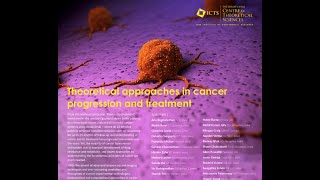
Chance and Necessity: Decision Making in Single Cancer Cells - Lecture 2
Explore decision-making processes in individual cancer cells, examining the interplay between randomness and determinism in cellular behavior and its implications for cancer progression.
Interacting Polya Urns - Statistical Mechanics Beyond 2D
Explore interacting Polya urns on graphs, their asymptotic behavior, and convergence to equilibrium in this statistical mechanics presentation by Omer Angel at UCLA's IPAM workshop.
The Grapheme-Valued Wright-Fisher Diffusion With Mutation by Anita Winter
Explore grapheme-valued Wright-Fisher diffusion with mutation in population genetics. Gain insights into mathematical models for genetic variation and evolutionary processes.
Inhomogeneous Multispecies t-PushTASEP and Macdonald Polynomials
Explore connections between inhomogeneous multispecies t-PushTASEP's stationary distribution and Macdonald polynomials at q=1 in this advanced mathematics lecture by Harvard's Lauren Williams.
The Inhomogeneous Multispecies PushTASEP
Explore multispecies PushTASEP variants, stationary distributions, and symmetry properties. Discover explicit formulas for correlations using Schur functions in this advanced mathematical presentation.
Compact Formula for Symmetric Macdonald Polynomials via ASEP and TAZRP
Explore connections between particle models and Macdonald polynomials, unveiling a new compact tableau formula with applications in probability and integrable systems.
Is It Dark Matter, or Is Spacetime Undergoing a Random Walk?
Explore a theory combining classical and quantum systems, applying it to general relativity to explain galactic rotation curves without dark matter through stochastic spacetime processes.
Transition from Fractional Diffusion to Normal Diffusion in Kinetic Models
Explore the transition between fractional and normal diffusion in kinetic models, examining mathematical principles and applications in complex systems.
Range Dynamics for a Spatially Structured Asexual Population
Explore range dynamics of spatially structured populations, considering spatial propagation and evolutionary dynamics in heterogeneous environments.
Ancestors' Genetic Weights in Biparental Populations
Explore genetic composition in biparental populations using a Moran model. Analyze ancestral genome proportions and their convergence as population size increases.
Filling the Gap Between Individual-Based Evolutionary Models and Hamilton-Jacobi Equations
Explore Hamilton-Jacobi equations in quantitative genetics, bridging stochastic individual-based models and phenotypic density analysis through asymptotic derivations and population dynamics.
A Multiple Time Renewal Equation for Neural Assemblies with Elapsed Time Model
Explore neural assemblies through a multiple time renewal equation, focusing on the elapsed time model and its implications for understanding brain dynamics.
Fokker-Planck Equations of Neuron Networks: Understanding Time Periodic Solutions
Explore Fokker-Planck equations in neuron networks, focusing on time periodic solutions and their implications for neural dynamics.
Noise-Driven Bifurcations in Neural Field Systems Modeling Grid Cell Networks
Explore noise-driven bifurcations in neural field systems, focusing on grid cell network modeling and their implications for spatial navigation.
Propagation of Chaos and Poisson Hypothesis for Replica Mean-Field Models
Explore propagation of chaos and Poisson hypothesis in replica mean-field models, delving into advanced statistical physics concepts.
Time Averages of a Metastable System of Spiking Neurons
Explore metastable systems of spiking neurons and their time averages in this concise neuroscience lecture by Morgan André.
Spontaneous Oscillations in Pure Excitatory Mean Field Networks of Neurons
Explore spontaneous oscillations in excitatory neural networks through mean field analysis, uncovering insights into complex neuronal dynamics.
Bayesian Phylogeography Along a Continuum: Sampling Its Way in a Random Walk
Explore Bayesian phylogeography techniques for analyzing species distribution patterns using continuous spatial models and random walk sampling methods.