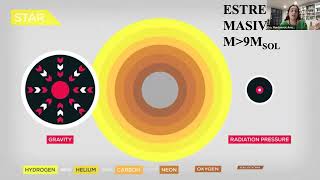
Las Estrellas a tu Alcance: Agujeros Negros y Estrellas de Neutrones de Binarias de Rayos-X
Explora agujeros negros y estrellas de neutrones en binarias de rayos-X. Descubre la física de la acreción y cómo estos objetos compactos convierten masa en energía eficientemente.
Las Estrellas a tu Alcance: Una Vista Binaria de Estrellas Masivas
Explora cómo las estrellas masivas forman, desarrollan y mueren a través del estudio de sistemas estelares múltiples. Aprende sobre su impacto en el universo y los desafíos de su observación.
Black Holes and Neutron Stars - A Merger in Space
Explore the groundbreaking detection of colliding black holes and neutron stars, their implications for astrophysics, and how they're revolutionizing our understanding of the universe through gravitational wave astronomy.
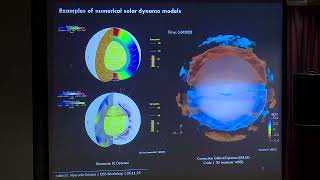
The Fundamentals: Physical Origins of Particles in Circumstellar Space
Explore the physical origins of particles in circumstellar space with Dr. Julián Alvarado-Gómez's insightful lecture on extrasolar space weather and its impact on exoplanet evolution.
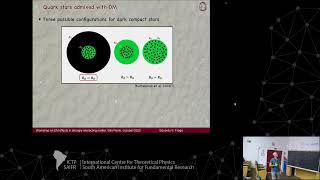
Strange Magnetars Admixed with Fermionic Dark Matter
Explore strange magnetars and their interaction with fermionic dark matter in this advanced astrophysics presentation by Eduardo Souza Fraga.
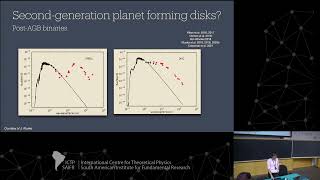
Exoplanets Beyond the Main Sequence - Class 4
Explore exoplanets beyond main sequence stars, focusing on detection methods, characteristics, and implications for planetary evolution and habitability.
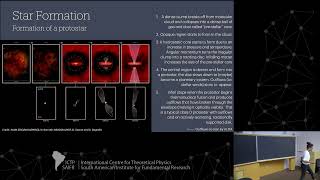
Exoplanets Beyond the Main Sequence - Class 1
Explore exoplanets beyond main sequence stars, focusing on detection methods, characteristics, and implications for planetary evolution and habitability.
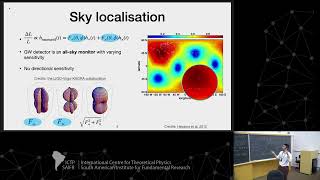
The Evolution of Compact Objects Across Cosmic Time - Class 3
Explore the cosmic evolution of compact objects, from gravitational waves to exoplanets, in this advanced astrophysics lecture by Filippo Santoliquido.
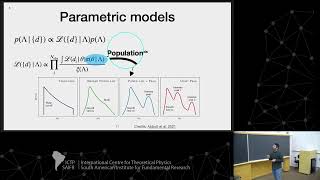
The Evolution of Compact Objects Across Cosmic Time - Class 2
Explore the cosmic evolution of compact objects, from gravitational waves to exoplanets, in this comprehensive lecture by Filippo Santoliquido.
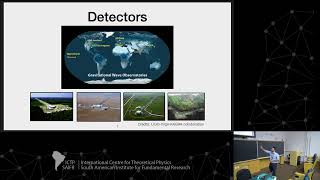
The Evolution of Compact Objects Across Cosmic Time - Class 1
Explore the cosmic evolution of compact objects, from gravitational waves to exoplanets, in this comprehensive astrophysics lecture.
The AAVSO-SNEWS Campaign: Monitoring Potential Supernova Progenitors
Explore the AAVSO-SNEWS collaboration monitoring potential supernova progenitors. Learn about campaign progress, observing opportunities, and insights from experts in particle astrophysics and stellar variability.
The Stars: Their Birth, Life, and Death
Embark on a cosmic journey exploring stellar evolution, from birth to death, discovering the fundamental properties, distances, and remarkable characteristics of the countless stars illuminating our universe.
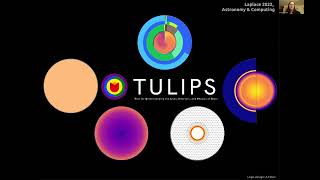
Visualizing MESA Models with TULIPS - How to Python
Learn to visualize MESA stellar evolution models using TULIPS Python package. Create plots and animations showing changes in stars over time. Enhance understanding of stellar structure and evolution.
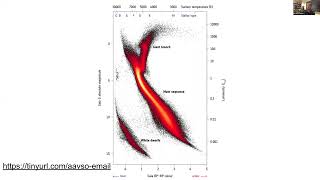
How to Model Isochrones Using Images of Star Clusters
Explore star cluster physics through image analysis. Learn to construct color images and model isochrones, revealing stellar evolution insights in this art-meets-science approach.
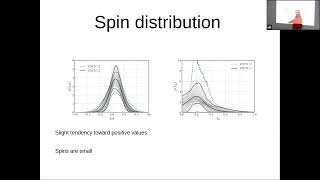
Where Do Merging Binary Black Holes Come From?
Explore the origins of merging binary black holes, examining LVK detections, formation models, and their comparison to observational data.
Heavy Metal: How the Smallest Galaxies Impact the Life Cycle of Elements in Our Universe
Explore the role of small galaxies in the cosmic metal cycle, examining their metal content and evolution over billions of years using deep space observations from Hubble and ground-based telescopes.
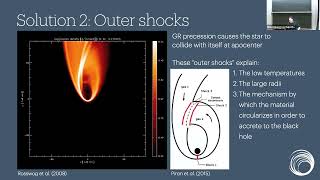
Stars Disrupted, Destroyed and Coalesed: Investigating Supernovae and Stellar Events
Explore groundbreaking research on stellar phenomena including supernovae, tidal disruption events, and neutron star mergers, examining their impact on understanding cosmic evolution and fundamental physics.
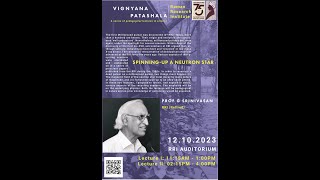
Spinning-Up a Neutron Star
Explore the fascinating physics of neutron stars and their rotational dynamics through pedagogical lectures designed for university-level understanding of these dense cosmic objects.
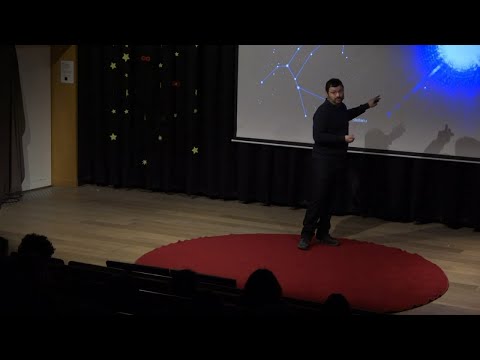
Les Étoiles Doubles et Multiples | Thibault Merle | TEDxYouth@EEB3
Contrairement au Soleil, de nombreuses étoiles de la Voie Lactée ont un ou plusieurs compagnons stellaires. Je vous propose de vous promener avec moi parmi l'infini des étoiles et au-delà pour découvrir des étoiles doubles et des systèmes stellaires avec 2 compagnons et plus parmi les étoiles les pl