
Reproducible Builds for Ubuntu
Explore Ubuntu's reproducible builds effort, its progress compared to Debian, and potential community involvement in enhancing software transparency and security.

Drift, Jitter, and Expectations - A Story of Kernel Timers
Explore kernel timers in Zephyr, their importance, and how testing ensures quality. Learn about timer drivers, potential issues, and the significance of setting expectations.
Right-Sizing and Auto-Scaling of MySQL Containers in Kubernetes
Optimizing MySQL container resources in Kubernetes using statistical analysis and algorithms for dynamic sizing and scaling, improving performance and efficiency while reducing costs.

Cyclic Tests Unleashed: Large-Scale Real-Time Analysis with Jitterdebugger
Explore real-time Linux kernel testing with Jitterdebugger. Learn about cyclic task analysis, latency measurement, and statistical evaluation for improved system performance and reliability.
Basic Data Structures in R Programming - Vector, List, Data Frame, Matrix, Array - R Language
Comprehensive overview of essential data structures in R programming, covering vectors, lists, data frames, matrices, and arrays for effective data manipulation and analysis.

Understanding and Overcoming the Statistical Limitations of Decision Trees
Explores decision trees' statistical limitations, proposes FIGS algorithm to improve performance, and demonstrates its effectiveness in clinical decision-making and other real-world applications.
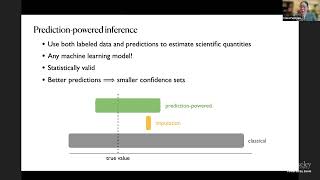
Error Embraced - Making Trustworthy Scientific Decisions with Imperfect Predictions
Explore prediction-powered inference for valid statistical analysis using machine learning predictions, with applications in proteomics, genomics, and astronomy. Learn about reliable ML-guided decisions in biological sequence design.

Efficiently Exploring Combinatorial Perturbations From High Dimensional Observation
Explore efficient methods for analyzing combinatorial perturbations in high-dimensional data, focusing on innovative approaches and practical applications.
Tea - A High-level Language and Runtime System for Automating Statistical Analysis
Introduces Tea, a declarative language for automating statistical analysis. Simplifies hypothesis testing by determining valid tests based on study design and assumptions, lowering barriers to accurate statistical research.
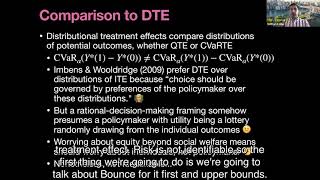
Treatment Effect Risk - Bounds and Inference
Explore bounds and inference in treatment effect risk analysis, focusing on statistical methods for causal inference and risk assessment in experimental studies.

Inside the Fake Like Factories
Investigación sobre fábricas de likes falsos en redes sociales, revelando métodos, hallazgos y consecuencias de la compra de interacciones en Facebook, YouTube e Instagram.
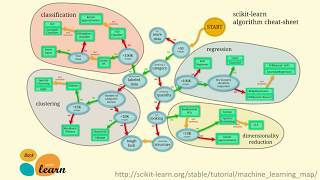
Data Science Tools and Techniques for the Blue Team
Explore data science tools and techniques for cybersecurity, including statistical analysis and machine learning, to enhance threat detection and defense capabilities in large-scale corporate environments.

Under Pressure: Real World Damage With TPMS Spoofing - DefCamp - 2019
Explore TPMS spoofing techniques, real-world implications, and mitigation strategies in this DefCamp 2019 talk on vehicle security vulnerabilities and their potential impact on autonomous driving.
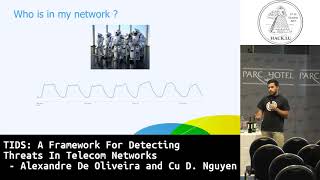
TIDS - A Framework for Detecting Threats in Telecom Networks
Explore a framework for detecting threats in telecom networks, covering monitoring, data collection, and analytics to protect infrastructure and subscribers from various attacks and privacy issues.

Who Are Entrepreneurs? The Myth and the Reality
Debunking entrepreneurship myths using LegalZoom data, revealing true demographics and challenges of small business owners in America.
Statistical Deobfuscation of Android Applications
Learn techniques for statistically deobfuscating Android apps, including probabilistic graphical models and implementation strategies, to enhance app security and analysis.
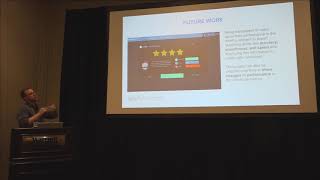
It's Not Just about Accuracy - Metrics That Matter When Modeling Expert Sketching Ability
Explores metrics beyond accuracy for modeling expert sketching ability, discussing features that differentiate expert and novice sketches to improve intelligent tutoring systems for design sketching.
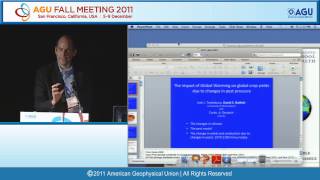
Social Impacts of Climate Change and Climate Variability
Explore climate change's social impacts, from carbon costs to disaster effects, through diverse topics like tropical cyclones, electricity consumption, and seasonal influenza.
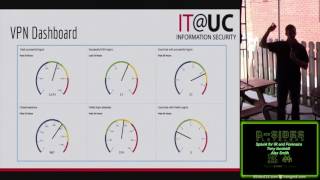
Splunk for IR and Forensics
Explore Splunk's capabilities for incident response and forensics, including log analysis, dashboards, alerts, and statistical analysis for effective cybersecurity investigations.
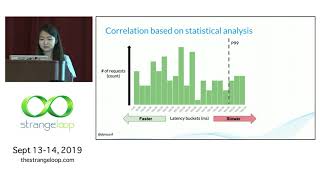
Beyond Traces - The Insights in Trace Aggregates
Explore how aggregating distributed traces reveals system-wide insights, enabling performance improvements through statistical analysis, latency anomaly detection, and resource contention identification.
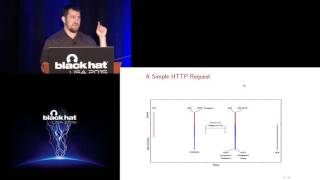
Web Timing Attacks Made Practical
Explore practical web timing attacks, improving data collection and statistical analysis for more effective penetration testing. Learn adaptive techniques and open-source tools for identifying cryptographic vulnerabilities.