From Zero to Hero: Building an A/B Testing System from Scratch
Learn to build an A/B testing system from scratch, covering bucketing, splitting, feature toggling, and avoiding common pitfalls. Gain skills to implement successful testing for data-driven decision-making.
Addressing Cultural and Technical Challenges in Product Experimentation - Beyond the Tool
Explore cultural and technical challenges in product experimentation, focusing on hypothesis testing, causal inference, and data science techniques beyond traditional methods.

Fundamentals of A/B Testing - Exploring Challenges and Benefits
Discover the fundamentals of A/B testing, its importance, and how to build a testing platform with a small team. Learn about challenges, cultural shifts, and metrics in testing.
Contained Chaos - Ensemble Consistency Testing for the Community Earth System Model
Explore ensemble consistency testing for climate models, focusing on the Community Earth System Model. Learn about statistical methods to evaluate model changes and ensure software quality in climate simulations.
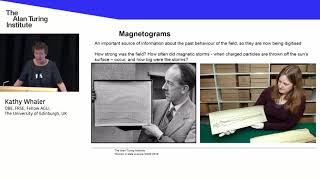
How Big Data Has Transformed and Is Transforming Geophysics
Exploring geophysical advancements: from analog instruments to digital data collection, satellite technology, and machine learning, revolutionizing Earth and planetary studies.
Police Chase Simulation with Obstacles - Episode 7
Explore a physics simulation of a police chase with random obstacles, analyzing motion, probability, and decision-making using Scilab programming.
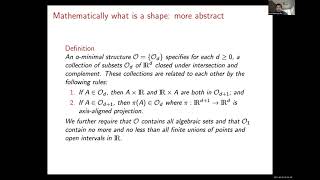
Modeling Shapes and Fields - A Sheaf Theoretic Perspective
Explore topological transforms for shape and field modeling, including Euler Characteristic and Lifted Euler Characteristic. Learn about sheaf theory in shape space construction and its applications in statistical analysis.
Capturing Turbulent Dynamics and Statistics in Experiments Using Exact Coherent States
Explore turbulent dynamics using Exact Coherent States, revealing coherent structures in experiments, forecasting turbulent evolution, and providing a geometric description of transient turbulence.
Beyond-Gaussian Statistics for Cosmological Clustering - K-Nearest Neighbor by Arka Banerjee
Explore advanced statistical techniques for analyzing cosmological clustering data using k-Nearest Neighbor methods, enhancing understanding of large-scale structure in the Universe.

Discussing Turbulence - Novel Scaling and Symmetry Approaches
Explore novel turbulence scaling in fluid mechanics through symmetry theory and high-resolution simulations. Gain insights from Martin Oberlack's research on wall-bounded shear flows and channel flow dynamics.
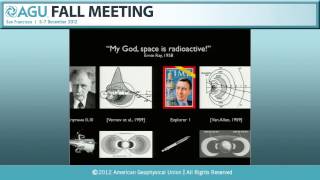
Dynamic Regimes of Space Plasmas - Deterministic or Stochastic? - Lecture 1
Explore statistical and physical aspects of self-organized criticality in solar flares and astrophysical phenomena, and the complexity of radiation belt electron transport at Earth.
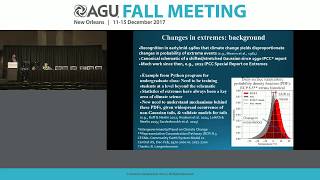
Bolin Lecture: Climate Extremes and Global Change - 2017 Fall Meeting
Explore climate change impacts on extreme weather events, focusing on precipitation patterns and El Niño dynamics. Gain insights into real-time attribution and global warming implications.

Statistical Data Analysis and Machine Learning for Neutrino Physics - Lecture 1
Introduction to statistical data analysis and machine learning techniques for neutrino physics research, covering fundamental concepts and applications in experimental analysis.
Data Assimilation - Basic Theory - Lecture 2
Explore advanced data assimilation theory, methods, and applications in weather and climate modeling. Gain insights into uncertainty estimation and remote sensing observation utilization.
Statistical Assessment of Interaction Among Brain Regions from Multi-Electrode Recordings
Explore statistical methods for assessing brain region interactions using multi-electrode recordings, enhancing understanding of neural connectivity and communication.
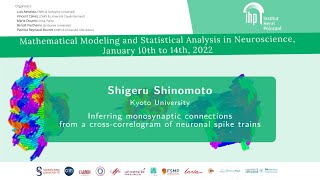
Inferring Monosynaptic Connections from Cross-Correlograms of Neuronal Spike Trains
Explore techniques for inferring monosynaptic connections from neuronal spike train cross-correlograms, enhancing understanding of neural network structures.
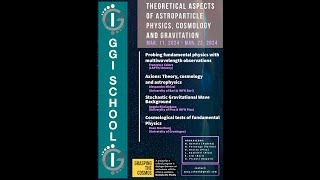
Stochastic Gravitational Wave Background - Lecture 5
Explore the intricacies of stochastic gravitational wave backgrounds in this advanced physics lecture, delving into theoretical concepts and current research developments.
Cosmic Tensions - Lecture 5
Exploración de las tensiones cósmicas y sus implicaciones para nuestra comprensión del universo, presentada por el destacado cosmólogo Josè Luis Bernal.
Cosmic Tensions - Lecture 4
Explore cosmic tensions in astrophysics, examining discrepancies in cosmological measurements and their implications for our understanding of the universe.
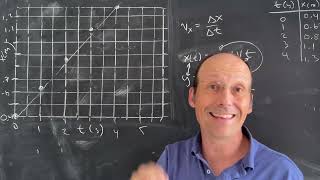
Physics Lab: Using Data to Plot Linear Functions
Learn to create linear graphs for physics labs using Vernier's Graphical Analysis software, enhancing data visualization and analysis skills.
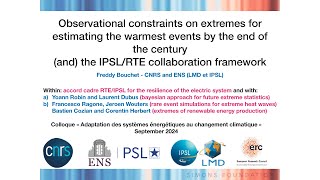
Observational Constraints on Extremes for Estimating the Warmest Events by the End of the Century
Explore observational constraints on extreme climate events and their impact on future temperature predictions through the IPSL/RTE collaboration framework.