
Comprehensive Guide to 160+ Best Stable Diffusion 1.5 Custom Models - Comparison and Download Script
Comprehensive tutorial on downloading and comparing 160+ top Stable Diffusion 1.5 models, with detailed analysis of their performance, capabilities, and output quality across various prompts and resolutions.
High-Resolution Advanced Inpainting with ComfyUI - SDXL and IP-Adapter Integration
Explore advanced high-resolution inpainting techniques in ComfyUI, including SDXL integration, IP-Adapter usage, and workflow optimization for enhanced image editing and generation.

AI Image Generation: Demos and Implications
Explore free AI image generators like Stable Diffusion, Bing Image Creator, and Leonardo AI. Learn their capabilities and discuss broader implications of this emerging technology.
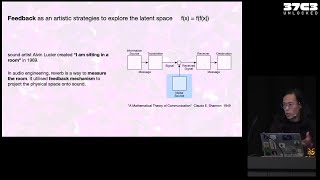
Self-Cannibalizing AI: Exposing Generative Text-to-Image Models
Artistic strategies to expose generative AI models' inner workings, biases, and limitations. Experiments with Stable Diffusion, dataset filtering, CLIP, and recursive image generation reveal unexpected correlations and default patterns.
Stable Diffusion 3 Early Preview - Capabilities and Experiments
Explore Stable Diffusion 3's capabilities in image generation, from complex prompts to natural language inputs, covering various applications like UI design, photography, and architecture visualization.
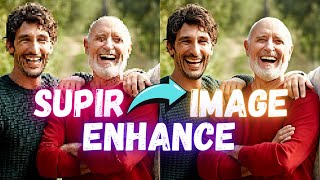
Complete Guide to SUPIR - Enhancing and Upscaling Images Like in Sci-Fi Movies on Your PC for Free
Learn to install, configure, and use SUPIR, an advanced open-source image upscaler and enhancer, for high-quality image restoration on your PC with step-by-step guidance and optimization tips.
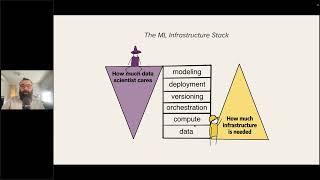
Orchestrating Generative AI Workflows to Deliver Business Value
Explore leveraging Large Language Models in existing software ecosystems using Python. Learn to balance innovation with established practices, applying text-to-image and text-to-speech technologies for robust, production-ready AI systems.

Using RunPod Storage Network Volume with Automatic1111 and ControlNet - Advanced Tutorial
Comprehensive guide on using RunPod's Storage Network Volume, deploying Automatic1111 with ControlNet, and leveraging InstantID for advanced image generation and face transfer techniques.
LoRAX - Serving Thousands of Fine-Tuned LLMs on a Single GPU
Explore LoRAX, an innovative LLM inference system enabling efficient serving of multiple fine-tuned models on a single GPU. Learn about dynamic adapter loading, heterogeneous batching, and scheduling techniques.

Generative AI: Fine-Tuning LLM Models Crash Course
Comprehensive guide to fine-tuning LLMs using advanced techniques like QLORA and quantization, covering theoretical concepts and practical implementations with popular models like LLama2 and Google Gemma.

Fooocus: A User-Friendly Stable Diffusion Web UI for High-Quality Image Generation - Tutorial
Explore Fooocus, a powerful Stable Diffusion Web UI with 200+ styles, automatic model downloads, and advanced features for effortless AI image generation. Learn installation, usage, and creative techniques.

FLUX LoRA Training Tutorial: From Zero to Hero with Kohya SS GUI - 8GB GPU, Windows
Comprehensive guide to FLUX LoRA training using Kohya SS GUI, covering installation, configuration, dataset preparation, training process, and image generation with practical tips for optimal results.

Local Flux.1 LoRA Training Using AI-Toolkit
Learn to create custom LoRAs for Flux.1 image generation on your PC, enhancing style and object control. Explore the process, requirements, and potential future developments in AI image customization.

Flux.1 Image-to-Image and LLM Prompt Enhancement in ComfyUI
Explore image-to-image composition control and AI-assisted prompt enhancement in ComfyUI, featuring Flux.1 workflows and LLM integration for improved image generation.
ControlNet Union ProMax, Pixart Sigma 900M, and New ComfyUI Features
Explore new ComfyUI features: ControlNet Union ProMax, Pixart Sigma 900M, improved background removal, and more. Enhance your AI image generation capabilities with these free tools.

Introduction to Generative AI Tools
Explore generative AI tools and their applications in various fields. Gain insights into cutting-edge technologies shaping the future of artificial intelligence.

Make Your Own Scheduler in ComfyUI
Create custom schedulers in ComfyUI for various AI models. Learn scheduler functionality, benefits, and implementation techniques for enhanced image generation control.
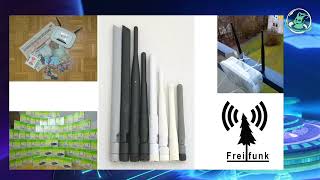
Antennen vermessen
Praktische Einführung in die Vermessung und Optimierung von Antennen für verschiedene Funktechnologien. Erklärt Unterschiede zwischen Antennentypen, Kabeln und Filtern für bessere Leistung.
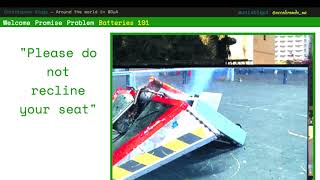
Around the World in 80 Microamps - ESP32 and LoRa for Low-Power IoT
Explore ultra-low-power IoT sensor design using ESP32 and LoRa. Learn battery selection, power optimization, deep-sleep modes, and solar integration for long-lasting wireless environmental monitoring.
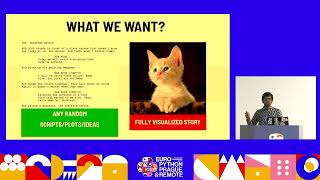
Story Generation Using Stable Diffusion in Python
Explore coherent visual story synthesis using AR-LDM, a latent diffusion model for story visualization and continuation tasks, leveraging history captions and generated images.

Latest Breakthroughs in AI Image Generation Tools - Ideogram Canvas, MidJourney, and OpenAI Updates
Discover the latest breakthroughs in AI image generation tools, including Ideogram Canvas's outpainting features, MidJourney's new editor, Stable Diffusion 3.5's capabilities, and OpenAI's innovative consistency models.