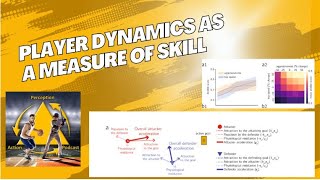
Player Dynamics and Skill in Football Dribbling
Explore football dribbling skill measurement through player dynamics, analyzing techniques and metrics for performance evaluation.
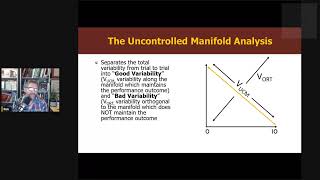
Understanding Sport Injury from a Dynamical Systems Approach
Explore sports injury through a dynamical systems lens, examining good variability, coordination, and movement synergies for enhanced prevention and rehabilitation strategies.
Functional Variability in Cricket Bowling Delivery
Exploring how cricket bowlers use movement variability to regulate timing and speed of delivery, challenging the notion of repeatability in sports performance.
Individual Differences in Muscle Load Magnitude and Variability During Repetitive Actions - Lecture 470
Explores individual differences in elbow load during repetitive baseball pitching, examining magnitude, variability, and effects of repeated action on pitchers' elbows.
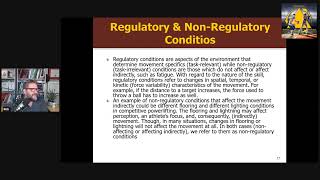
An Applied Model for Using Variability in Practice
Explore an innovative approach to enhancing athletic performance through strategic implementation of variability in training regimens and skill acquisition.
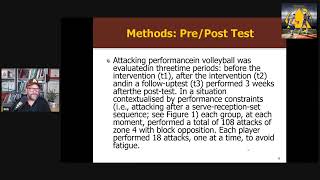
Functional Variability in the Volleyball Attack Developed via the Constraints-Led Approach
Explore how functional movement variability enhances skill adaptation in volleyball attacks, improving players' ability to overcome defensive blocks and adapt to changing game conditions.
An Applied Model for Using Variability in Practice
Exploring an applied model for incorporating variability in practice, discussing its implementation, timing, and benefits for skill development and performance enhancement.
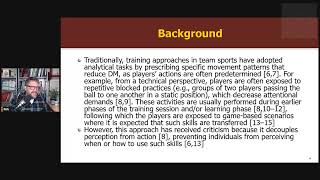
Kicking Against Walls and Decision Making in Soccer Practice
Explore how adding decision-making elements to soccer drills enhances skill development and on-field performance, with insights from research on youth football training methods.
Kicking Against Walls and Decision Making in Soccer Practice - Episode 447
Analyzing soccer drills for improved representativeness and on-field relevance. Explores effects of adding decision-making elements to practice activities, enhancing skill transfer and performance.
An Ecological Dynamics Approach to Measuring and Developing Collective Behavior in Football
Explore ecological dynamics in football: measuring and developing collective behavior through a novel approach that integrates macro, meso, and micro levels of analysis.
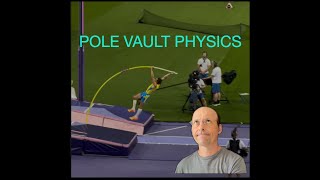
Video Analysis Physics: World Record Pole Vault
Analyze Mondo Duplantis' world record pole vault using physics principles and video analysis techniques to understand the mechanics behind this extraordinary athletic feat.
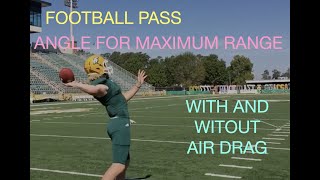
Maximum Range Launch Angle for a Football - Python Simulation
Explore optimal football launch angles using Python, considering gravity and air resistance for maximum range.
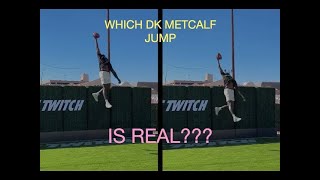
Which DK Metcalf Jump Video is Fake? - Video Analysis
Analyze a viral video of DK Metcalf's incredible catch using physics principles and video tracking software to determine its authenticity.

Building the Best Sports Science Club in the World
Benfica's journey to become the world's leading sports science club, exploring their vision, progress, and expansion strategies in a discussion with key figures.

What Women Athletes Need to Unlock Their Full Potential
Sports scientist Kate Ackerman advocates for a dedicated medical system to study and develop women athletes, supporting their health, well-being, and lifelong success beyond just equipment and apparel.
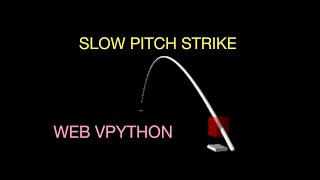
Modeling a Slow Baseball Pitch
Explore the physics behind slow baseball pitches using Python programs, analyzing their trajectory and impact on gameplay.

Understanding Fast-Twitch vs Slow-Twitch Muscle Fibers and Athletic Performance
Discover the science behind muscle fiber types, their impact on athletic performance, and how training can influence your body's natural composition of fast-twitch, slow-twitch, and hybrid fibers.
Analysis of Sports Scenes Using Computer Vision Models
Explore computer vision applications in sports analysis, from player detection to performance monitoring, using deep neural networks with practical experiments in handball scene analysis.
Advice on Applying Ecological Dynamics in Coaching - Episode 467
Practical advice for coaches on implementing ecological dynamics theory in training design, focusing on real-world applications and expert insights for effective skill development.
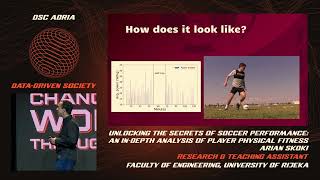
Unlocking the Secrets of Soccer Performance Through GPS Data Analytics
Discover how GPS data and analytics revolutionize soccer performance analysis by examining energy expenditure patterns and creating a comprehensive framework for evaluating player responses to game situations.

You can run 100 miles. Here's why. | Seth Moyer | TEDxBrentwoodCollegeSchool
Seth will be speaking about how every able-bodied human has the capacity to run 100 miles. He will support his claim with physiological concepts and evolutionary biology to show that our running capacity is much greater than we think. Seth is a former Division 1 lightweight rower, ultramarathon runn