How to Photograph a Black Hole - With Ziri Younsi
Explore the groundbreaking journey of photographing black holes with physicist Ziri Younsi, delving into their nature, imaging techniques, and implications for our understanding of the universe.
The CubeRover for Lunar Mobility as a Service
Explore CubeRover: an innovative, ultra-light lunar rover for diverse payloads. Learn about its modular design, scalability, and potential to revolutionize lunar exploration and commercial space ventures.
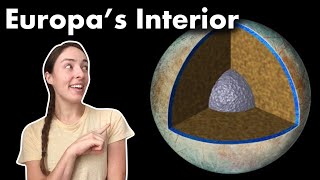
Europa's Core, Mantle, and Water Shell - What We Know and How We Know It
Explore Europa's interior structure, formation, and evidence for a liquid ocean through gravity science, geology, and magnetic field data. Learn about ongoing research and future missions.
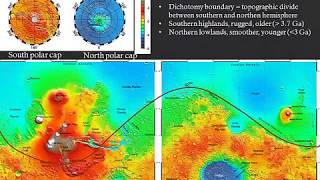
Water on Mars and the Potential for Martian Life
Explore Mars' water history, from ancient rivers to modern ice, and its implications for potential Martian life. Discover geological evidence and recent findings that shape our understanding of the Red Planet's habitability.

Glacial Mars and Its Morphological Mysteries
Explore Mars' glacial landscapes, recent ice history, and morphological mysteries. Dr. Frances Butcher discusses glaciation, meltwater, and intriguing features like eskers and inverted channels on the Red Planet.
General Astronomy - Atmospheres of the Terrestrial Planets
Explore terrestrial planet atmospheres, from lunar and Mercurian traces to Mars' winds and Venus' greenhouse effect. Understand atmospheric evolution and planetary climate dynamics.
Earth Science - The Jovian Planets and Small Solar System Bodies
Explore Jupiter, Saturn, Uranus, Neptune, and smaller celestial bodies in our solar system, including moons, asteroids, comets, and dwarf planets like Pluto.

The Webb Space Telescope - Launching a Legacy
Explore the Webb Space Telescope's revolutionary capabilities, from its inception to launch preparations, and its potential to transform our understanding of the Universe through infrared observations.

How Dark Is Space?
Explore the darkness of space beyond our solar system and discover evidence of an unknown universal light source with NASA's New Horizons probe and Dr. Tod Lauer.

The Hubble Space Telescope - From Cosmological Conflict to Alien Atmospheres
Explore the universe with Hubble: from cosmic expansion to exoplanet atmospheres. Discover groundbreaking results in astrophysics and learn about Hubble's unique capabilities driving diverse scientific discoveries.

Sailing Across the Local Universe with ULLYSES
Explore stellar spectroscopy and the ULLYSES program, uncovering the secrets of young stars through Hubble's ultraviolet observations in our galaxy and beyond.

'Oumuamua: A Mysterious Interstellar Interloper
Explore the enigmatic 'Oumuamua, the first confirmed interstellar object in our solar system. Uncover its mysterious properties, origins, and the scientific questions it raises about interstellar visitors.

The Astronomer’s Toolkit
Explore modern astronomical tools and methods, from telescopes to digital detectors, and learn how to analyze authentic NASA data in this engaging lecture on recent discoveries in space science.

Our Place in the Stars
Explore our cosmic origins, the search for extraterrestrial life, and humanity's role in space exploration with Dr. Amaya Moro-Martin in this thought-provoking astronomical journey.

Chasing Supernovae with Kepler
Explore how the Kepler spacecraft's precise measurements are used to hunt supernovae, offering insights into the early stages of stellar explosions and advancing our understanding of these cosmic events.

Webb in Three Acts - The Telescope, The Science, The Legacy
Explore the James Webb Space Telescope's groundbreaking capabilities in infrared astronomy, from observing distant galaxies to studying exoplanets, and its potential impact on our understanding of the universe.

Dawn: A Journey to the Early Solar System
Explore the Dawn mission's journey to Vesta and Ceres, uncovering secrets of the early solar system through advanced spacecraft technology and scientific instruments.
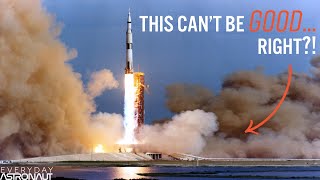
How Much Do Rockets Pollute? Are They Bad for Our Air?
Explore rocket emissions, their environmental impact, and comparisons with other pollution sources. Learn about unique aspects of rocket pollution and potential improvements in the space industry.

Is SpaceX's Raptor Engine the King of Rocket Engines?
Comprehensive analysis of SpaceX's Raptor engine, comparing it to other rocket engines and exploring its unique methane fuel and full flow staged combustion cycle technology.

How SpaceX and Boeing Will Get Astronauts to the ISS
Detailed comparison of SpaceX's Crew Dragon and Boeing's Starliner spacecraft, exploring their designs, capabilities, and roles in transporting astronauts to the International Space Station.
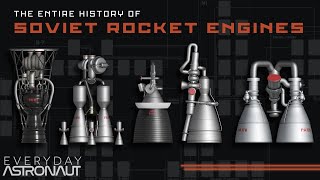
The Entire Soviet Rocket Engine Family Tree
Comprehensive exploration of Soviet rocket engine development, tracing their evolution, technological advancements, and impact on space exploration. Includes fascinating stories and lesser-known facts about these pioneering propulsion systems.