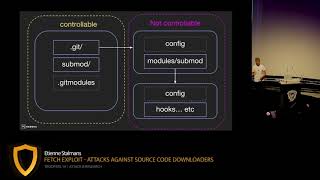
Fetch Exploit - Attacks Against Source Code Downloaders
Explore attacks against source code downloaders and learn techniques to exploit vulnerabilities in fetch mechanisms, enhancing your cybersecurity knowledge.
Your Secrets are Showing - How to Find if Your Developers are Leaking Secrets
Discover tools and techniques to identify and prevent sensitive information leaks in source code repositories, both within corporate networks and on public platforms.

KOALitionsvertragsAnalyse – Dem Vertrag auf den Zahn fühlen
Analyse des Koalitionsvertrags mit verschiedenen Textanalyse-Methoden: als Sourcecode, Spezifikation, Objektmodell und Literatur. Einblicke in Struktur und Inhalt des Ampel-Vertrags.

Reversing Web Applications
Explore web application reverse engineering techniques, from information gathering to active testing, to understand behavior, analyze code, and improve security assessments.

Attacking EvilCorp - Anatomy of a Corporate Hack
Explore corporate hacking techniques, from enumerating targets to exploiting Kerberos, with insights on attack paths and essential mitigations for enhanced cybersecurity.

Static Binary Analysis - The Essentials
Dive into reverse engineering and static malware analysis essentials with Igor Kuznetsov. Learn visual inspection, disassembly techniques, and structure analysis using IDA Pro and Ghidra.
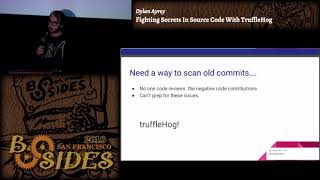
Fighting Secrets in Source Code with TruffleHog
Discover TruffleHog: a tool for identifying secrets in source code, its applications in DevOps, and new approaches to detecting secrets in package managers like npm and pypi.
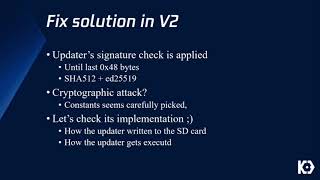
Over-the-Air - How We Remotely Compromised the Gateway, BCM, and Autopilot ECUs of Tesla Cars
Detailing Tesla car hacking techniques, including remote compromises of gateway, BCM, and Autopilot ECUs. Explores vulnerabilities, attack chains, and Tesla's security enhancements in response.

Growing the PHP Core - One Test at a Time
Learn to contribute to PHP core by writing tests, no C coding required. Discover how to compile PHP, run tests, and identify areas for improvement, becoming an active part of the PHP community.
Harvesting Passwords from Source Code Repositories
Discover techniques for extracting sensitive credentials from code repositories, enhancing security awareness and prevention strategies for developers and organizations.

Real Impact Testing Analysis for JVM Developers
Discover Test Impact Analysis to speed up test automation in JVM projects. Learn to implement TIA tools, especially useful for mono-repos, using JUnit extensions and Git integration.

Machine Learning on Source Code
Explore large-scale code analysis and machine learning on source code using open-source tools. Learn about ingesting public git repositories and transforming code into ASTs for advanced analysis and ML applications.

VulChecker - Graph-based Vulnerability Localization in Source Code
Explore VulChecker, a tool for precise vulnerability detection in source code using graph-based neural networks. Learn about its innovative approach to locating and classifying security flaws.
Gone in 60 Minutes - A Practical Approach to Hacking an Enterprise
Practical approach to hacking an enterprise using Yasuo tool. Covers shell generation, exploiting vulnerabilities in Tomcat and Jenkins, and password extraction techniques.
Harvesting Passwords from Source Code Scripts and Code Repositories
Explore techniques for extracting passwords from source code, scripts, and repositories, enhancing security awareness and vulnerability detection skills.

Recharging Penetration Testing to Maximize Value
Strategies to enhance penetration testing effectiveness, including improved scoping, collaboration, and reporting techniques for maximizing value and impact in information security.

Active Defense - Helping Threat Actors Hack Themselves
Explore innovative active defense strategies to turn the tables on cyber threats, helping attackers inadvertently compromise themselves while protecting legitimate users.

The Hip Approach to Safeguarding Your Users
Explore innovative approaches to cybersecurity, privacy, and harm prevention in software development. Learn to make informed safeguarding decisions using industry-wide security information and DevOps tools.

Micro Frontend - Module Federation
Explore micro frontends with real-world case studies, implementation strategies, and Module Federation. Learn when to use this architectural style and how to integrate it effectively in your projects.
Code From Nothing - Procedural Generation of Python Source Code
Explore novel techniques for testing Python linters and fixers using Hypothesis, focusing on procedural generation of source code to uncover edge cases and improve tool reliability.
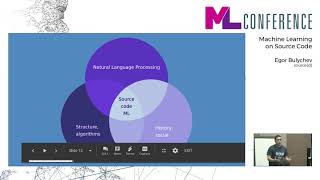
Machine Learning on Source Code
Explore Machine Learning on Source Code: trends, tools, and applications like deep code suggestions and structural embeddings. Learn how ML can improve developers' daily lives and gain insights from projects.