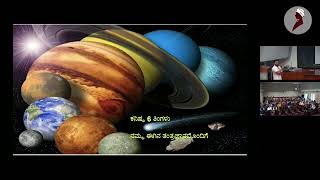
If Not Earth, Where Else? - Exploring Life Beyond Our Planet
Explore the fascinating quest for extraterrestrial life and understand our cosmic responsibility to Earth through ISRO scientist Dr. Girish's compelling perspective on space exploration.

Getting Beyond Earth - Exploring the Solar System
Explore the solar system through expert presentations on past and present missions, gaining insights into planetary bodies and Earth while understanding the importance of continued space exploration.
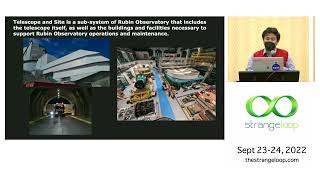
The Vera C. Rubin Observatory Legacy Survey of Space and Time
Explore the groundbreaking Vera C. Rubin Observatory and its Legacy Survey of Space and Time. Learn about its advanced technology, automated operations, and potential to revolutionize our understanding of the universe.
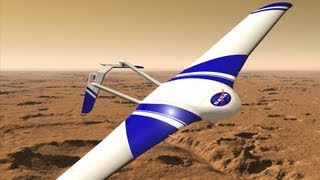
Why We Need to Go Back to Mars
Explore Mars' intriguing features, from ice-filled craters to ancient oceans, and discover compelling evidence of past life. Learn why returning to the Red Planet is crucial for unraveling its mysteries.
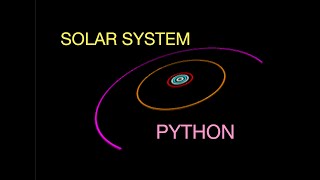
Building a 3D Model of the Solar System with Python
Construct a 3D solar system model using Python and Web VPython, exploring numerical modeling and adding multiple planets.
Microscopy Methods for Life Detection on Icy Ocean Worlds
Explore microscopy techniques for detecting life on icy ocean worlds. Learn cutting-edge methods in astrobiology research and their applications in the search for extraterrestrial life.
AXE: A New Frontiers Enceladus Astrobiology Mission Concept Study - AbGradCon 2023
Explore Enceladus' potential for life through AXE mission concept study. Learn about plume formation, mission trajectory, and key objectives for this New Frontiers astrobiology mission.
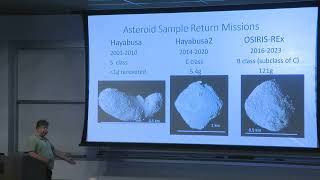
Past Sample Return Missions and Major Achievements
Explore past sample return missions and their major achievements in space exploration with NASA's Michael Zolensky.
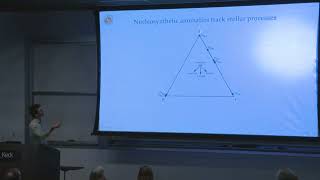
Linking the Protosolar Disk with the Inner Solar System
Explore the connection between the protosolar disk and inner solar system in this insightful talk by Francois Tissot from Caltech at the KISS short course on sample return missions.
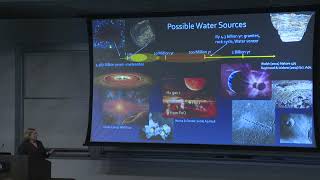
Chemical Fingerprints of the Early Solar System and its Dynamical Evolution
Explore chemical fingerprints of the early Solar System and its dynamic evolution through Karen Meech's insightful presentation at Caltech's space studies short course.
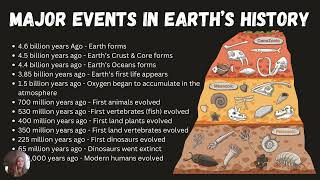
Brief History of the Earth
Explore Earth's history from the Big Bang to major geological events in this concise overview of our planet's formation and evolution.
Asteroid 101: Introduction to Asteroids - Krum High School Presentation
Explore asteroid science through a high school student presentation, part of NASA's ExMASS program for lunar and asteroid exploration.
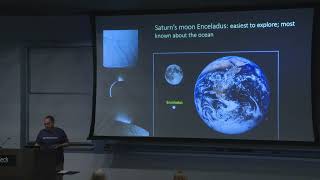
Ocean Worlds and Habitability
Explore ocean worlds and habitability in the solar system with NASA JPL expert Jonathan Lunine at Caltech's space studies short course.
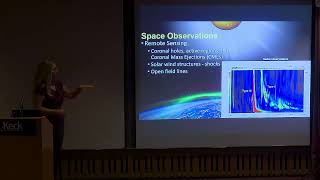
View from the Inside: The Solar System's Particle Environment
Explore the solar system's particle environment with Dr. Christina Cohen in this Keck Institute for Space Studies talk on extrasolar space weather and exoplanet evolution.
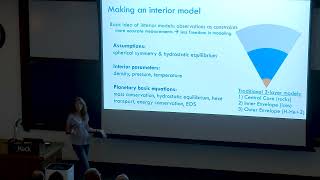
Uranus's Evolution and Current Structure
Explore Uranus's evolution and interior structure with Prof. Ravit Helled, preparing for future space missions to the ice giant.
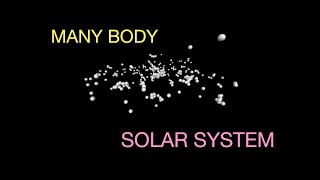
Modeling a Flat and Spinning Solar System Using Python
Model a flat, spinning solar system with 100 masses using Web VPython and Python code. Explore advanced simulation techniques for celestial mechanics.
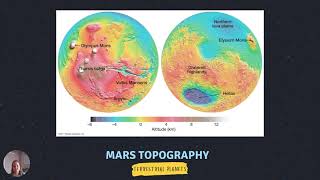
Introduction to Our Solar System
Explore the wonders of our cosmic neighborhood and gain insights into the planets, moons, and other celestial bodies that make up our Solar System.
Reconstructing the Early Solar System
Explore early solar system formation through meteoritic analysis, isotopic anomalies, and integrated data to uncover the origins of our cosmic neighborhood.
The Origin of Mercury's Structure and Chemical Composition and Their Astrobiological Implications
Explore Mercury's unique composition, formation, and implications for astrobiology. Investigate its metal-rich core, volatile elements, and comparisons to chondrites through experimental data and spacecraft observations.
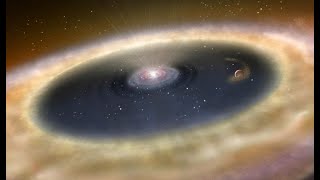
Key Atmospheric Signatures for Identifying Source Reservoirs of Volatiles in Giant Planets
Explore key atmospheric signatures for identifying volatile source reservoirs in giant planets. Analyze Jupiter's water abundance and its implications for planetary formation theories.
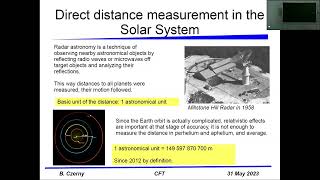
Distance Measurement in Astronomy
Explore astronomical distance measurement techniques, from direct probing to advanced methods using quasars, and understand their role in building a consistent picture of the Universe.