
Do You Speak My Language? Make Static Analysis Engines Understand Each Other
Explore a novel framework for cross-language taint-flow analysis, enabling detection of critical security vulnerabilities across multiple codebases and programming languages.
Put in One Bug and Pop Out More - An Effective Way of Bug Hunting in Chrome
Discover effective bug hunting techniques in Chrome, leveraging historical vulnerabilities to uncover new ones. Learn to identify shared code patterns and exploit codebase complexity for enhanced security testing.
Bringing the Power of Symbolic Execution to the Fight Against Malicious Excel 4 Macros
Explore Symbexcel, a tool using symbolic execution to analyze and detect malicious Excel 4.0 macros, enhancing cybersecurity against this common attack vector.
Optimized Fuzzing IOKit in iOS
Optimized fuzzing approach for iOS IOKit interfaces, dynamically resolving symbols and parameters to improve efficiency and effectiveness in vulnerability discovery.
Firmware.RE - Firmware Unpacking, Analysis and Vulnerability-Discovery as a Service
Large-scale analysis of firmware images reveals vulnerabilities across embedded systems, highlighting security challenges and the need for improved tools and techniques in firmware analysis.
The Node.js Highway - Attacks Are At Full Throttle
Explore Node.js security issues and effective measures for secure application development. Learn about weak cryptography, testing, MongoDB, and see a practical demo.
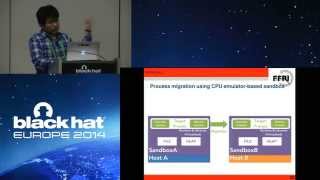
Freeze Drying for Capturing Environment-Sensitive Malware Alive
Innovative techniques for capturing and analyzing environment-sensitive malware through "freeze drying" and live process migration, enabling dynamic analysis of sophisticated threats like Citadel and ZeuS/GameOver.
Counterfeiting the Pipes with FakeNet 2.0
Explore network simulation for malware analysis using FakeNet 2.0. Learn to mimic protocols, configure settings, and capture network signatures efficiently in this hands-on workshop.
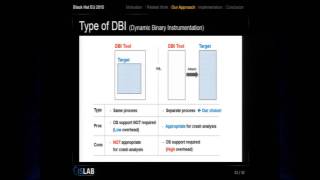
Triaging Crashed with Backward Taint Analysis for ARM Architecture
Explore tools for analyzing crashes on Linux and ARM, using dynamic binary instrumentation and backward taint analysis to determine exploitability. Learn about ARM-Tracer and ARM-Analyzer for efficient crash analysis.
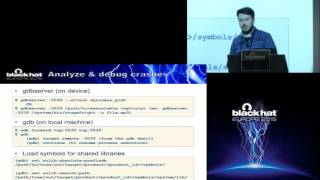
Fuzzing Android - A Recipe for Uncovering Vulnerabilities Inside System Components in Android
Explore a fuzzing approach to uncover vulnerabilities in Android's core system components. Learn about data generation, test execution, logging, and triage mechanisms for effective vulnerability detection.
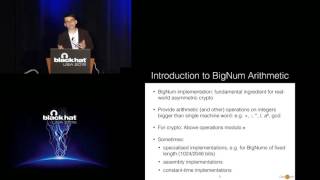
Assessing and Exploiting BigNum Vulnerabilities
Explore vulnerabilities in multi-precision integer arithmetic used in cryptography implementations. Learn bug patterns, exploitation techniques, and strategies for automated vulnerability detection.
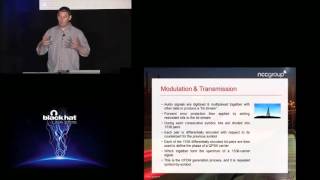
Broadcasting Your Attack - Security Testing DAB Radio in Cars
Explore vulnerabilities in DAB radio systems in cars, potential security risks, and implications for automotive cybersecurity using Software Defined Radio and custom testing tools.
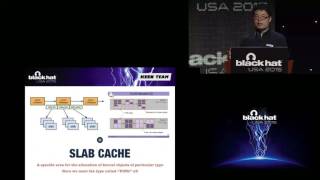
Universal Android Rooting Is Back
Explore universal Android rooting through kernel exploitation, focusing on a Use-After-Free bug affecting all Linux versions. Learn about innovative techniques for 64-bit devices and bypassing modern kernel mitigations.

Hey, Your Parcel Looks Bad - Fuzzing and Exploiting Parcelization Vulnerabilities in Android
Explore Android's Binder IPC vulnerabilities through fuzzing and exploitation techniques. Learn to identify, analyze, and exploit "BadParcel" issues for privilege escalation in high-privilege processes.
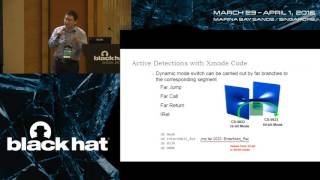
Break Out of The Truman Show - Active Detection and Escape of Dynamic Binary Instrumentation
Explore active detection techniques for Dynamic Binary Instrumentation, focusing on exploiting weaknesses and escaping control. Learn to identify and overcome DBI environments in cybersecurity.
Android Commercial Spyware Disease and Medication
Explores Android vulnerabilities exploited by spyware and proposes a detection method using fuzz testing to mitigate risks and protect user privacy on smartphones.
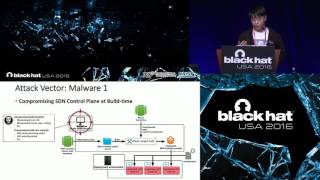
Attacking SDN Infrastructure - Are We Ready for the Next-Gen Networking?
Exploring SDN vulnerabilities through attacks on control plane, channel, and data plane. Demonstrates critical exploits affecting network availability and confidentiality, and introduces SDN security projects.
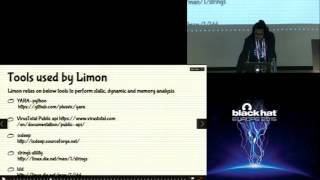
Automating Linux Malware Analysis Using Limon Sandbox
Explore automated Linux malware analysis with Limon sandbox. Learn to collect, analyze, and report runtime indicators using static, dynamic, and memory analysis techniques for comprehensive threat assessment.

Discover Vulnerabilities with CodeQL
Explore CodeQL's static and taint analysis capabilities to uncover vulnerabilities, including potential RCE flaws. Learn key concepts for effective code analysis and security testing.

The Bug Hunter's Methodology v4 - Recon Edition
Explore cutting-edge techniques for bug hunters and red teamers to discover and expand attack surfaces, focusing on domain reconnaissance, subdomain enumeration, and IP space analysis.
Rugged Driven Development with Gauntlt
Explore Gauntlt, an open-source framework for automated security testing in DevOps. Learn how it bridges the gap between security, development, and operations teams, enabling continuous validation of cloud infrastructure.