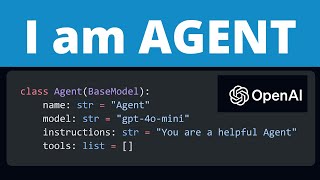
Multi-Agent Orchestration System Design and Implementation
Dive into OpenAI's multi-agent orchestration system, exploring how routines, tools, and handoffs enable dynamic AI interactions for customer service and sales automation through practical code implementation.
Automated Design of AI Agents Using ADAS Framework
Explore the cutting-edge framework for self-designing AI agents, featuring automated architecture generation, peer evaluation systems, and iterative refinement processes for enhanced problem-solving capabilities.
Agent-based Mixture of Experts and LLM-augmented Autonomous Agents - A Tutorial on Dynamic Expert Generation
Discover how to create specialized AI expert agents through dynamic prompting, enabling tailored solutions for complex tasks from code generation to artistic design using LLM-augmented systems.
Efficient Soft-Output Decoders for the Surface Code
Explore advanced quantum error correction through efficient soft-output decoders for surface codes, focusing on improved fault-tolerant quantum memory and computation techniques.
Toward a 2D Local Implementation of Quantum LDPC Codes
Explore innovative approaches to implementing quantum LDPC codes in 2D architectures, focusing on bilayer designs and quasi-cyclic codes to achieve efficient error correction with reduced physical qubit requirements.
Single-shot Decoding of Good Quantum LDPC Codes
Explore quantum Tanner codes and their role in single-shot quantum error correction, focusing on constant-weight parity checks and reliable error suppression in both adversarial and stochastic noise scenarios.
Hierarchical Memories - Simulating Quantum LDPC Codes
Explore groundbreaking research on hierarchical quantum LDPC codes for efficient fault-tolerant quantum memories, featuring innovative bilayer architecture and performance analysis against surface codes.
3D-Local Noisy Shallow Quantum Circuits - A Colossal Advantage Against Classical Computing
Explore groundbreaking research demonstrating quantum computing superiority using 3D-local noisy circuits, showcasing unprecedented advantages over classical computing in fault-tolerant quantum systems.
State Purification with Symmetry Subgroup Projectors
Explore quantum state purification techniques using symmetry subgroup projectors to enhance purity of quantum states with reduced overhead and improved scalability for near-term quantum systems.
Fault-Tolerant Circuits from Twisted Quantum Doubles - Quantum Error Correction Beyond Stabilizer and Clifford
Explore advanced quantum error correction through fault-tolerant circuits and twisted quantum doubles, focusing on geometric locality and abelian non-chiral topological phases implementation.
A Converse for Fault-tolerant Quantum Computation - Fundamentals and Lower Bounds
Delve into quantum computation fundamentals, exploring fault tolerance, redundancy bounds, and noise thresholds in quantum systems through advanced mathematical and theoretical frameworks.
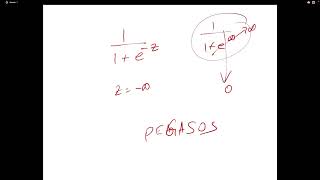
Machine Learning Practical Concerns and Societal Impacts - Lecture 28
Explore practical neural network implementation challenges and gain valuable insights into building ethical, socially responsible machine learning systems.

Advancements and Challenges in Retrieval-Augmented Generation Systems
Explore the latest developments in Retrieval-Augmented Generation systems, their real-world applications, and key challenges in implementing AI-powered information retrieval and generation solutions.
Concatenate Codes and Space Optimization for Fault-Tolerant Quantum Computation
Discover groundbreaking advances in fault-tolerant quantum computation through concatenated codes, achieving 90%+ reduction in space overhead while maintaining high threshold and modularity in quantum architectures.
Fault Tolerance of Stabilizer Channels in Quantum Computing
Explore rigorous analysis methods for fault tolerance in stabilizer channels, focusing on surface codes, LDPC codes, and Floquet codes for quantum computing applications.
Practical Advice for Building Machine Learning Applications - Lecture 28
Gain insights into practical strategies and best practices for implementing real-world machine learning systems, from system design to deployment considerations.
Eclipse IoT and Edge Native Projects: Architecture and Integration Overview
Explore Eclipse Foundation's comprehensive IoT and Edge Native portfolio, featuring 40+ projects and their integration into IoT architecture, with insights into six major European research initiatives.
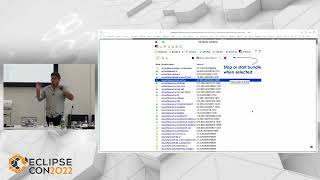
Using E4 Spies to Debug Eclipse Applications - A Developer's Guide
Discover how to leverage E4 spies for debugging Eclipse applications, from UI components and toolbar items to perspectives, events, injection, and CSS styling - with practical examples for RCP developers.
Lessons Learned Building a GenAI-Powered Interactive Trivia Quiz App
Explore real-world challenges and solutions in building an interactive trivia quiz app powered by GenAI, featuring practical insights, live demonstrations, and cloud implementation strategies.
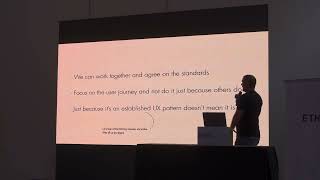
From Web2 to Web3: Pitfalls and Learnings
Discover key insights and challenges in transitioning from Web2 to Web3 development, exploring common pitfalls and valuable lessons learned from the Ethereum ecosystem.
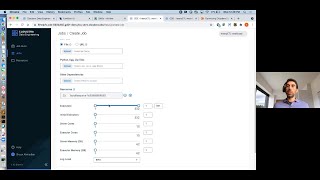
Embracing the Scalability of Kubernetes in Azure - Ask the Experts
Explore how Cloudera Data Platform leverages Azure Kubernetes Service for flexible, scalable Big Data environments. Learn about cloud agility, cost optimization, and hybrid data cloud models.