
Design & Reality
Exploring non-linear software design through real-world cases. Learn how domain modeling and novel abstractions can reframe problems, leading to better solutions in complex systems.

Software Architecture, Team Topologies and Complexity Science
Exploring connections between team structure, software architecture, and complexity science to optimize software development organization performance and design.

Having Fun with Generics and Abstract Classes in C#
Explore advanced C# concepts with Don Wibier: abstract classes, generics, and their practical applications for optimizing code and building flexible, reusable foundations in application development.

The Grand Unified Theory of Clean Architecture and Test Pyramid
Explore a practical approach to combining Clean Architecture and Test Pyramid in software development, with insights applicable across technologies.

Lean & Lego - Building the Millennium Falcon Redux
Explore lean product development techniques through building a massive Lego set. Learn key concepts like cycle-time, batch size, continuous improvement, and systems thinking in a fun, relatable context.

Achieving Great API-ness - Why Streaming and API Management Go Hand in Hand
Explore how API management enhances streaming architectures, enabling secure external data access, flexible control, and efficient event-based information exchanges for modern businesses.

Goodbye Controllers, Hello Minimal APIs
Explore Minimal APIs in .NET 6: build high-performance, scalable APIs with minimal code. Learn implementation, comparison with traditional approaches, and real-world application strategies.

Bridging the Gap - Linux in Safety Critical Systems
Explore Linux's role in safety-critical systems, industry pressures, and strategies for bridging gaps. Learn about working groups, reference processes, and focus areas for enhancing safety in various domains.

Challenges of Low Spec Embedded Linux
Explore challenges and solutions for low-spec embedded Linux devices, focusing on innovation, cost-effectiveness, and collaborative problem-solving in the consumer industry ecosystem.

Integrity Measurements and the Cruel World
Explore integrity measurement systems for embedded devices, overcoming challenges in security-enhanced Android and Linux to improve reliability without compromising user experience.

Let's Dance in the Cache - Destabilizing Hash Table on Microsoft IIS
Explore Microsoft IIS's Dynamic Hashing algorithm and its vulnerabilities. Learn about potential collision attacks on hash tables in web server architecture and their implications for cybersecurity.

An Introduction to Residuality Theory
Explore residuality theory for software design in complex environments, using applied complexity science to manage uncertainty and model systems as interconnected residues.

Tales of Data Architecture Evolution
Explore data architecture evolution, from RDBMS to Data Lakes and Meshes. Learn to architect modern analytical data infrastructure and glimpse the future of data platforms.

Micro Frontends and How We Applied It in the Chase App
Explore micro frontends architecture, design process, and implementation in the Chase UK App, with insights on challenges, solutions, and best practices for successful adoption.

Balancing Coupling in Software Design
Explore coupling in software design as a tool for creating evolvable systems. Learn to evaluate and optimize architectural decisions using a coherent model for assessing system decomposition.

Succeeding at Reactive Architecture
Explore principles and patterns for building reactive systems, focusing on message passing to achieve isolation, resilience, and elasticity. Learn key design concepts for successful reactive programming.

Rebuilding Twitter Following Clean Architecture and Domain-Driven Design
Explore rebuilding Twitter using clean architecture and domain-driven design. Learn event storming, bounded contexts, aggregates, and system structure for improved performance and consistency.
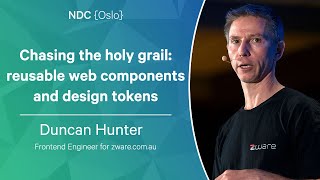
Chasing the Holy Grail - Reusable Web Components and Design Tokens
Explore building design systems with reusable web components and design tokens for efficient, framework-agnostic frontend development across multiple projects.

A Contrarian View of Software Architecture
Challenging conventional software architecture wisdom, exploring drawbacks of layered approaches, and proposing alternatives for improved code organization and maintainability in large enterprise systems.

Intentional Code - Minimalism in a World of Dogmatic Design
Explore minimalist software design principles, challenging traditional patterns for more meaningful and maintainable applications. Learn to simplify code intentionally.

Software Engineering Is About Tradeoffs
Explore software engineering tradeoffs, C++ design debates, and real-world problem-solving in mp-units library development. Gain insights into architectural decision-making and compromise acceptance.