Getting Around the GIL - Parallelizing Python for Better Performance
Explore techniques to parallelize Python code, overcoming GIL limitations for improved performance in data processing and CPU-bound tasks.
Vectorize Using Linear Algebra and NumPy to Make Your Python Code Fast
Learn to optimize Python code using linear algebra and NumPy vectorization techniques. Discover how to replace inefficient loops with fast NumPy operations, significantly improving performance while maintaining readability.
The Lost Art of Diagrams - Making Complex Ideas Easy to See with Python
Explore visual communication techniques to simplify complex ideas using Python. Learn to create effective diagrams, charts, and illustrations for project concepts, architecture, and workflows.

Oh No! My Regex Is Causing a Denial of Service! What Can I Do About It?
Explore regex performance issues, including ReDoS, with practical examples. Learn to detect problematic expressions, improve performance, and defend against malicious inputs using static analysis techniques.
Algorithmic Ideas, Engineering Tricks, and Trivia Behind CPython's New Sorting Algorithm
Explore the evolution of CPython's sorting algorithm, from Quicksort to Timsort and beyond. Discover algorithmic insights, engineering tricks, and historical anecdotes behind Python's fast list sorting.
How Memory Profilers Work
Explore memory profilers in Python: types, allocation patterns, and effective usage for optimizing large-scale applications and diagnosing memory issues.
Catching Tensor Shape Errors without Running Your Code
Discover how to catch tensor shape mismatches in ML code using shape types and type checking, improving debugging efficiency and code understanding without execution.
Introducing Incompatible Changes in Python
Explore Python's evolution, focusing on introducing incompatible changes, lessons learned from Python 2 to 3 transition, and future plans for a stable ABI and improved compatibility.
Inside CPython 3.11's New Specializing, Adaptive Interpreter
Explore Python 3.11's new specializing, adaptive interpreter, its self-optimizing techniques, and performance improvements, with insights on future enhancements and optimization challenges.
Instrumentation Nightmares - A Review of Our Toughest Cases
Explore advanced Python instrumentation techniques, challenging real-world cases, and design patterns. Learn to hook into import systems, instrument popular libraries, and make your code instrumentation-friendly.
Power Up Your Work with Compiling and Profiling
Discover how to optimize Python code performance using Numba, a JIT compiler for numerical calculations. Learn when and how to apply Numba effectively to speed up math-heavy code in data science and development projects.
Building Scalable Web Apps
Learn strategies for developing high-performance web applications that can handle increased traffic and user loads efficiently, ensuring optimal functionality and user experience.

Dependency Injection Is Your Friend
Explore the concept of dependency injection and its benefits in software development, focusing on practical applications and best practices.
Debugging and Profiling Techniques
Learn essential debugging and profiling techniques to optimize Python code performance, identify bottlenecks, and resolve complex issues efficiently.

Leveraging an Instant Messaging Protocol to Build a Scalable Cloud Architecture
Explore how instant messaging protocols can be utilized to create scalable cloud architectures, enhancing system performance and efficiency.
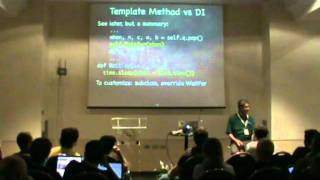
Python Design Patterns
Learn Python design patterns to enhance code structure and flexibility, covering Facade, Singleton, Dependency Injection, and more, with practical examples and Pythonic approaches.
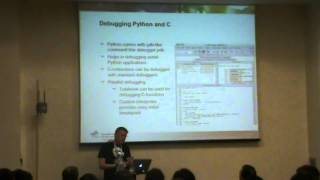
Python for High Performance and Scientific Computing
Explore Python's capabilities for high-performance and scientific computing, enhancing your skills in numerical simulations and data analysis for research and industry applications.
Spotify and Python - Love at First Sight
Discover how Spotify leverages Python for its architecture, services, and tools. Explore the company's tech stack, deployment strategies, and future challenges in music streaming.
Best Practices for Python in the Cloud
Discover optimal strategies for deploying Python applications in cloud environments, enhancing scalability, performance, and cost-effectiveness.
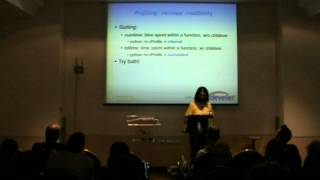
Debugging and Profiling Techniques
Learn essential debugging and profiling techniques to optimize Python code performance, identify bottlenecks, and resolve complex issues efficiently.
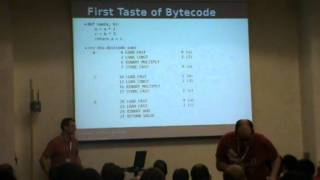
Exploring CPython's Bytecode
Dive into CPython's bytecode, exploring its structure, execution, and optimization. Learn to compile, disassemble, and manipulate code objects for deeper Python understanding.