
Design Patterns in the 21st Century
Explore modern C++ design patterns, functional programming concepts, and improvements to classic Gang of Four patterns. Learn how lambda expressions enable monads and enhance software design.
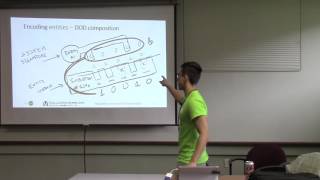
Implementation of a Multithreaded Compile-Time ECS in C++14
Explore efficient game architecture using C++14 metaprogramming to create a compile-time, multithreaded entity-component system, focusing on reusability, parallelism, and intuitive syntax.

Exceptional Performance
Explore the impact of exceptions on C++ performance, examining hardware architecture, memory hierarchy, and optimization techniques to understand when exceptions might enhance performance.
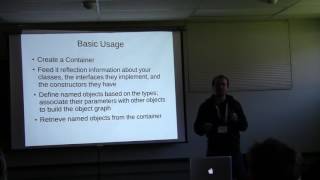
IoC++ - A IoC Framework for C++
Explore IoC++, a flexible dependency injection library for C++. Learn about runtime configuration, object graph management, and comparisons to similar frameworks like Boost.DI.

Let's Make a Web Match-3 Game in C++14
Learn to create a web-based match-3 game using C++14, Emscripten, and experimental Boost libraries. Explore Dependency Injection and Meta State Machine concepts for efficient game development and cross-platform compatibility.
C++ Tool Support - Where We Are and Where We Are Heading
Exploring the evolution and benefits of C++ development tools, from basic editors to advanced IDEs, highlighting features that enhance productivity and code quality.
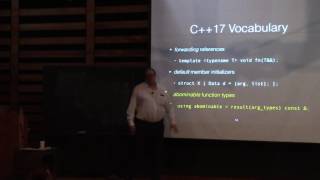
Implementing Tuple in C++17
Explore C++17's impact on std::tuple implementation, including new language features, library changes, and design considerations. Dive into testing and benchmarking scenarios for tuple implementations.
The CPU Cache - Instruction Re-Ordering Made Obvious
Explore CPU cache anatomy, its role in hardware/software design, and how instruction reordering impacts performance. Gain insights into modern system implementation and parallelism considerations.
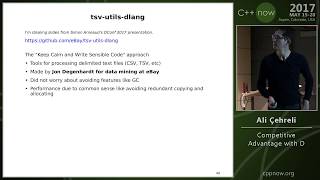
Competitive Advantage with D
Explore D programming language's competitive advantages, focusing on compile-time features, safety, and productivity. Learn how D simplifies systems programming and enhances software engineering.

Postmodern Immutable Data Structures
Explore modern immutable data structures in C++, their benefits for concurrent systems, and efficient implementation techniques using Relaxed Radix Balanced Trees and the Immer library.
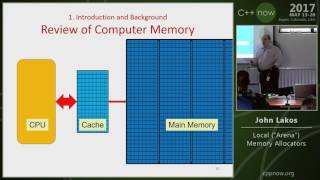
Local - Arena - Memory Allocators
Explore the impact of local memory allocators on C++ performance, examining six key dimensions and demonstrating potential order-of-magnitude speed improvements in long-running systems.

Rethinking Strings
Rethinking string design in C++: exploring modern approaches, optimizations, and considerations for encoding, storage, and performance in light of recent language and library developments.

Good FIFOs Make Good Thread Neighbors
Explore microarchitectural implications of FIFO queues in parallel programming, analyzing open-source implementations and their impact on processor core performance through code and assembly examination.
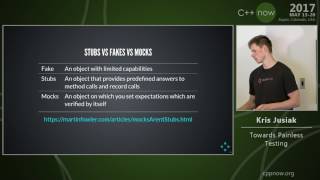
Towards Painless Testing
Explore modern C++ testing techniques, including automatic mocks injection, TDD, and BDD. Learn to streamline your testing process and improve code quality with practical examples and future-oriented insights.
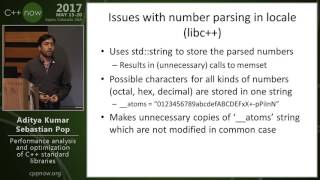
Performance Analysis and Optimization of C++ Standard Libraries
Análisis y optimización del rendimiento de las bibliotecas estándar de C++, incluyendo mejoras en algoritmos, atributos de funciones y comparaciones entre implementaciones, con sugerencias para desarrolladores.
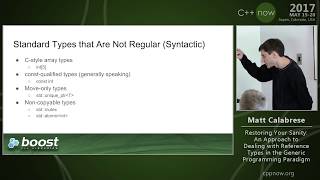
An Approach to Dealing with Reference Types in the Generic Programming Paradigm
Explore handling reference and proxy types in generic programming, discussing challenges, semantics, and potential solutions for future datastructures. Audience participation encouraged.
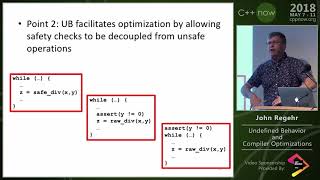
Undefined Behavior and Compiler Optimizations
Explores compiler optimizations, undefined behavior in intermediate representations, sequential memory models in C++, and the future of compiler technology, including formal verification and automatic generation.
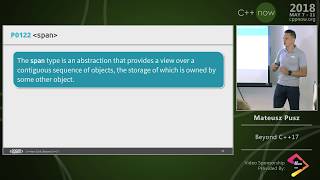
Beyond C++17
Explore C++20 features and promising proposals, including Span, Concepts, and Consistent Comparison. Gain insights into performance, low latency, and modern C++ advancements from an ISO C++ Committee member.
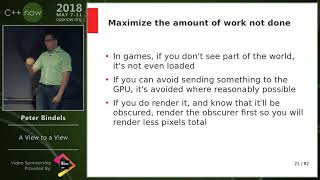
A View to a View
Exploring C++17 views: benefits, pitfalls, and implementation strategies for improved performance and cleaner abstractions in software design.
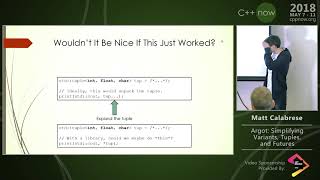
Argot - Simplifying Variants, Tuples, and Futures
Explore Argot, a library simplifying complex operations with tuples, variants, and futures in C++. Learn powerful techniques to enhance code readability and efficiency in handling these abstractions.
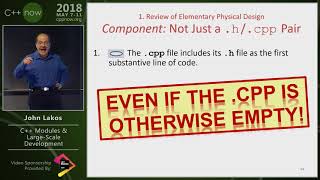
C++ Modules and Large-Scale Development
Explore C++ modules, their goals, and impact on large-scale development. Learn about efficiency, architecture requirements, and migration paths for codebases of all sizes.